June 18, 2005 — Harley Davidson Festival, Lake Balaton, Hungary


2006
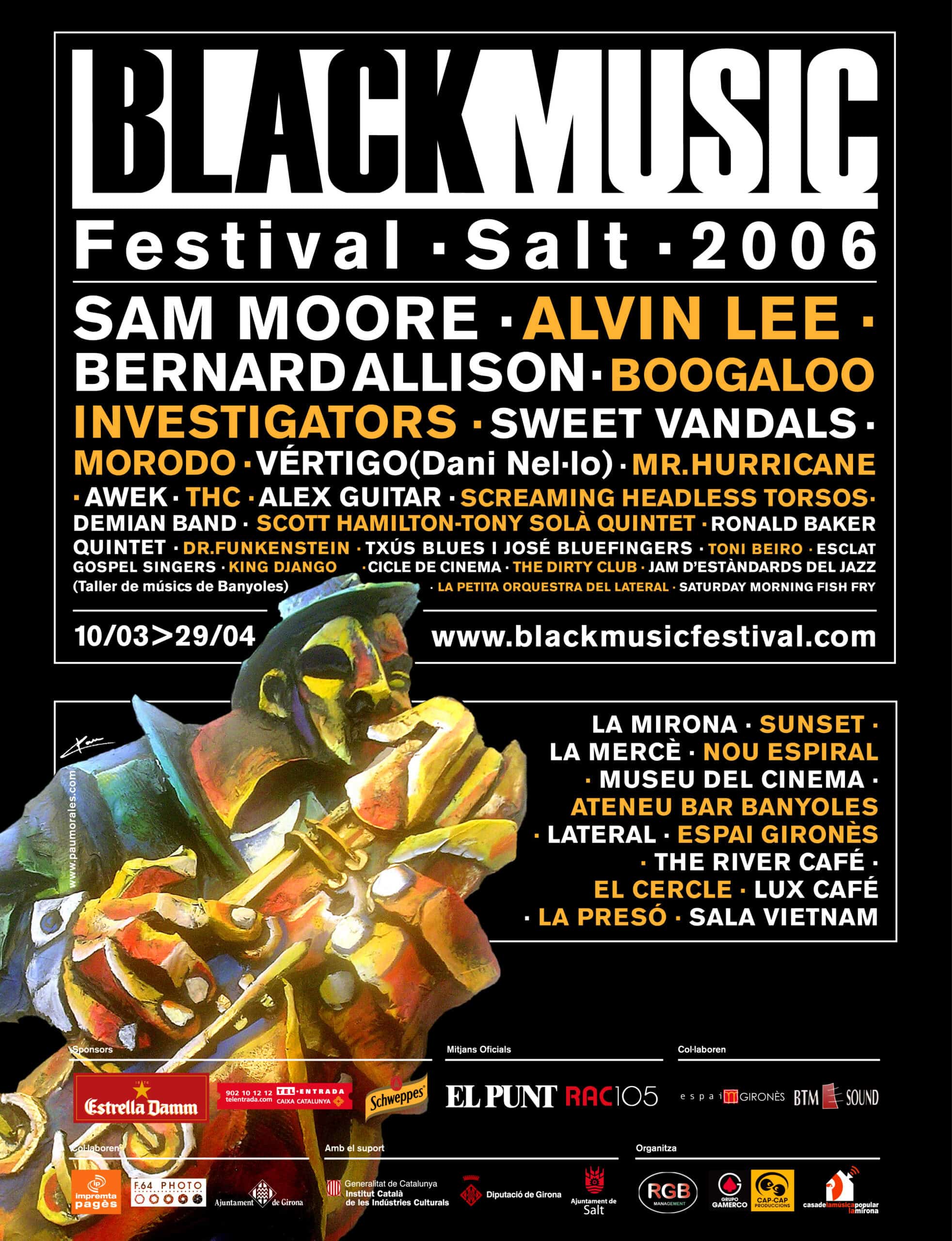
April 1, 2006 – Black Music Festival, Girona, Spain 2006

El guitarrista Alvin Lee, en un moment de l’actuaciÛ a la sala La Mirona de Salt, en el marc del Black Music Festival. FOTO: F-64 PHOTO
2007
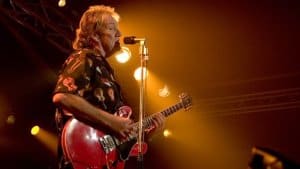
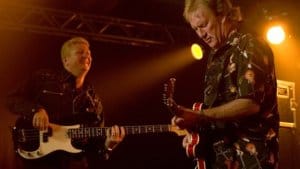
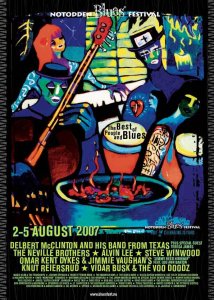
August 2, 2007 – Notodden, Norway
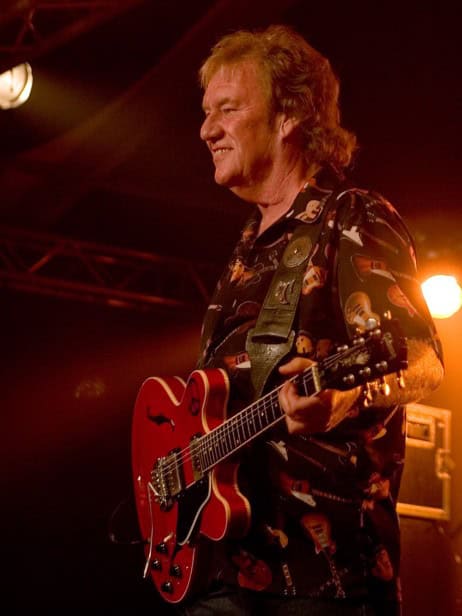
Photo: Ole Hagen
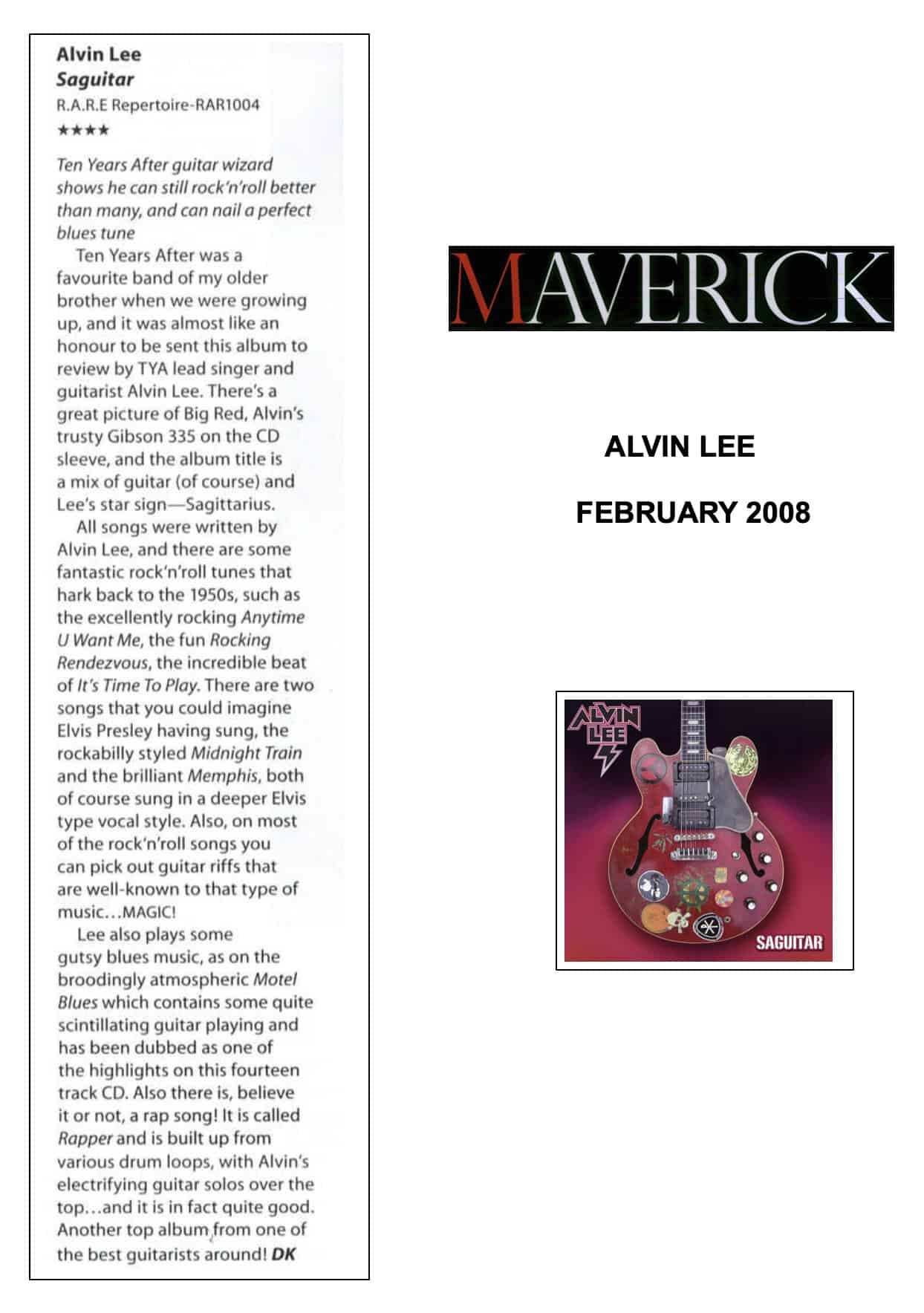
Saguitar CD Reviews
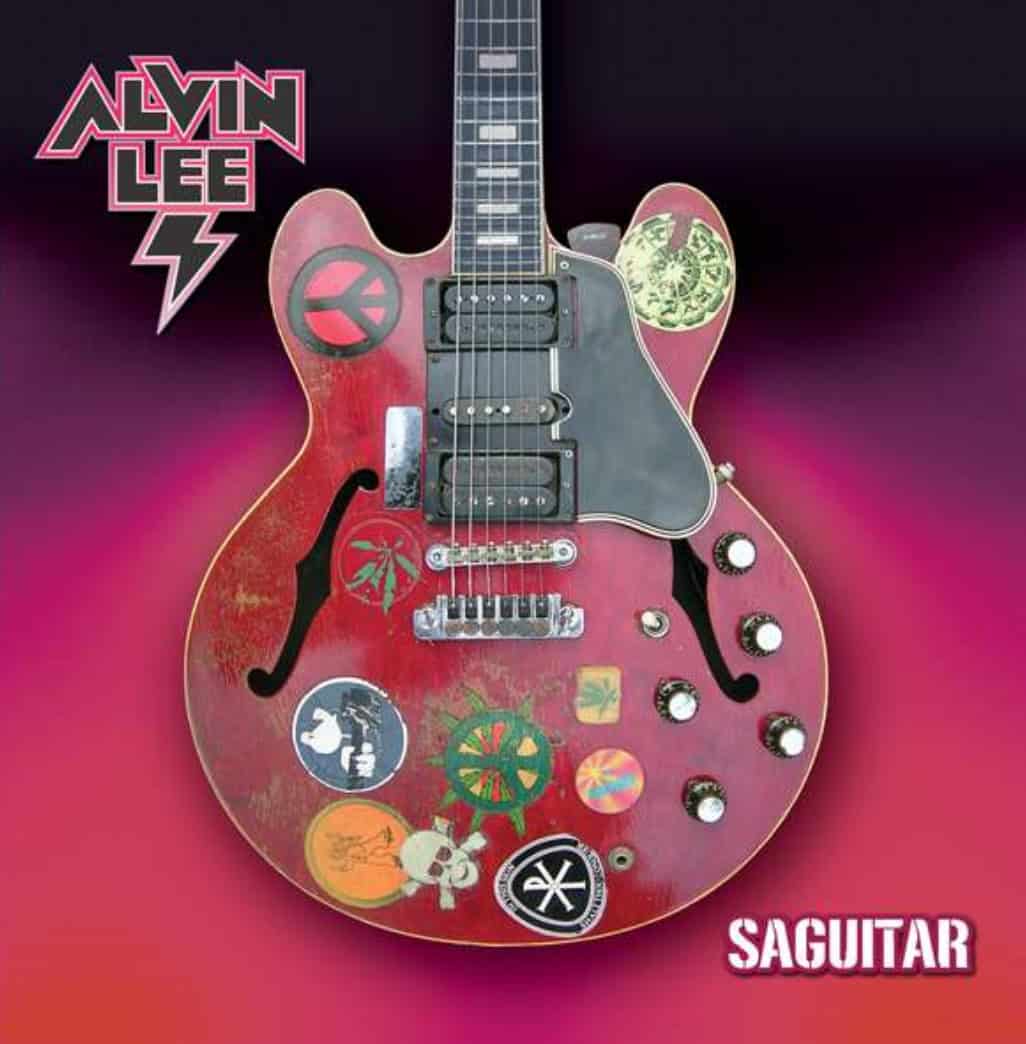
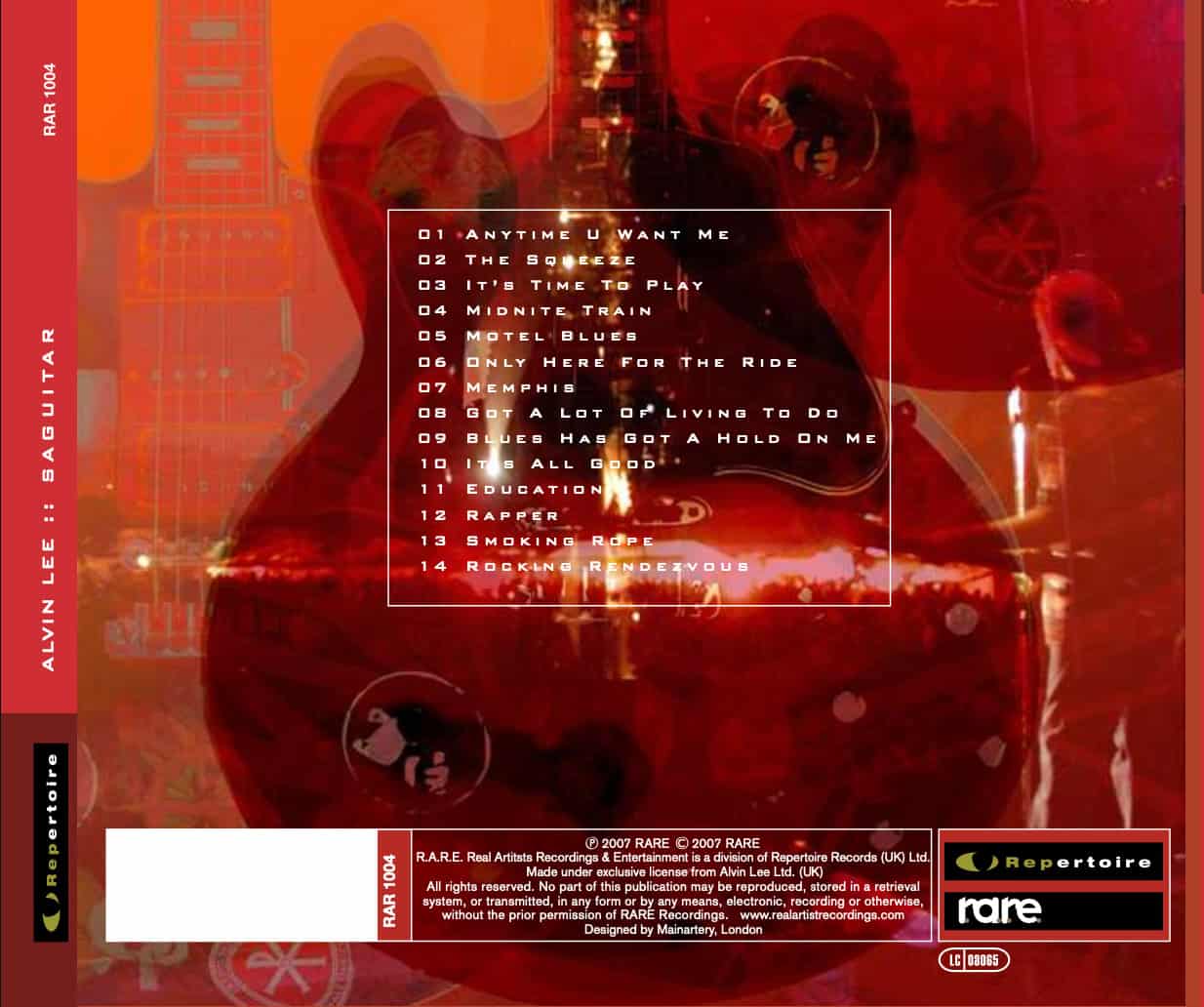
This is a rather eclectic mix of songs from Alvin Lee, as it includes an assortment of Rockabilly, Memphis, “Midnight Blues” and more (even rap). It sounds as though some were leftover material from past projects, resuscitated here on “Saguitar”.
The mood changes frequently, from track to track, but no matter, taken individually this is a fine collection of songs, with Alvin’s voice and guitar playing in great form throughout.
There is a lot of stuff here and it sounds better with each listen!
September 23, 2007 – Herb Staehr
——————-
ALVIN LEE Saguitar Repertoire RAR1004 (2007)
While ‘Saguitar’ frequently touches on Alvin Lee’s description of his current music as ‘raw boogie rock’- the title being a play on his Sagittarius star sign – he might have found room for ‘rock & roll’ as part of his musical description as a couple of the tracks sound like an outtakes from his recent Tennessee album recorded with Scotty Moore.
‘Saguitar’ grows on you with repeated listening with only the stark rock-blues and rock and roll divide stopping this from being one of Alvin’s best efforts of late. The emphasis is squarely on having fun and laying down some hot licks, from the opening rock and roll work out of ‘Anytime U Want Me’ and the stripped down retro shuffle and clean picking of ‘It’s Time To Play’, to the Elvis ode ‘Midnite Train’ on which former Quantum Jump/Peddlers drummer Trevor Morais explores a lovely train time shuffle.
But just when you think this album is going to be no more than a mix of retro rock & roll boogie with occasional guitar flurries, up steps Alvin with the almost mournful ‘Motel Blues’. This deep blues is probably the most moving and possibly most honest song about life on the road that Alvin has ever written. It’s so dark and emotionally wrought in places that the smouldering low down blues accompaniment is just about the perfect backing track to some disturbingly pessimistic lyrics. Thus he sings, ‘I don’t want to die in some downtown motel’ and concludes the first verse with ‘Spend my life out on the road, must be near the end’. Alvin adds a beautifully measured, deep toned solo over Tim Hinckley’s computerised Hammond on the album highlight.
The curious thing is that just like the smoking blues of ‘Blues Has Got A Hold On Me’ – all delicately teased notes and subtle backing – these two tracks stand in stark contrast to the rock & roll elements here, not to mention the almost hot club feel of ‘Memphis’. And yet there is still plenty for Ten Years After fans to enjoy, particularly the fluid groove of ‘It’s All Good’ on which Alvin constructs a short but memorable mid number solo.
There’s also a partial return to TYA’s ‘Working in a Parking Lot’ on the celebratory boogie ‘Got A Lot of Living To Do’. Alvin evokes ZZ Top with the polished production feel of ‘Education’ on which he ultimately stretches out with some fluid playing that should generate some deserved radio play.
Overall, ‘Saguitar’ is an album recorded without record company or production pressures and touches on both Alvin’s strengths, and his occasional foibles, as is the case on ‘The Rapper’. This is a ground breaking outing for Alvin built on drum loops and is curious in as much as it sounds closer to Zappa than any brothers from the hood. But at least no one can complain about a lack of experimentation or innovation from a rocker in his fifth decade as a pro. Indeed there’s even room for some humorous narrative on ‘Rapper’ when Alvin declares, ‘you’ve got more baggage than Federal Express’, which bring s a smile that just about holds sway over the brief bouts of introspection on a slow burning but ultimately cooking album well worth checking out.
****
Review by Pete Feenstra
Interview with Cliff Smith
Cliff Smith: So you have a new album out, ‘Saguitar’. I can hear a lot of Elvis there, who are your other influences?
Alvin Lee: I used Trevor Morais on the first track ‘Midnight Train’ and that’s maybe where the ‘return to Sun Records’ feel came from. I keep leaning back to the fifties but I also I revisited some of my 70’s stuff and Ten Years After stuff. I also recorded a rap song which some people are up in arms about. I don’t particularly care for rap but I like some of the rhythms used. I did it just for fun as an instrumental to experiment with my drum loops but then I thought “This sounds pretty rocky and controversial” – and that’s what Rock ‘n’ Roll is supposed to be.
Cliff Smith: Any plans for a full blown ‘gangsta rap’ album?
Alvin Lee: No, but I may do one more track.
Cliff Smith: Where did you record the album?
Alvin Lee: I recorded it at my home in Spain. This album was an experiment for me to learn to use Logic on the Mac and it took 2 years to record. I recorded about 50-60 songs and some other bits that I never finished. It’s a contrast to my ‘In Tennessee’ album which I recorded with Scotty Moore in 2 days – that’s live music for you.
Cliff Smith: And you played the bass and drums too?
Alvin Lee: Yes, Trevor Morais put down some snare drum and Tim Hinkley
played some keyboards but everything else is me.
Cliff Smith: These songs would work well live, are you playing in the UK anytime soon?
Alvin Lee: No plans as yet, but I hope to be. I try not to play too much as I have a fear of over playing, if you play every night for 3 weeks it becomes automatic and that’s not good. When Rock ‘n’ Roll becomes boring you’re in trouble.
Cliff Smith: The song ‘Motel Blues’ from your new album is very moving – was life on the road really that depressing for you?
Alvin Lee: It was that night – I never wanted to see an airport again. I sat down with the guitar and the song was written in about 15 minutes. I have a love hate relationship with touring – the week before I’m going out I wonder if I’ll ever get back in one piece. If I’m away playing for 2 months I can’t wait to get back home but if I’m home for 2 months I cants wait to get out there!
Cliff Smith: You were known as ‘the fastest guitar in the west’ and you’re still lightning fast – what’s your practice routine?
Alvin Lee: I just fiddle about, I’ve never played scales and I’m very much self- taught. I look for nice phrases and patterns and practice them until I can get in and out of them easily. Good things often happen if I jam with somebody who has only been playing for 6 months or so – I think that you can learn a lot from someone who is not set in their ways. I play for about an hour a day normally, if I’m recording or playing live then about 2 or 3 hours a day – I sometimes need to get the callouses back on my fingertips before a tour, they get a bit soft here in Spain with all the swimming…
Cliff Smith: What music have you been listening to recently, which new bands do you like?
Alvin Lee: I can’t think of any new bands I like off the top of my head. I listen to what I’ve always listened to – Blues, R’n’B; Big Bill Broonzy, Django Reinhardt, George Benson. I love Flamenco too, I have a guy that comes round and gives me lessons – he has an incredibly strong thumbnail! I can play a bluff fandango…
Cliff Smith: Anything else you’d like to say?
Alvin Lee: I’m hoping that as many people as possible will listen to and enjoy the album. It’s a very selfish
album; I didn’t sit down and say “What’s commercial? What’s going to sell records?” I just made some music.
Good Times Magazine

Pre Advertisement for a package that didn’t happen…
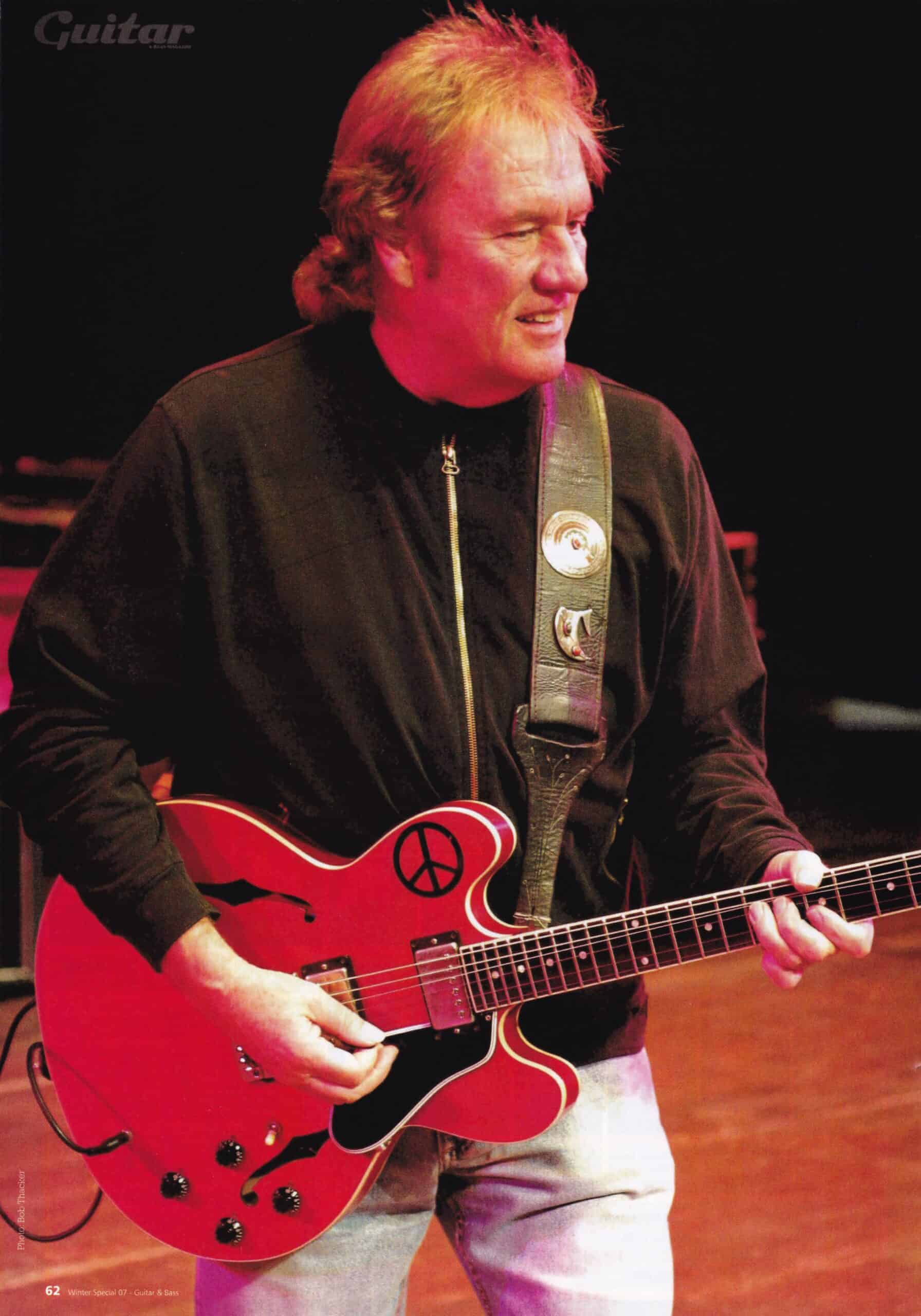
Guitar & Bass Magazine UK — Winter 2007
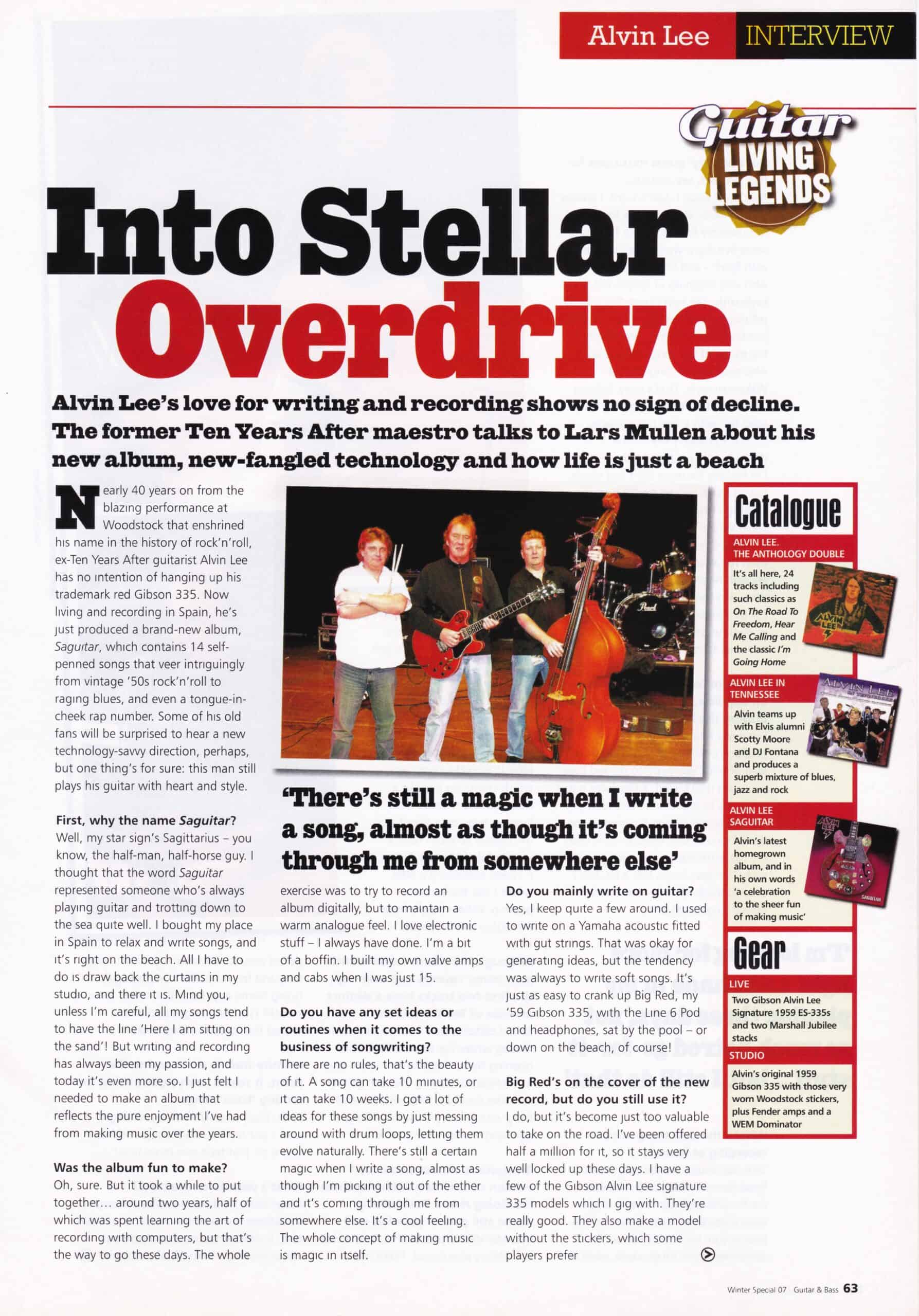
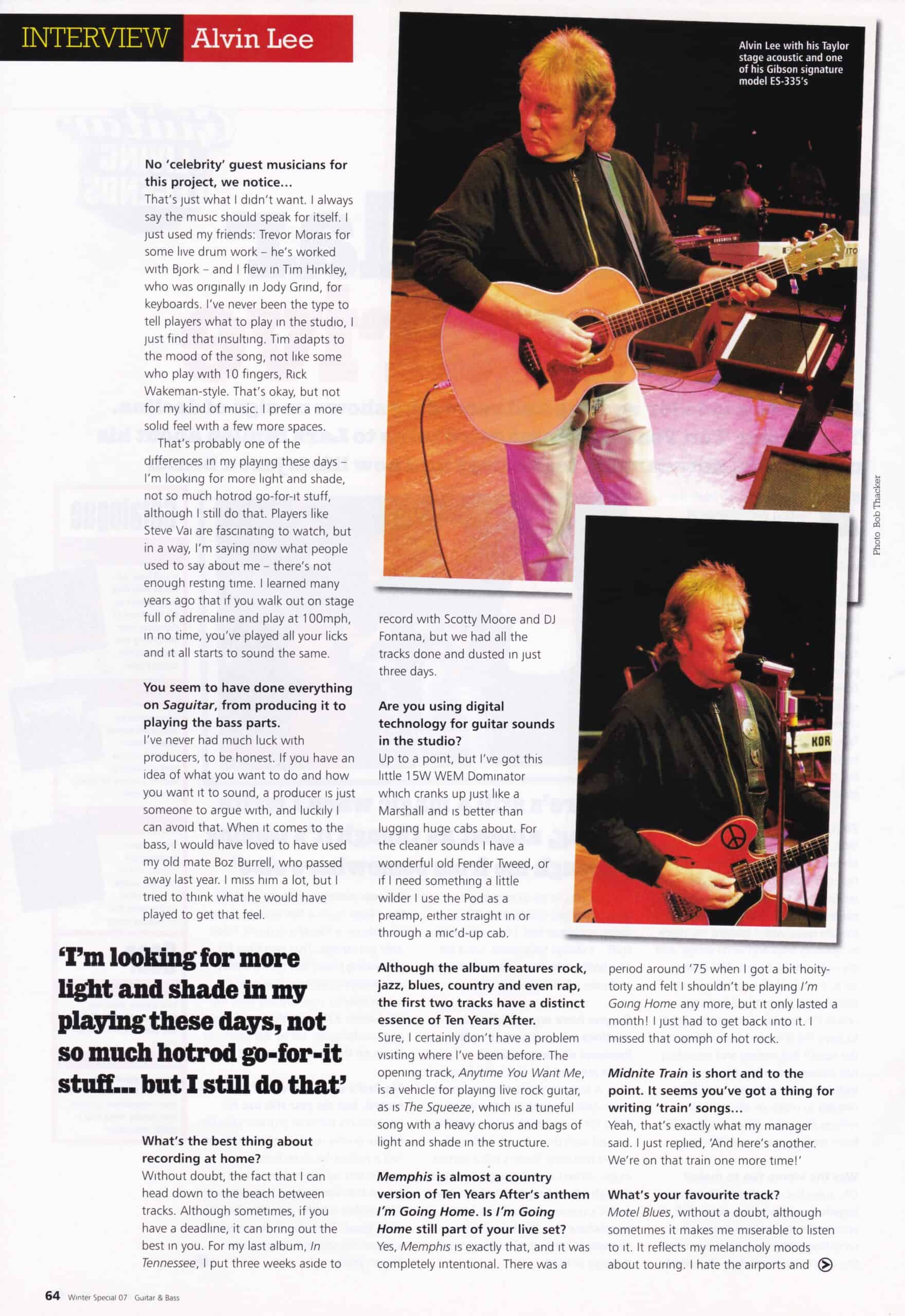
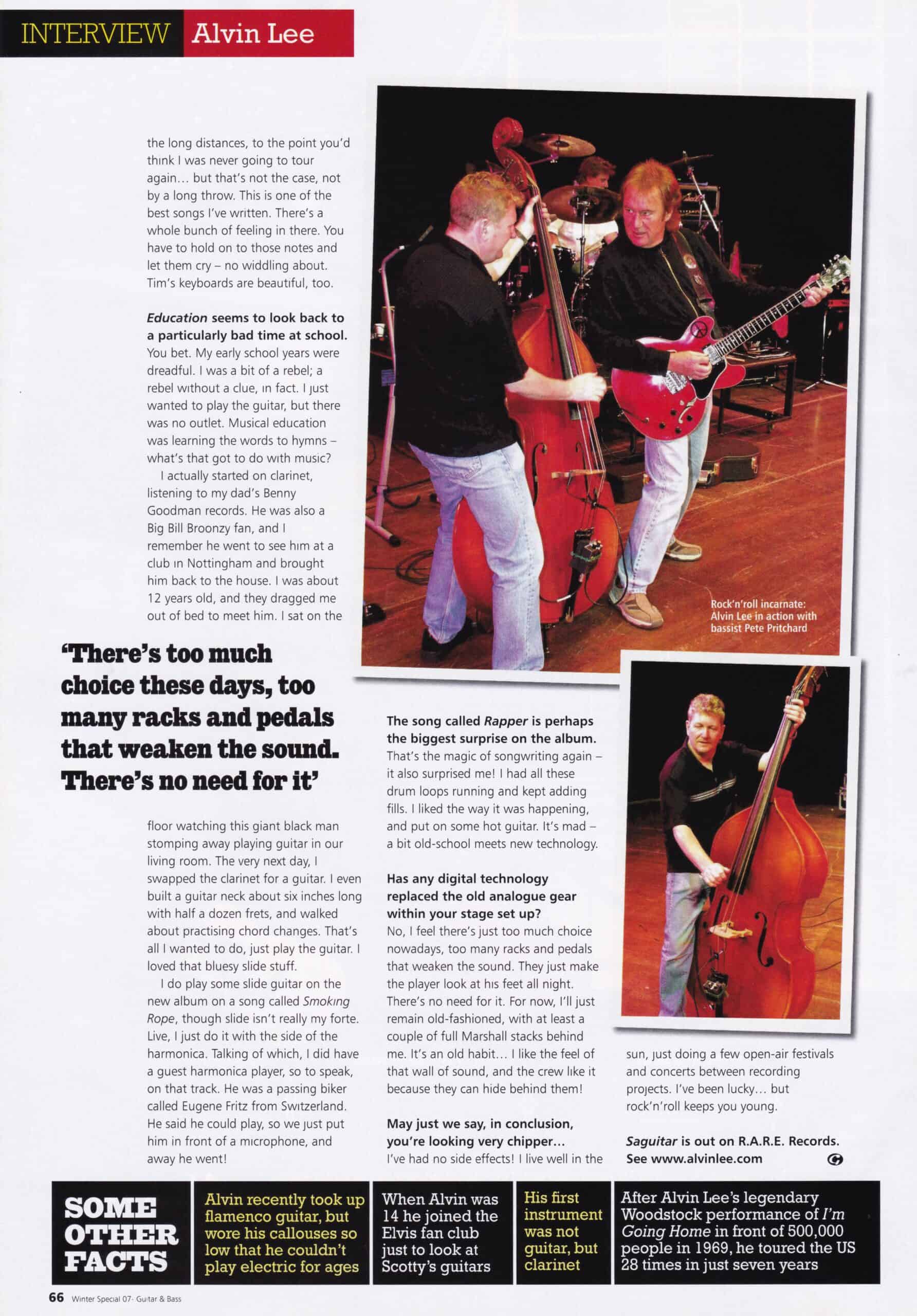
2008
Saguitar reviews
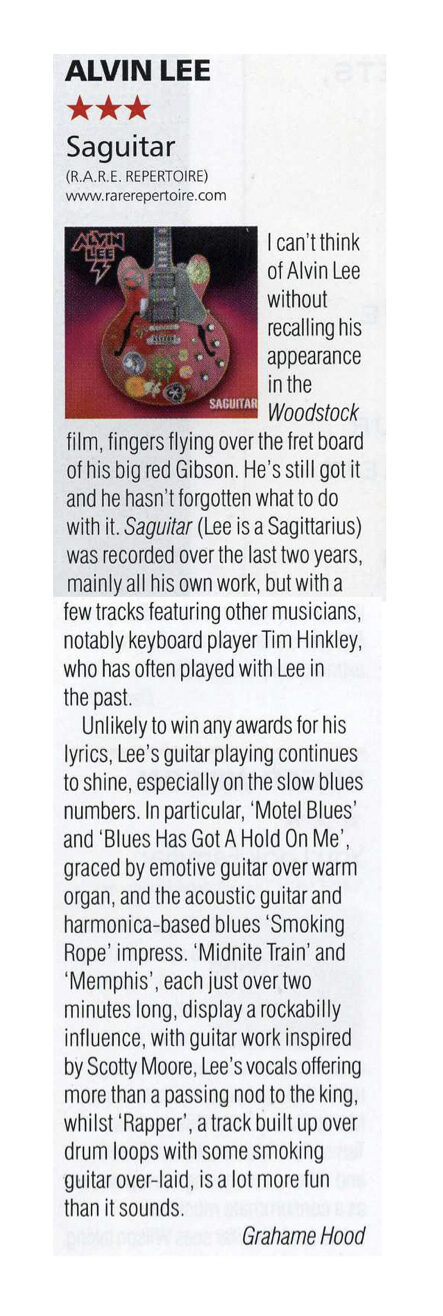
Rock’n’Reel – January 2008
Rock and Folk magazine (France) – September 2008
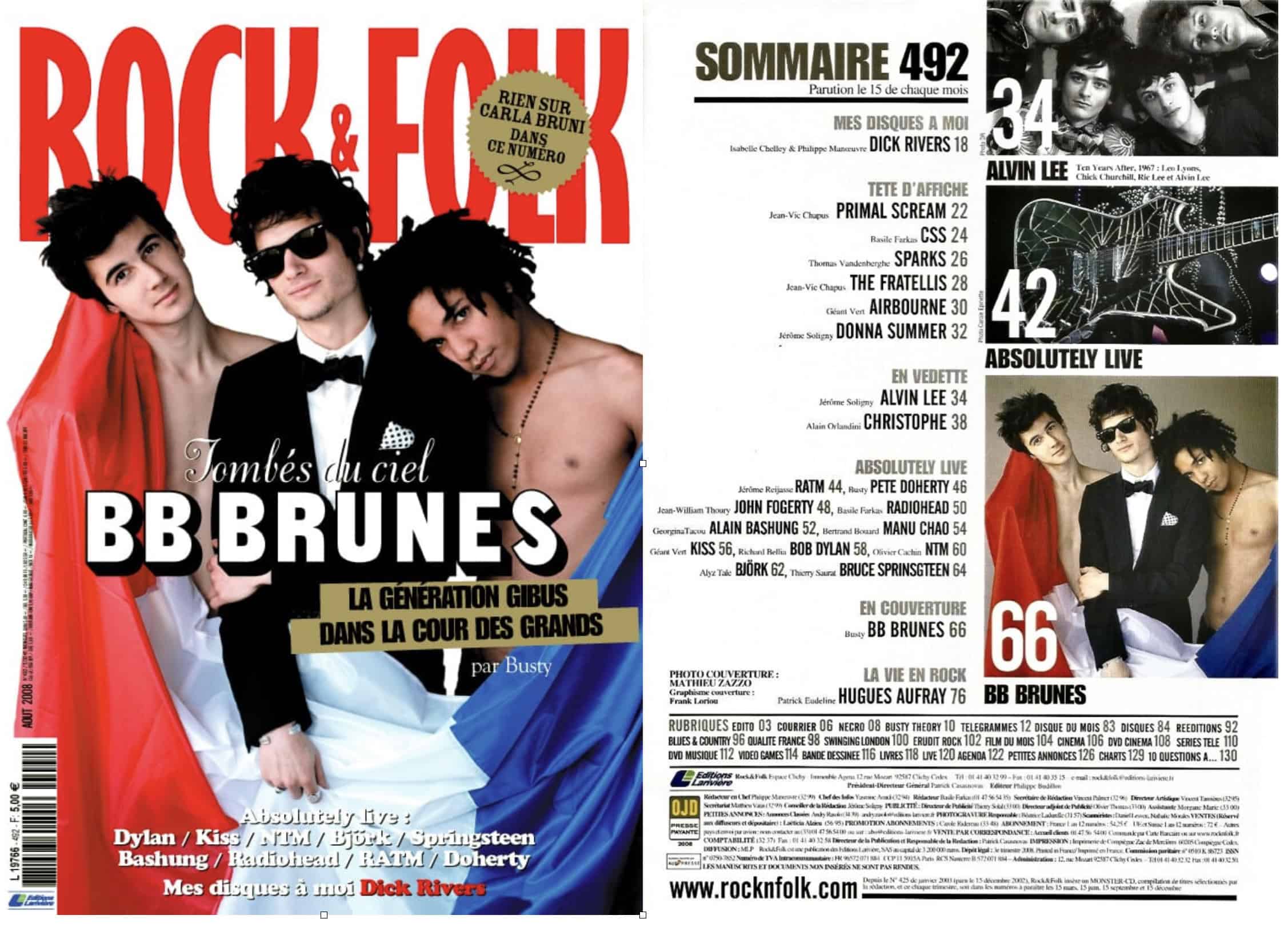
Interview
(English Translation)
TYA 67
R&F: Does your passion for blues come from your father’s record collection ?
AL: Yes – my dad Sam had an amazing collection of 78 rpm records. He was a keen collector of ethnic music recordings and had many recordings by Big Bill Broonzy who my folks actually brought back to our house after he had played a gig at a pub called The Test Match in Nottingham. I was 12 years old at the time and my dad woke me up and said “You’ve got to come and meet this man.” I sat on the floor looking up at this huge man playing my dads old 6 string guitar and I think from that moment I knew I wanted to be a blues musician. Also in my dad’s collection was Muddy Waters, Ralph Willis, Lonnie Johnson, Leadbelly, Sonny Boy Williamson, Sonny Terry and Brownie McGhee along with Piano Boogie Woogie by Pete Johnson and Meade Lux Lewis and negro spiritual groups like The Deep River Boys and The Golden Gate Quartet. He even had recordings under the title of Murderers Home which was recordings of inmates in a southern penitentiary playing and singing real chain gang songs and the like. It was a great musical environment to grow up in.
R&F: Which guitar players would you consider as your main influences ?
AL: When I started playing at 12 years old I was listening mainly to the great jazz players like Charlie Christian, Django Reinhardt and Barney Kessel etc but when Rock & Roll came into my life I was a big fan of Chuck Berry and Scotty Moore along with the usual guitarist’s favorites like Chet Atkins and Merle Travis from the country field.
R&F: What do you remember of the Hamburg days, what was a typical set-list then ?
AL: Chuck Berry, Jerry Lee Lewis and early Elvis. Hamburg was a crash course in sex, drugs and Rock & Roll.
R&F: What was Chris Wright’s role on your road to success ?
AL: Chris did a great job. The band was well capable of playing the top blues clubs but Chris took it a step or two further and secured us the residency at the Marquee which led to the Windsor Jazz and Blues Festival and eventually America. He never interfered creatively and gave me the freedom to do whatever I wanted to do. I remember once he said “Which would you rather be like, The Beatles or the Rolling Stones?” I said the Rolling Stones, the rest of the band said The Beatles. Fortunately TYA was not a democracy.
R&F: When you started to play at the Marquee, did you realize things were about to get bigger and bigger ?
AL: Well, playing the Marquee was pretty big for a kid from Nottingham. The roller coaster was already rolling and I was pretty much ready for anything.
R&F: Did you feel like a pop musician or more like a “serious” musician ?
AL: If ever I feel like a pop musician I’m gone.
R&F: What was it like playing the Fillmore and feeling America was starting to really love the band ?
AL: That was a dream come true, even better than a dream. The band was hot and well trained from a thousand club gigs and it was just so great to have those gigs and those people to play for. We were still an underground band and the Fillmores, the Kinetic Playground, the Boston Tea Party, the Grandee Ballroom in Detroit were just great gigs to play. I loved every minute of it and to me they were the very best of times.
Stonedhenge 69
R&F: How would you describe your music at the time ? Prog blues ?
AL: It’s as good as anything else. They are all just tags to put music in pigeon holes. It’s been called blues-rock, heavy rock, underground…it’s all just music to me.
R&F: What was the audience reaction at a TYA concert at the time ? Were they “stoned” listening to Stonedhenge?
AL: Not as stoned as I was.
R&F: Until 1974, most of the band’s activity has been touring, do you think you spent enough time on your studio albums ?
AL: No I was always fighting for more time for songwriting and recording. I actually finally put my foot down and stopped for six months to chill out and do some song writing during which time I wrote the songs for A Space In Time.
R&F: Even though you were a blues boom act, songs like “Hear Me Calling” were huge in the pop charts, how did you live with that? Did you consider yourself serious musicians?
AL: That wasn’t a problem as it was a good song with a good groove. It was not a pop song therefore it was not a problem.
R&F: That special song, “Hear Me Calling”, has been covered by Slade, what do you think of their version ?
AL: I only heard it recently. It’s quite good, but I’m not a Slade fan.
R&F: Most journalists of the 60’s, consider Woodstock as THE TYA’s crucial concert. Do you agree with that ?
AL: It was the movie which brought TYA to the attention of a wider audience. Some say it made TYA but to me it was the beginning of the end. I missed the underground venues like the Filmores and I did not enjoy playing the huge sports arenas and ice hockey stadiums. Woodstock at the time was a great experience only nothing really changed for a year until the movie came out.
R&F: What do you remember of it today? Was the hippie thing your thing? Was TYA a political band as such?
AL: No Politics at all. I was pretty much an idealist at the time. I really did think the young people could change the world and I believe we did. The only trouble is it changed back again while nobody was looking. Too stoned I guess.
R&F: Would you describe WOODSTOCK as a traumatic experience ?
AL: No, it was a lot of fun.
R&F: You played Woodstock again in 1994 with TYA, what was it like ?
AL: Rubbish, apart from being allegedly in the same field it was nothing like the original. The 1994 festival was a Total, commercial bullshit event.
Ssssh… 69
R&F: “Produced by Alvin Lee” mentioned for the first time. Production has always been important to you – do you consider the artist should “produce” his music rather than leave it to someone else ?
AL: Always. I would rather work with a good engineer than a producer. If the artist knows what he wants to achieve then he does not need a producer. They just get in the way.
R&F: Great cover – was the visual aspect important to you? or was it more like a record company’s choice?
AL: The very talented photographer John Fowlie and I worked on it together in Copenhagen. He took the photos, then we processed them in the dark room using a secondary light exposure technique called solarization. We even followed it thru to the printing to make sure the colors stayed true. I thought it was a fantastic cover and really captured the feeling of the time.
R&F: I guess at the time money was starting to be good being in TYA. Did it change your perception of things or anything at all between the members of the band ?
AL: There is only one thing that is inevitable and that is change. Money didn’t change anything much. We all had nice cars and big houses by the early 70’s but my apparent personal success brought out the egos and jealousy within the band which eventually lead to my leaving.
R&F: “I Don’t Know That You Don’t Know My Name” enhanced the folky side of your music – can you tell us more about this different musical color (as opposed to blues and rock’n’roll)?
AL: It was a folky influence. Possibly from Ralph McTell and Pentangle. I have a very open mind when it comes to music…. as I like to say “it’s all music.”
R&F: Same for “The Stomp”, rather funky ? – can you tell us more about this different musical color?
AL: I could go on for weeks about that but basically it’s in the feel and the groove. The Stomp was inspired by John Lee Hooker who is a master of the groove. I don’t care too much about the song, the chords or the structure as long as it’s got the groove.
Cricklewood Green 70
R&F: More and more hit records and singles – Did the success of tracks like “Love Like A Man” overshadow the work of the band ? I mean did you feel obliged to play the hits more? Same for “Going Home” – was there a time when you were sick of playing it? Do you sometime leaves the stage without playing it?
AL: Yes – I did rebel against the songs I felt obliged to play but in the end it’s how you play them and how they evolve that gets interesting. For a while I dropped them from the set, like when I did the In Flight album and tour I did not do any TYA songs at all. I played all new songs in an attempt to get away from what I called “the traveling juke box syndrome” where you play the same songs over and over again and it gets tedious. When Rock & Roll gets boring it’s time to move on to something else.
However, around that time I went to see Jerry Lee-Lewis in concert and he did mainly country songs and he did not play a lot of my favorite rockers and I came out of the theatre feeling really disappointed and I vowed I would never leave my audience feeling that way, so I came back to my rock roots with Ten Years Later, a real hard hitting energetic power house trio with Tom Compton on the drums and Mick Hawksworth on the bass.
R&F: How did you cope with the fact of being a touring band (on the road most of the time)
AL: It was great in the beginning but after the first million miles it can get a bit tedious.
R&F: This one ‘s produced by TYA – Does that mean the whole band was more implicated in terms of arrangements/production ?
AL: Not really, I just didn’t want to take all the blame.
Watt 71
R&F: Great production I think (one of my favorite albums of yours) – but no mention of who produced it on the cover – does “no mention” mean Alvin Lee?
AL: It certainly was not produced by Chris Wright as it says on the Chrysalis re-issue.
R&F: Can you tell us more regarding the contribution of Andy Johns?
AL: Andy Johns is the younger brother of Glynn Johns and was an excellent engineer. He did all the record engineering and when it came to mixing and putting the album together I brought in the links and sound effects that I had made at home and he really enjoyed that process. I always like to make an album into an entity of its own from beginning to end, rather than it being just a list of songs. We used to spend hours experimenting when everyone else had gone home.
R&F: Great cover (once again)! Does it mean anything special? Very psychedelic! Did drugs play a role in your musical inspiration as they did with Hendrix or The Beatles?
AL: Can’t remember….so YES
A Space In Time 71
R&F: No production mention again but enters Chris Kimsey (mispelled on the original cover actually) – Was he to play an important role in your sound or was he just an engineer ?
AL: Chris was a very good creative engineer. One of the best I’ve worked with. I learned a lot from him. If anyone produced the album it was Chris but I never bothered with production credits. The band would produce their own individual performances and I would work with the engineer and tie it all together and mix it. Everybody would come back to approve the final mixes so it was a joint effort in which everybody played their part.
R&F: The back photo is credited to you – Were you into photography as you are into painting now ?
AL: Yes – I have thousands of slides from those days as I always carried my trusty 35mm. Nikormatte
R&F: Does that photo mean anything? I mean broken guitars strings = tired of the band in a way…
AL: No – I was fixing it.
R&F: Great songs here (“I’d love to change the world”, “Over The Hill”) – Do you realise “I’d love to…” has turned into a peace anthem these days ? The peace sign was on your guitar – were you into that “make love not war thing”? Had it anything to do you with the fact you were playing the USA a lot at a time when the anti-Vietnam war thing was going on?
AL: Yes, Yes and yes. I was totally involved in all that and very frustrated that I could not do anything about it hence the words I’d Love to Change The World but I don’t know what to do, so I’ll leave it up to you…… and the best of luck.
R&F: Were you surprised the album was bigger in USA than UK ?
AL: No – America is bigger than the UK and by now Chris Wright had the big guns at CBS records involved. The corporate finger was on the corporate button. It was great at first but I came to hate it after a while. It was all bullshit and nothing to do with music.
Alvin Lee & Company 72
R&F: Your name on the front cover for the first time – Were you starting to escape from the band ?
AL: This album and title was actually nothing at all to do with me it was put out by Deram records as a compilation of singles and out-takes.
R&F: As it always happens, a new music style emerged at the time – You were playing blues and rock’n’roll when the whole glam thing exploded. How did you fit and live with it?
AL: I don’t change my music to fit in with fashions. My music is real and from the heart; Glam rock was crap.
R&F: How did you get involved in the movie “Groupie”? What do you remember of this experience?
AL: The producer said the movie was going to be called Rock 70 but I saw which way it was going and told him. “You know if this movie ever comes out it’s going to be called The Groupies” to which he said “Oh no it’s Rock 70”. Sure enough when it came out it was of course called The Groupies.
R&F: This record is some kind of compilation of non-album tracks. Are there more unreleased TYA/Lee tracks left in the vaults that would be worth releasing as some rarity anthology for instance? Were you pleased with the recent Fillmore concert release? Did you get involved in this process (Ric has written the liner notes)
AL: No, the story to this is very sad. Ric Lee decided to re-release all the TYA albums behind my back with bonus tracks that were never intended to be heard by anybody. I had to get lawyers to stop the release and take off the offending tracks.
Rock ‘n’ Roll Music To The World 72
R&F: “Choo Choo Mama” live favorite, again. How do you prepare a set-list today with so many great songs to play?
AL: No problem, I just pick the songs that are fun to play live.
R&F: At the time some critics started to use the word “old-fashioned” in their reviews – how did you live with that ? Did you think blues and rock’n’roll were more relevant than anything else ? Do you think the same today ?
AL: Fashions come and go but if you believe in what you do, you stick with it no matter what. If Rock&Roll and Blues became the most unfashionable music in the world I would still play it because I love it.
Recorded Live 1973
R&F: One of the greatest live rock albums of all times
AL: You are obviously a man of good taste.
R&F: Do you think your music was meant for the stage rather than records ?
AL: Definitely. They are two different mediums and the live stuff always came naturally to me.
R&F: Do you realize generations of guitarists have learnt (or tried) to play guitar with this double-album?
AL: Nice thought.
R&F: “Official TYA Bootleg” mention on the cover – How did you live with the bootleg situation at the time? What to you think of the pirate downloading situation today? Do you think recorded music should be free?
AL: Free music is fine. It’s not whether it is free or not. The point is the artist should be able to control what goes out. Quality control is very important.
R&F: Is “Recorded Live” the real deal – I mean no overdubs at all?
AL: Absolutely no overdubs. It’s a pure recording of what actually happened on the night.
Positive Vibrations 74
R&F: Ironic title as this album meant the (first) split of the band? Well, why did you finally split?
AL: Strangely enough because of negative vibrations.
On The Road To Freedom 1973
R&F: Not a “solo” album as such, but not TYA anymore – How did you meet with Mylon in the first place?
AL: I had met Mylon in America. We got on really well so I got his band Holy Smoke on to the TYA tour as opener and we used to hang out together after the shows and started writing songs together. That’s how the album came about.
R&F: Tell us a few words about the “dream team” involved here : Steve Winwood (whom I interviewed last month happens to have fond memories of this album…), George Harrison, Ron Wood, Boz Burrell, Jim Capaldi, Tim Hinkley.
AL: I hadn’t quite finished building the studio at Hook End and Mylon, Ian Wallace (drums) and Boz Burrell (bass) came down and we spent about a week putting up soundproofing and finishing off the studio. Then Mylon said “Where do all the musicians hang out man?” and I said The Speakeasy. He said “Right”, put on his zoot suit and went off to London. Six hours later, he came back and said “I got us a band, man.” He certainly did. In walked George Harrison, Steve Winwood, Mick Fleetwood, Ronnie Wood and Jim Capaldi. Mylon really had a silver tongue I can tell you.
In Flight 74
R&F: This is your first solo album as such and it’s a double live album very different from TYA – Was it like a double statement you wanted to make at the time : a) live music b) melting-pot of influences?
AL: It was those things and a lot more. It was Going thru the Door.
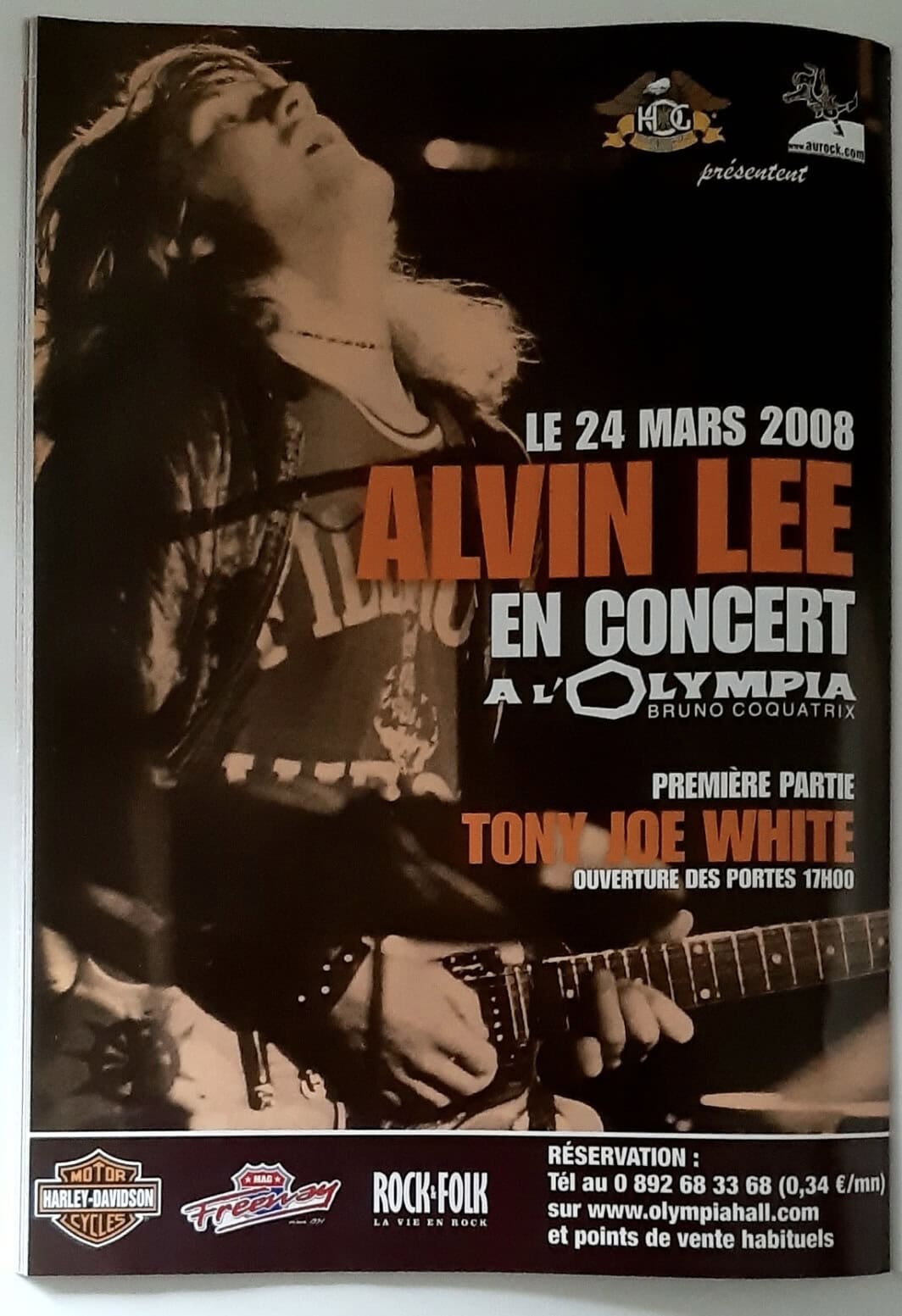
R&F: You really had a fantastic band at the time – a band o’ gypsies? Was it like paradise artistically at the time (you actually played “I’m writing you a letter” at the Olympia)? Would you like to restart a project like this in the near future, leading a family of musicians?
AL: It was heaven and hell and everything in between. When you put a band together of the best musicians, you know something’s going to happen but you can never be sure what! These days I much prefer playing live as a 3 piece. You are not restricted to pre-planned arrangements and there is more room to move.
R&F: You did tour the US again in 1975 with TYA? Was it due to prior commitments? How was the mood of the band then?
AL: It was kind of ‘One for the money, two for the money, three for the money and go cat go’. The band was over-toured and tired and nobody wanted it to go on at the time. I Had a good time myself but the general mood of the band was miserable. I used to hang out with the roadies all the time.
Pump Iron 75
R&F: When you went for a period not too easy to follow for your fans: recording and playing under different names (Alvin Lee & Co, Ten Year Later, The Alvin Lee Band…). Were you having a hard time finding the right formula or did you wish to experiment?
AL: They call me “confuse a fan”. Experiment is everything to me. I only wish I could be more experimental. Pump Iron was a lot of fun. I had found this fantastic drummer Bryson Graham and together with Tim Hinkley on keyboards and my all time favorite bass player Boz Burrell we recorded this album and had a great time doing it.
R&F: That cover has always been a mystery, anything to say about it ?
AL: The album was going to be called “Let the Sea Burn Down” but it was one of the few times I unfortunately let the record company interfere. They thought it would be a “good idea” to call the album Pump Iron after the title of a movie at the time called Pumping Iron. I was told they used Arnold Schwarzenegger for the session and painted Alvin Lee on his chest and although that was kinda fun it was a crap album title and cover and had nothing to do with the music. Thanks to the art department at CBS records.
R&F: There are good songs here but some tracks sound like your muses were playing tricks with you? Can your personal life and things you’re going thru as human alter your songwriting?
AL: Of course… everything artistic is a reflection of your life, your environment and your imagination and the imagination takes the thought one step further…sometimes into chaos.
Let It Rock 78
R&F: On the cover, it looks like you’re saying : “Hey, I don’t give a fuck about all this punk thing going on ! Me, I can rock !” Was releasing an album with such a title during punk heydays another statement ? You never followed any trend – Did you regret it at some point?
AL: No regrets at all. I am what I am, I do what I do.
Freefall 80 / RX5 81
R&F: The 80’s were difficult for most 60’s/70’s act – How did you cope with it? Was there a time when you thought your music was obsolete?
AL: I never thought that. I remember when the punk thing became popular and I was asked in an interview “Do you feel you have to step aside for the new wave?” To which I answered “ No I am the permanent wave.” I just had to sit it out and wait for people to come to their senses.
About Time 89
R&F: “About time”, does it mean it was about time TYA got back together?
AL: Yes
R&F: Why did you decide to get back together 15 years after the first split?
AL: We all make mistakes.
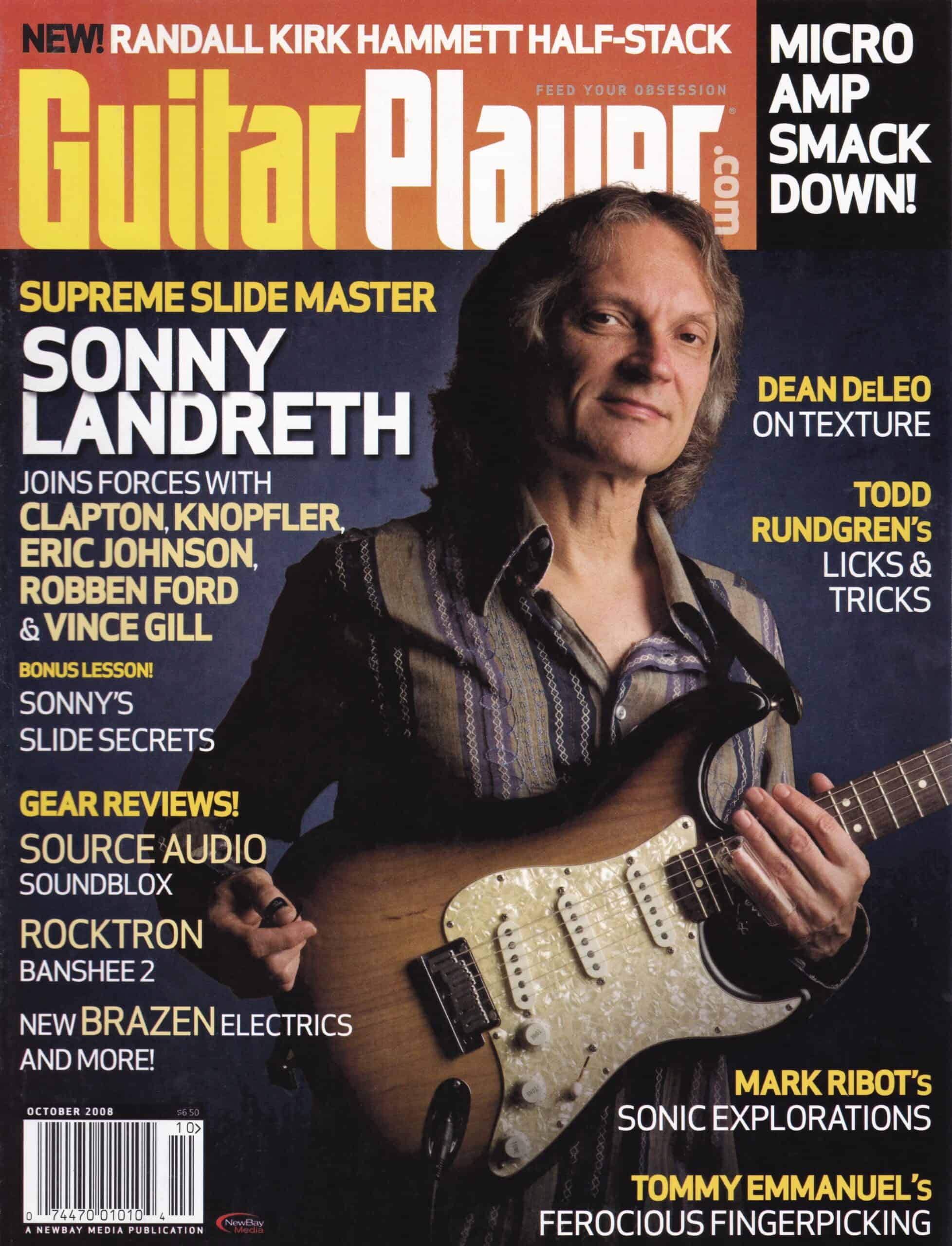
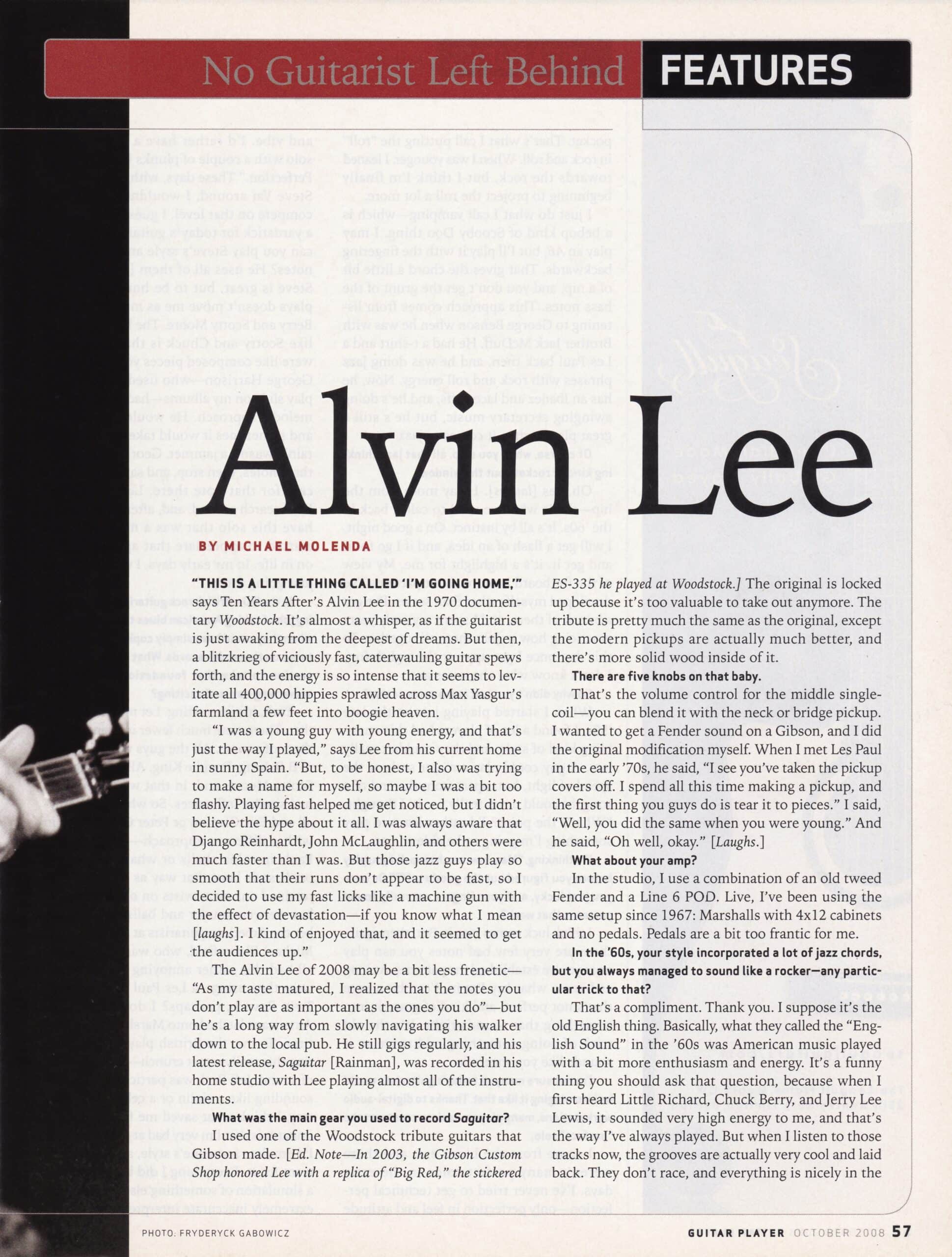
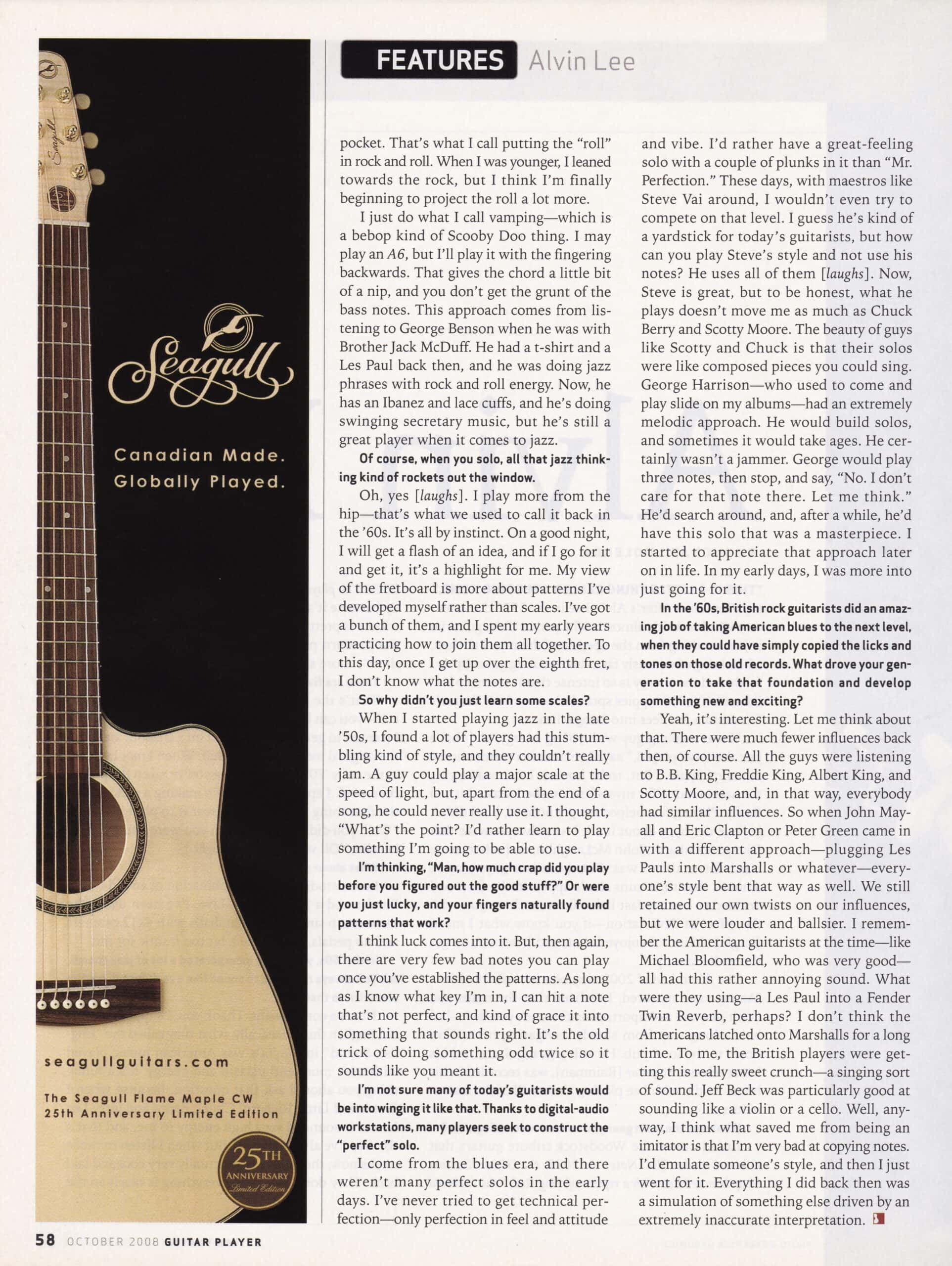
Guitar Player magazine (USA) – October 2008
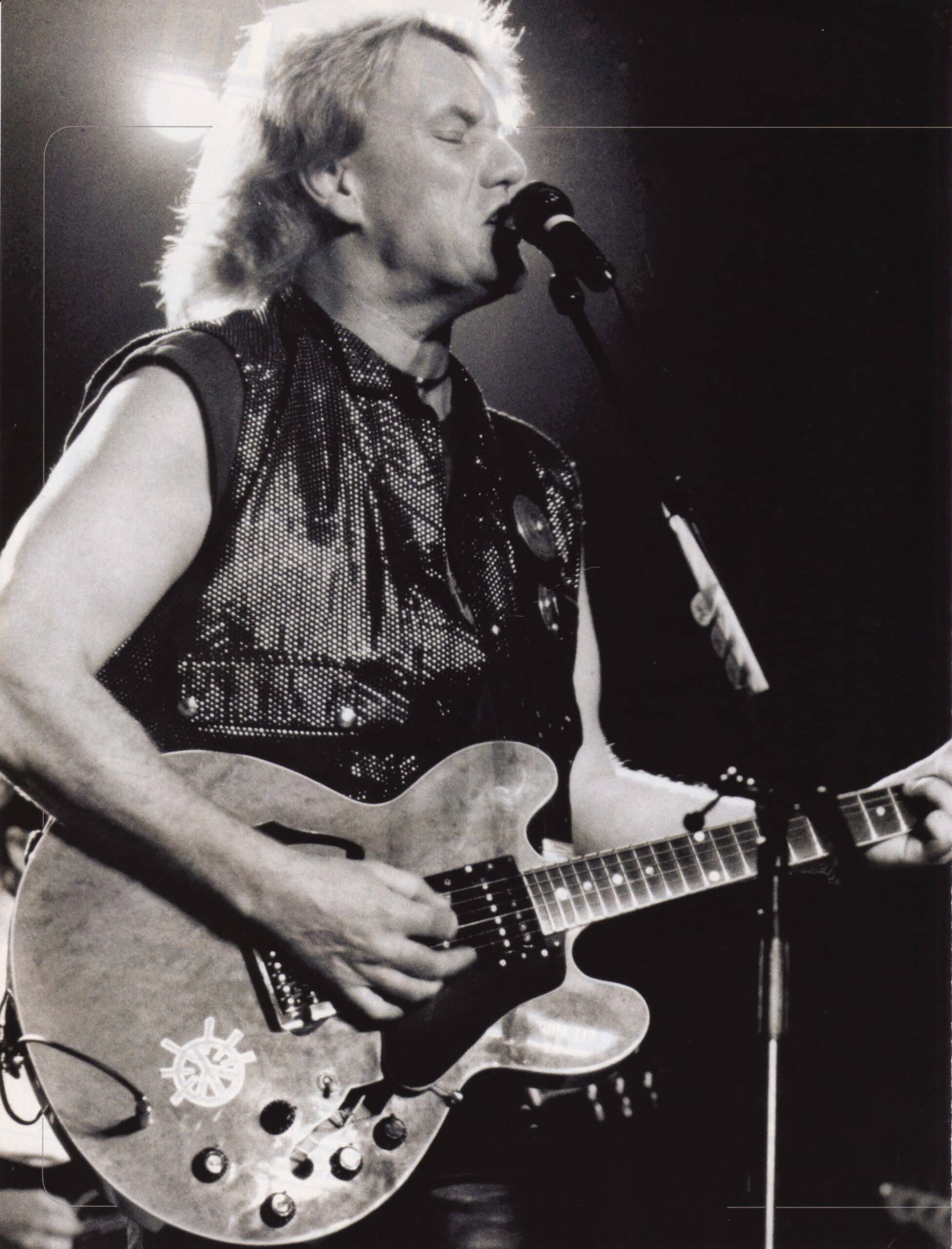
November 21, 2008 – 013, Dommelsch Zaal,Tilburg, Netherlands
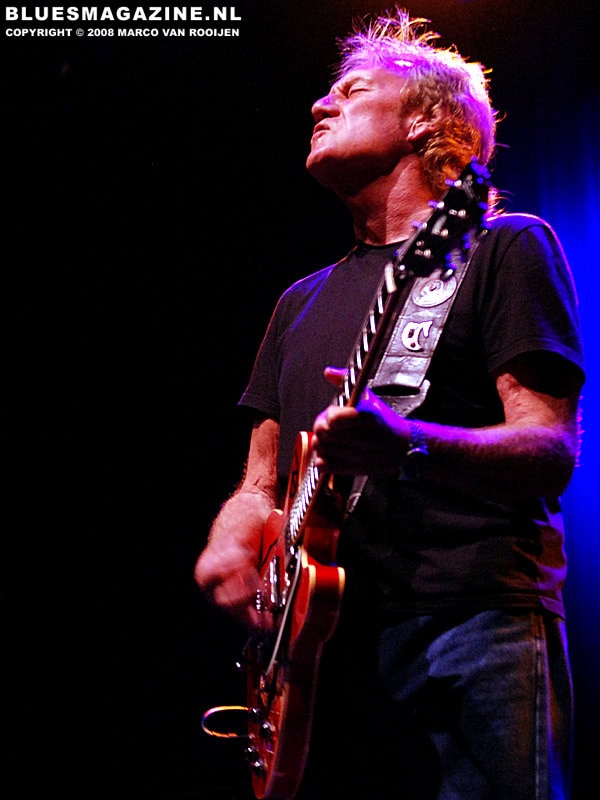
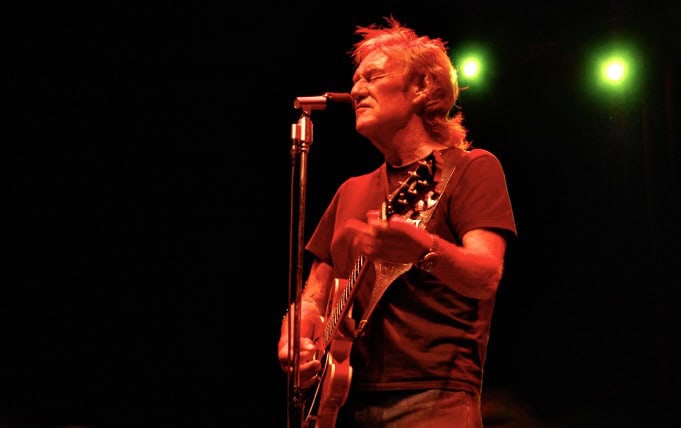
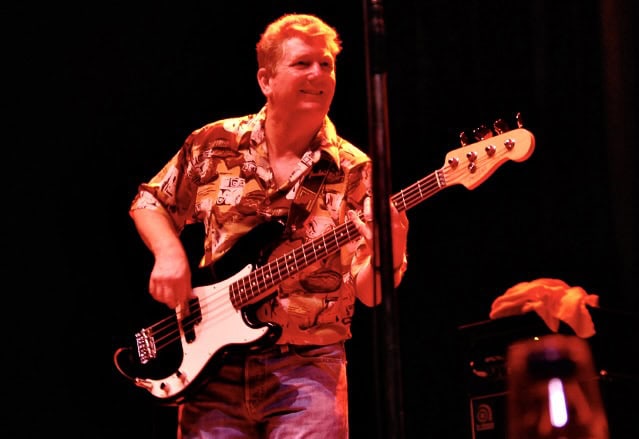

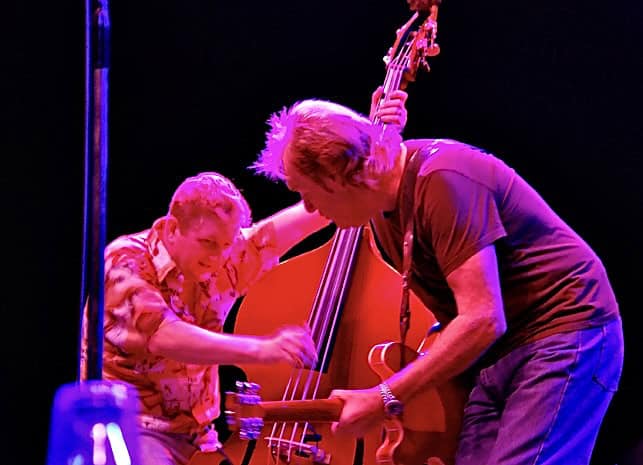
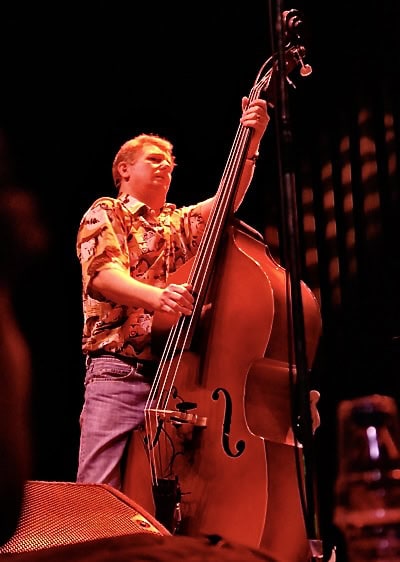
Alvin plays with Pete Pritchard (electric bass/double bass) and Richard Newman (drums)
Photos by Brigitte Scholz
Fan review:
I hadn’t seen Alvin live for about 20 years, so couldn’t help wondering how he might have changed, as we all have over the years. The thing about him is, he’s got so much technique and natural talent that he could, if he wanted, play at 80%, put on an ‘act’ and still make you enjoy it, But that’s not the man or his style… he takes you on an edge-of-your-seat ride that pushes you, as well as himself, to the limit. You can see him stretching to meet his own expectations, as well as those of the audience. and his own love of the music he plays, and that’s what sets him apart.
Tilburg was freezing with snow in the air on the coldest night of the year so far. It’s a typically Dutch town with even more bicycles than you ever expect to see. Lovely friendly and hospitable people there. The venue was a black painted cavern just along from a street of bars and cafes where, incredibly in the zero temperature, drinkers sat outside til after midnight. It had tiered steps up from the stage, holding about 1200 and it was packed with fans when Alvin came onstage at 10 pm on the dot, asked if they were ready to rock and roll, roared his red Gibson into life before they could answer. For me the set went by as something of a dazzling blur, with one familiar song after another being given the Lee treatment – a bit of Django or Charlie Christian here, bit of Franny Beecher or Scotty there and plenty of Alvin in between. Even a creditable solo flamenco piece between numbers. They loved him, singing and swaying along and raising a forest of arms to cheer and applaud at the end of every number. He often gets into places in his solos where you can’t see how he’s going to get himself out – but he always finds the way – and leaves you gasping when he pulls it off. This is how Going Home seemed, more than ever, this time. Picking it up, slowing it down, finishing on a high after he’s teased you just long enough. Then, somehow, having to top it off with an encore when you can’t imagine how he can give anything more.
I tried to make a comparison in my mind with how I saw him 20 years ago and before… the brain plays tricks, so I can’t be sure but here goes. If anything, his timing and phrasing have got even better – there’s less thunder and lightning, more balance and harmony. His voice has grown more into itself as an instrument. What never alters, though, is the excitement he generates, his passion and quest for perfection, for his own sake as well as for the fans. Don’t wait till he comes to see you – go and see him!
2009
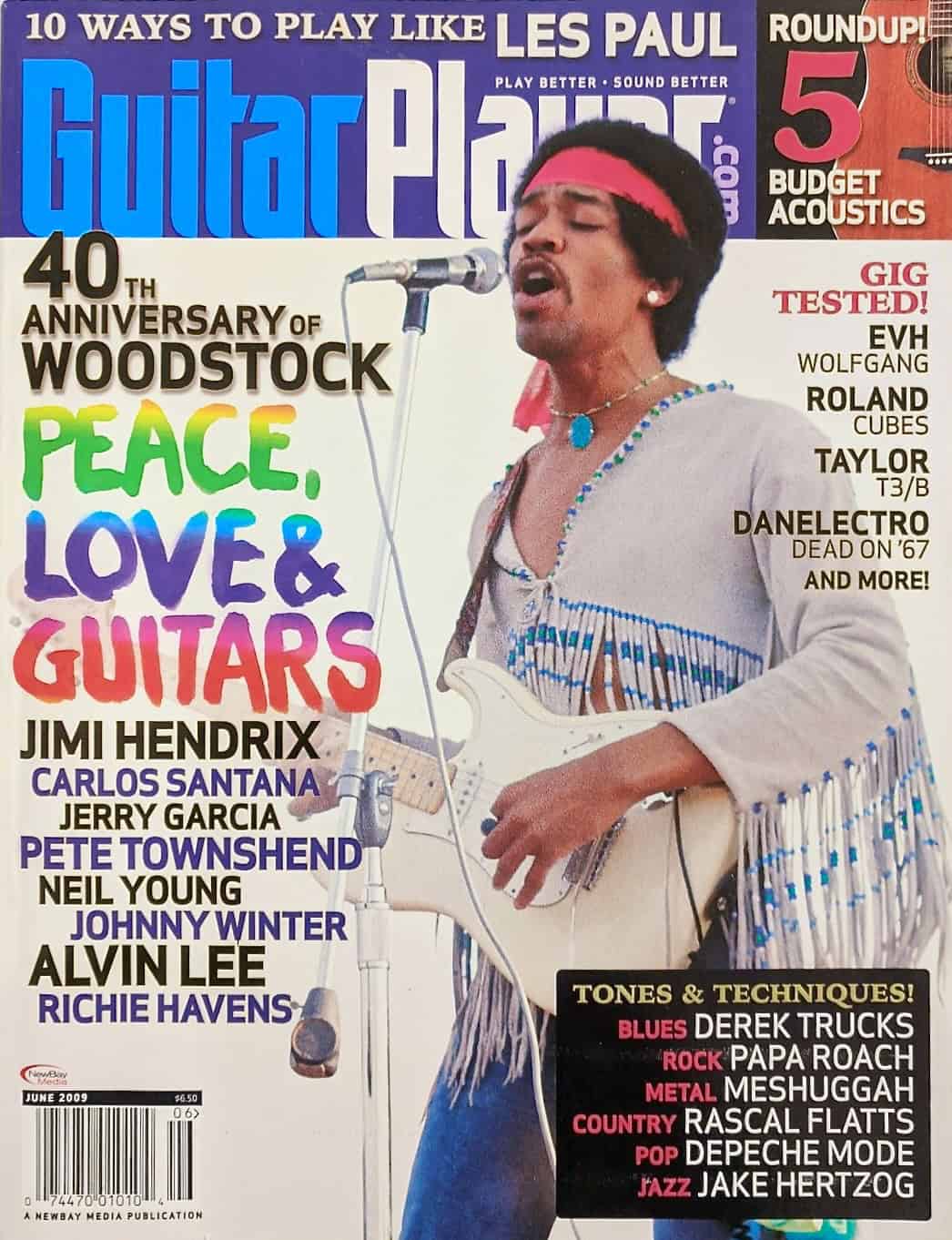
Guitar Player magazine (USA) – June 2009
July 2, 2009 — Avoine Zone Blues Festival, France
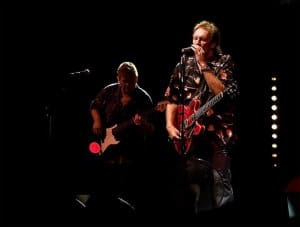
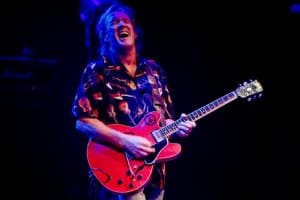
Photos by Th. Joubad
2010
July 17, 2010 — Jazz Open Guitar Night, Stuttgart, Germany
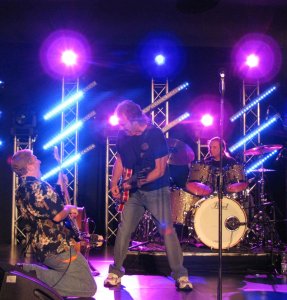
Alvin Lee and Evi in Stuttgart

September 25, 2010 — Budapest, Hungary
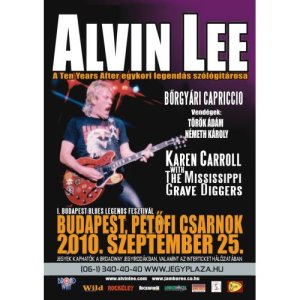
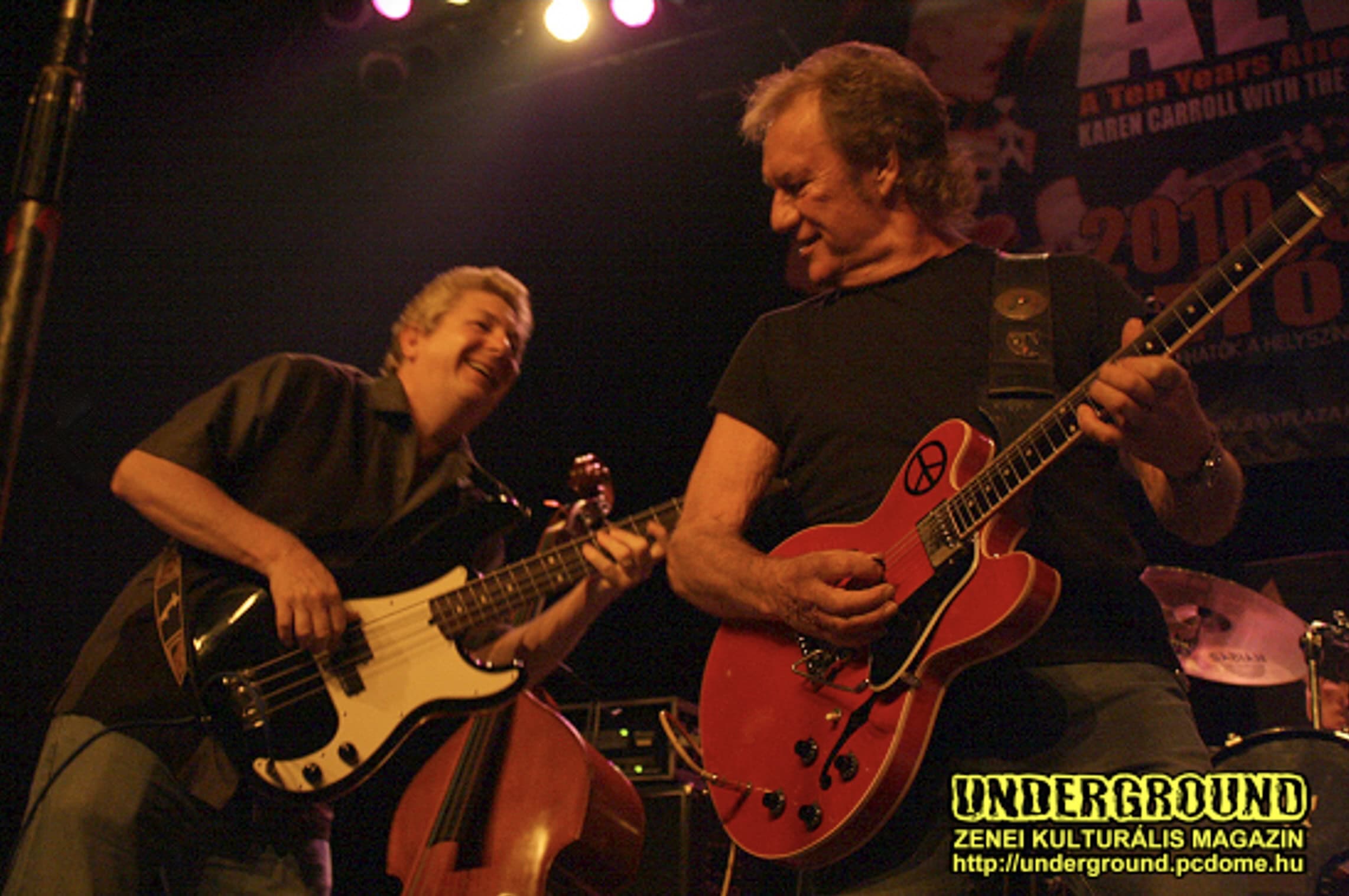


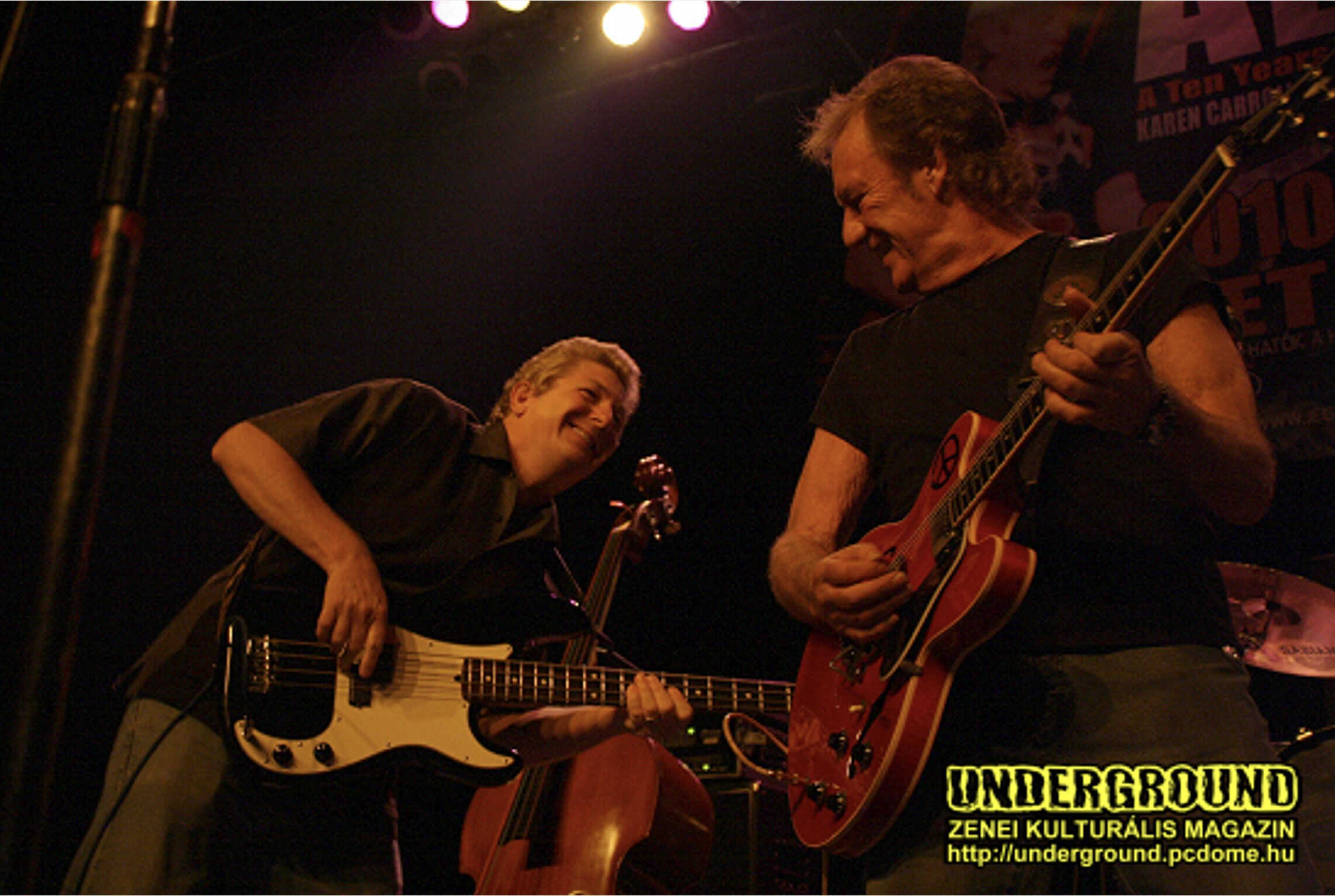
Photos by Fido
Ten Years After — “Think About the Times 1969 to 1972” – review

Ten Years After – “Think About The Times” – The Chrysalis Years – 1969 to 1972
A Box Set – Released 2010 – Pay Attention, This Is The One To Buy
Re-Mixed and Re-Mastered by Peter Mew who did the Beatles re-masters!
This three CD box set contains five albums with the re-mastering done by Peter Mew who also did the Beatles re-masters. The results are sonically magnificent. Contained in this set are the following: SSSSH – Cricklewood Green – Watt – A Space In Time and Rock and Roll Music To The World. There are also single edits that were previously unreleased / unavailable on CD format. Simply put, Ten Years After have never sounded better than this, and it’s excellently sequenced so that disc one has the first two albums, disc two contains Watt and A Space In Time, and disc three is devoted to Rock and Roll Music To The World.
It doesn’t get any better than this.
This set represents Ten Years After’s fourth through their eighth album in their catalogue.
This covers the high water mark for Ten Years After as their SSSSH album was released the same month that the band took to the stage at Woodstock and put on a performance that would see the quartet catapulted into the realm of super-stardom. All the tracks in this edition are of incredible quality, the sound being clear which really helps let the music take centre stage. Also included here are five single edit versions at the tail end of the albums that they originated from. These singles include: “If You Should Love Me” – “Love Like A Man” – “I’d Love To Change The World” – “Choo-Choo-Mama” and a live version of “Love Like A Man”. It’s also great to hear the evolution in the bands sound as they progressed during this period. As a group, they were way overlooked much too often, this set now allows someone to gather the band’s best four albums in a one shot deal. This will really allow someone unfamiliar, or who wants to upgrade their collection, to really engage the music from this legendary rock group. Alvin Lee is an incredibly talented guitarist, that when backed up by Ric Lee, Leo Lyons and Chick Churchill, is virtually like a steamroller coming through your speakers. I truly enjoyed listening to all the music that this box-set offers. I believe that any fan of Ten Years After, or rock music from that period in general would be overjoyed with this fantastic collection.
This collection offers up the meat and potatoes of Ten Years After’s onslaught. The re-mixing and re-mastering job here is excellent. If its been awhile since you’ve listened to this classic material, it’s refreshing to once again hear a great British Rock and Roll band playing at full throttle, with a little psychedelia, and recording experimentation of the day added. The fact remains, that if you’re a die hard fan of lead guitar work, then Alvin Lee during this period is just straight ahead shredding, with simple classic fundamentals, played at blinding speed.
This is the one for you.
Alvin Lee / Ten Years After is such a great unheralded band, that is only now starting to get their do. This set gets it and there is so much more to the Ten Years After / Alvin Lee catalogue, I recommend that you examine their history and check them out for yourself.
2011
July 16, 2011 – Guitar Festival, Porto Antico, Arena del Mare (Genova), Italy

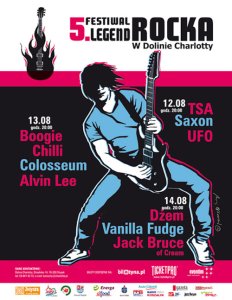
August 13, 2011 – Festiwal Legend Rocka, Dolina Charlotty (Slupsk), Poland

Pete Pritchard & Alvin Lee