“The Best of British Blues Tour 1996”
May 29, 1996 – Rochester, NY
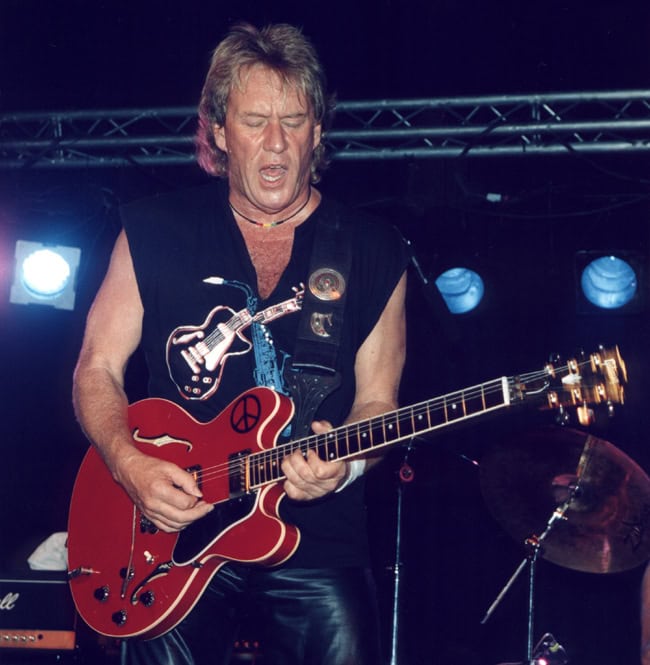
Photo Henry Kiecman
Ray Shasho Review

Those wild backstage party days of yesteryear are over. Classic Rockers are laid back and very approachable. After all, most of them are grand-parents now. I struck up a conversation with an older man outside a smaller venue in Washington D.C. It so happened that the man was Alvin Lee’s tour manager. With that same Fender Guitar in my hand, this reporter ended up hanging out backstage with legends Alvin Lee, Eric Burdon and Aynsley Dunbar.
This was when a band of veteran musicians got together for a short lived tour entitled, “Best of the British Blues” in 1996. Alvin even played my 1973 Fender backstage. I drove to the show in a white limousine and nearly gave Mr. Lee a ride to his hotel, if it weren’t for his girlfriend wanting to eat on the tour bus.
by Ray Shasho – far right in the photo
June 22, 1996 – Linz, Austria

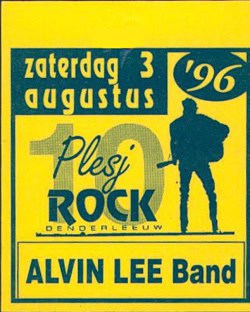
August 3, 1996 – Denderleeuw, Holland
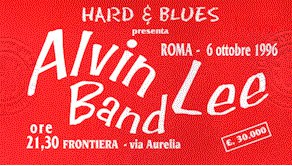
October 6, 1996 – Rome, Italy
SECONDS Magazine, No. 38 – September 1996


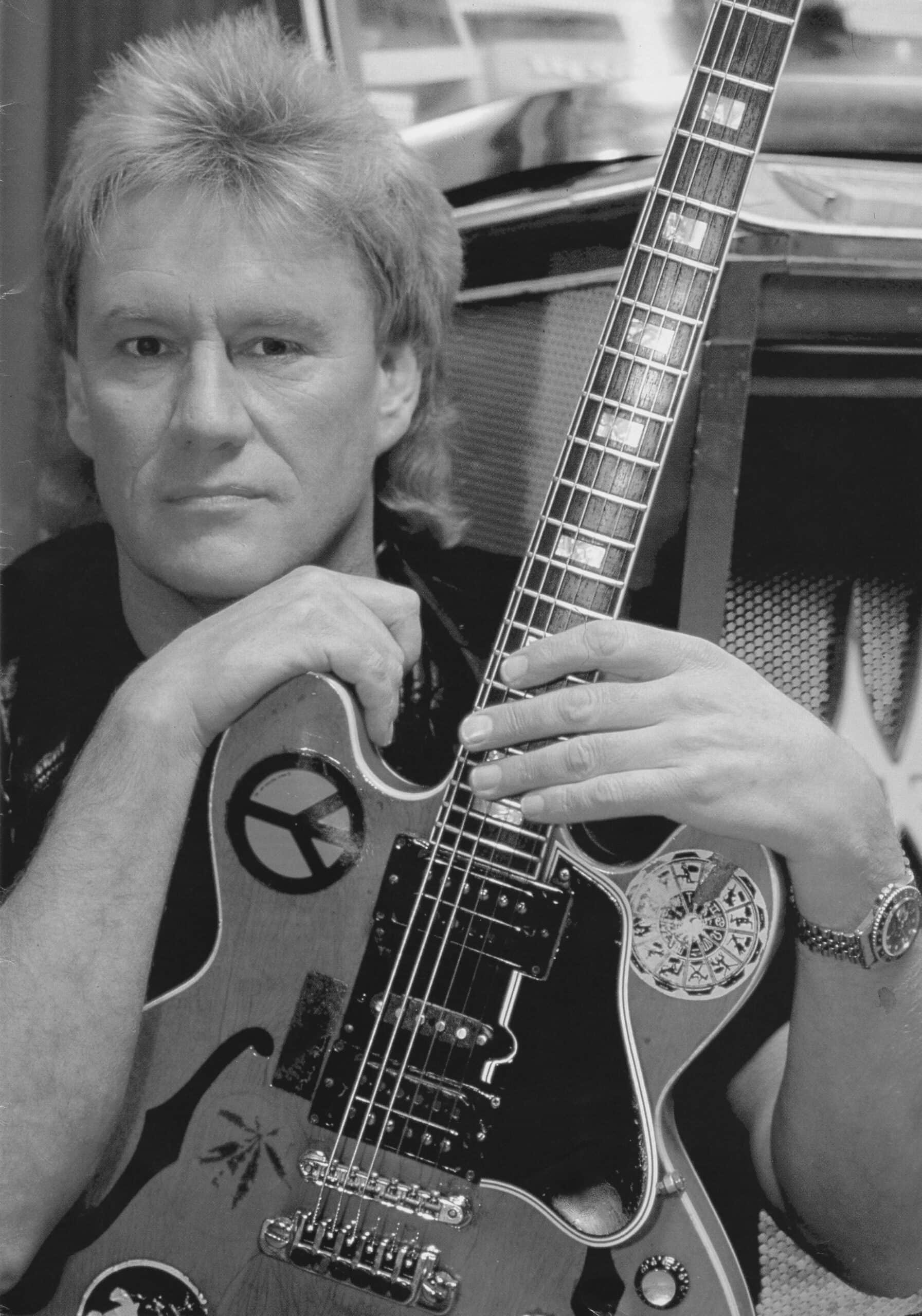
Interview Alvin Lee with George Petros, published in Seconds, No. 38, September 1996
The magazine Seconds was published from 1986 to 2000 by Steven Blush & George Petros, New York City
Seconds: What aspect of your work do you recognize in music today?
Alvin: Licks and tricks, really. There’s certain licks I play that I know I’ve developed that not many other people play. I never used to copy players. I was a big fan of Chuck Berry, but I never copied his solos. I’d emulate his style. Sometimes I hear my actual licks copied. I realize there are some young guys out there listening to me, like I listened to Chuck Berry. That’s an on-going thing.
Seconds: You are particularly noted for playing fast.
Alvin: The original “Captain Speed-Fingers” yeah. That was something that just happened, actually. I never tried to play fast. If anything, I tried to slow it down a bit. With the adrenaline of live gigs, it just used to come out that way. I never acknowledged that “Fastest Guitarist In The West” and all that because it just isn’t true. Django Reinhart was before us all and played much faster than anybody I’ve ever heard. A lot of Jazz players like Barney Kessel and John McLaughlin play much faster than me. I’l play light and shade, I’l play things slowly and then hit you with some rocket riffs. It’s nothing I set out to do – it’s quite the opposite; I always tried to hold it back a bit.
Seconds: What other qualities of your guitar playing would you like to be remembered for?
Alvin: I just play by feel, “from the hip”, as they say these days. I’m not musically trained. I’ve been asked to really know what I’m playing. I’ve developed a style where my fingers will do what my brain says, but I don’t get in the middle of that. It’s one of those things where I grit my teeth, dig in, and just play it. It’s an automatic thing. It doesn’t work slow; I forget where I’m going. I don’t play scales or anything like that — in my mind, scales are a waste of time. You learn to play a major scale but you can’t use it! It doesn’t sound nice. What’s the point of learning to play something that doesn’t sound nice? So I make my own scales up. I make scales that I want to hear. It sounds better and I can use it. I don’t think about my playing too much. I don’t sit down and practice this lick or that lick, I just play.

Seconds: What’s the center of gravity, the thing you come back to the most?
Alvin: The center of gravity is the guitar and me.
Seconds: I hear the word Rockabilly in connection with you …
Alvin: Yeah, I was a big fan of Scotty Moore. I met Scotty in Nashville. I had to say to him, “that second solo in Hound Dog – how did you play that?” He said, “I just grabbed a handful. I’ll tell you about another time I fucked up…”. It was a mistake. That’s what I like about Blues and Rock & Roll – sometimes the mistakes are the great bits. You make a mistake and it sounds good. That often happens when I’m playing live. I told Scotty a lot of us guitarist were trying to work out how he played this second solo to Hound Dog, and it’s a complete mystery, even to him.
Seconds: You don’t like your music to be too polished.
Alvin: I’m kind of an amateur engineer. I’ve got my own twenty-four track studio and I’ve always fooled around and made demos. Over the last ten years, I’ve got more and more involved with drum computers and synthesizers and sequences. It’s a lot of fun, but it led me astray a little bit. On the Zoom album, there’s a song called Jenny Jenny. It pleased me because it sounds like a Rock & Roll tune, but it was actually cut with a drum computer. On I Hear You Rockin’ I listened to some old Ten Years After songs and said, “How did we record then? How did the songs come about?” I remember sitting with the band in one room and playing tunes, so that’s what I did on this last album. It’s simple, but I clouded by technology. When I first started touring after I made the album, I did something I’ve always wanted to do. I went onstage and said, “I’ve just made a new album and now I’d like to play it for you”. I played the whole album from start to finish and it was great. Now, I’m playing a mixture of old favourites because I think the audience would like to hear the classic cuts, as well as the new stuff.

Seconds: What do you regard as your classic stuff?
Alvin: I’m Going Home – Love Like A Man – Good Morning Little Schoolgirl – Slow Blues In C – I’ve just started doing I Hear You Calling again.
Seconds: How was Ten Years After different from other Blues Rock bands of that time?
Alvin: Ten Years After was never a very happy band. It was a constant war, which made the style what it was. I was playing rocket riffs, the bass player was playing rocket riffs, the drummer was playing a constant drum solo, and a lot of the time it was very frustrating. I wanted to hear a bit of backbeat, but the band was so busy – everytime l’d take a solo, everyone else would take a solo at the same time.
Seconds: But you had the final word, right?
Alvin: Yeah, to a point. I never told a musician what to play. It’s far too corporate. If you want a happy musician, if you want a contribution from the guy, he’s got to be playing what he likes.
Seconds: Yet you were together a long time …
Alvin: It was enjoyable, but I started to move toward solo projects because I wanted to move on and try other things. The first solo album I did was On The Road To Freedom – which was a little statement in itself, and it was strongly influenced by Country Music. It was a whole different feeling. I had Ian Wallace playing simple drums and Boz Burrell (from King Crimson and Bad Company), who was one of my favourite bass players. After playing with Ten Years After, where everything was a racket and solos, suddenly I was playing with Wallace and Burrell. I’d start a Rock & Roll song, and instead of them coming crashing like I was used to, they’d come in with a neat half-time feel. To me, that was great. I’ve always liked to do different things; I don’t like to get stuck in a rut too much. I’ve always experimented with music. I hate the kind of person who sits down and says, “what’s popular? What the people want to hear, I’ll play that.” That’s too contrived. I always like the music I play. I’ve gone astray a few times, I must admit. Record companies say they want you to record something that’s popular so it can get played on the radio – I tried it a few times and it never worked. The radio stations say, “this isn’t Alvin Lee’s stuff. We want the real Alvin Lee.” I’ll stick to my guns and play what I like and it’s more rewarding. If you do have some success and it’s come from your heart, it’s much more rewarding.
Seconds: Ten Years After albums were very referential to Psychedelia, but they were also Blues albums.
Alvin: That was all part of that Sixties feel. On the second album Ten Years After did, the live album called Undead, we just played in a club and recorded it. I heard it back a couple of days later and thought, “this is great, this is the band playing the best they’ve played. Where do we go from here?” I was quite worried, I thought I’d peaked. I didn’t know what else to do. The way my mind went then was, “I’ve done that, so let’s experiment in other regions”. I suppose the Psychedelic era was on us and I was playing around with mind expansion as much as anyone else, and I guess it just came out in the music. I was always trying to not get tied down by any particular bag.
Seconds: Was the drug scene an integral part of the music?
Alvin: Not integral, but inspirational in a way.
Seconds: Did that all change?
Alvin: It has now for me – but not that recently! I’ve been a heavy user for a long time. I only cleaned up my act quite recently.
Seconds: An intoxication ritual is a great motivator for music.
Alvin: It is and it isn’t. Inspiration is hard to get, and anywhere you can get it, you get it. I’ve never been into heavy drugs at all. I was a pot smoker, I took LSD, and I found LSD to be quite inspirational.
Seconds: Did you do it when playing live?
Alvin: I have, in the bad old days. Once at the Fillmore West, as I walked on stage, the chemicals took over. I hit a test note on my guitar and I heard it hit the back of the wall and hit everybody’s head on the way back and bounce up. Most of what I remember about this gig is what people told me afterwards. I know I played Slow Blues In C and then said “Now I’d like to do Slow Blues In C” and played it again. All the fans were giving me very strange looks. There was one point where I was playing this solo, finished the solo and thought, “what song is this?” I came back playing another song. I got away with it, nobody wanted their money back. Things like that tended to happen at the Fillmore West.
Seconds: Did drugs take a toll on your contemporaries?
Alvin: When people started to die, that was not funny. I’ve always been very against heavy drugs. I’ve never been in the same room as Heroin. If anybody ever started to strap their arm up, I’d make it known that I disapprove and walk out. I’ve seen too many go that way. But smoking pot is harmless. Acid’s probably a bit risky, but you can’t be too safe in this world, can you ? I was quite a late starter in drugs. I never wanted to be reliant on anything. I liked the way I was going and didn’t want to change anything. The first time somebody gave me some Speed Pills, I was so worried that I made myself sick and spewed them out.
Seconds: Do you consider Cocaine one of the heavy drugs?
Alvin: I don’t consider it heavy, I consider it a waste of time and money.
Seconds: Did you see its effect on people around you?
Alvin: Yeah, I was a late starter on that too. I used to say, “how stupid putting white powder up your nose”. Eventually, I started doing it myself, as well. That led to three day jam sessions, out of which nothing came except a lot of rubbish. There was a time where I thought, “I don’t see the way out of this”, and suddenly I got fed up with the stupid lifestyle and just stopped. I’m healthy, happy, and I’ve got something in the bank now, which I never did when I was into that stuff.
Seconds: Your sound became more complex with albums like Watt and Cricklewood Green.
Alvin: I think an important part of music is evolving, and the band evolved, not necessarily for the good, but I think it’s best that a band does evolve, rather than stand still. We could have played that same style and become a cardboard cut-out band and made enough money to live fine, but I wanted more than that. I wanted personal creative rewards; I wanted to feel I was doing something more important than making a living.
Seconds: And the offer to play Woodstock …
Alvin: That just came about in the middle of a tour. I didn’t recognize it as anything different until I got there.
Seconds: It was a real demarcation point in your career.
Alvin: In retrospect, yes, but it was the movie that did that. The band was playing the Fillmore West, Fillmore East, Kinetic Playground, Boston Tea Party … the underground. We’d play to 1,000 to 2,000 people at the most. They’d be right up front, sweat dripping down the walls. Some of the best gigs I’ve ever done were those kind of gigs. We played the Woodstock Festival – great experience – but for a year we carried on playing club gigs. It wasn’t till the movie came out – that silver screen, larger than life feeling, and suddenly I found we were playing basketball stadiums and ice hockey arenas. You’d think playing to 20,000 people in arenas is making it, but it was horrible, I hated it. Having played clubs all my life, I suddenly found myself in ice hockey arenas where you’d finish the number and the sound continued on for another thirty seconds – huge barriers, so you couldn’t see the audience – and in those days, they didn’t have security guys; they had real cops with guns and cotton wool in their ears. I was playing to the back of coppers heads and thinking, “what am I doing this for?” People were shouting for Going Home through every number, and I got very disenchanted with that.
Seconds: If you didn’t enjoy playing the arenas, who was making you do it? Management and Record Companies?
Alvin: Pretty much. I wanted to do it at first. You think that’s what you want; you have to actually get it to find out it isn’t what you want. I used to walk onstage with everybody screaming and shouting – it didn’t seem like I had to do anything. With everything I did, they weren’t really listening to it. Nobody was picking on it. I’d play a rotten show, everybody would come back afterwards and say it was great. I’d play a good show, and everybody would say it was great. I don’t think anybody really knew. Generally I wasn’t getting any feedback. It’s a very unreal situation. My hero’s are Blues Musicians and I was becoming a Pop Star, which I didn’t want. A lot of people will say Woodstock made Ten Years After, but in fact it was the beginning of the end. At that point, disenchantment went on. To me, it was a big trap. I was constantly plagued by media obligations; it was ridiculous. I was doing twenty interviews a day and by the time it came time for the gig, I didn’t know where I was. I actually made the decision to de-escalate that thing. I stopped it. The managers, the record companies the agents, they all said, “Alvin, you can make millions of dollars”. I said, “what’s the point of having millions of dollars if I’m crazy?” I didn’t want what was happening to me. I stepped out of it and there’s no regrets. I’m playing a club tonight and that’s what I love doing. I’m glad I’m not playing Madison Square Garden tonight.

Seconds: Tell us about A Space In Time.
Alvin: A Space In Time was me making a break. After the Woodstock Movie, I had no time to write songs. I was writing songs in the taxi on the way to the studio. The band would say, “what have you got” and I’d make a song up right there. It worked; it was natural. I still write songs like that nowadays, but at the time I thought it ought to be harder than that. I wanted to struggle, I wanted to sit up all night writing. So I said, “I want six months off to write songs”. That was the first time I heard, “but Alvin, you could make a million dollars in the next six months”. Nobody could understand I didn’t want that.
Seconds: How was the band politics concerning money?
Alvin: Everybody was a bit burned out with these auditoriums, to be honest. I wasn’t the only one. The other guys quite liked making lots of money, whereas I thought it was distasteful, I didn’t think I deserved it. With A Space In Time, I said I was taking six months off. I wanted to be proud of the music I made. I’d Love To Change The World was one of the songs on that album I was really happy with.
Seconds: On The Road To Freedom with Mylon LeFevre was a real departure from the Ten Years After sound.
Alvin: I was trying to get back to some sanity and get away from Rock & Roll. When I did that, I realized that wasn’t what I wanted either and I came back to Rock & Roll. I went to see Jerry Lee Lewis and he was playing Country & Western. He didn’t play Whole Lotta Shakin’ or Great Balls Of Fire and I was really disappointed. I came out of that gig and I thought, “if people come to see me and I didn’t play I’m Going Home, they’re going to come out of the gig feeling like I feel”. It’s ok being an artist and playing what you want, but if people are paying money to come and see you, then you’ve got to give them something of what they want. That night, I went back to my band with Ian Wallace and Boz Burrell and said, “we’re doing I’m Going Home tonight”. I finally came full circle and came back to Rock & Roll and found it’s what I did best.
Seconds: It seems you’ve managed both your fame and your money pretty well.
Alvin: Yeah, by the skin of my teeth.
Seconds: You’ve probably had former millionaires looking to borrow ten bucks from you.
Alvin: It happens, sure. If you want security, there’s no security in the world. If you’ve got a million pounds, somebody can steal it from you. The only security I’ve ever found as a musician is that I can sing for my supper. I can do a gig and make money to live.
Seconds: Did you have contemporaries that lost their resources and looked to you with resentment?
Alvin: Most of those guys didn’t care. They were so out on a limb, they didn’t realize what they had and when they lost it, they didn’t realize it either. You make the best of what you’ve got, don’t you ? It’s not so much the guys that made millions and lost millions, it’s the guys that made millions and never got it. There’s lots of that, guys that had hit records and never saw a penny because of their crooked manager. I was lucky, I had a manager who used to say he was ninety percent straight, so I figured I got ninety percent of the money coming to me.
Seconds: How about your subsequent band, Ten Years Later?
Alvin: The name in itself was an anniversary, it was ten years after Ten Years After. There was a time around 1973 when I didn’t have any interest in the band anymore and the manager said, “You could have any musicians you want, Just call it Ten Years After. Keep the trade name”. To me that was very distasteful. I wanted to leave that and start again.
Seconds: I get the idea that you just considered yourself a guitar player in a group called Ten Years After, and were bothered by the fact that people fixated on you.
Alvin: It was never intended to be that way. It was a communal group, but obviously the singer and lead guitarist will be in the spotlight ninety percent of the time. I was getting bad vibes from the rest of the band. They were a bit miffed, that I was becoming the front man. That really started the rift within the band; they wanted to do interviews, too. So the manager would say, “Chick Churchill’s going to do the interview instead of Alvin Lee”, and the people would say, “we don’t want him, we want Alvin”, and the resentment built.
Seconds: In your current music, what do you look for?
Alvin: The feel. If it feels right, it’s good.
Seconds: If you experience a huge resurgence of popularity and someone calls you up saying, “Alvin, we want you to play Madison Square Garden”, what will you say ?
Alvin: I’d probably do it. I’ve learned a lot of lessons. Now I’ve got control, I know what I’m doing. In those days, I didn’t know what I was doing. I was pretty lost and the drug haze didn’t help. When you get to my age, you learn to make things easier for yourself. When you’re twenty three, you seem to be intent on making things hard for yourself – “how many drugs can I take and still play?” I’d give playing Madison Square Garden a whirl, I’d try and put over my music the way I want it to be. But I don’t think there’s too much danger of that happening.
George Petros about Alvin Lee
His music ought to be playing in the lobby of the Rock & Roll Hall Of Fame. And someday to be enshrined.
Ten Years After came as close to being “Underground” as a band could get in the late Sixties. They were raw and scruffily flower-powered. Despite their down-the-road sound, they aspired to virtuosity and speedy delivery. It was a time when albums were becoming more important than specific songs (thanks to the FM radio revolution) and there was zero nostalgia in music marketing, the Blues being something new to the White market. Ten Years After, who cranked out unfolding jams for hours on end and mixed genres with ease, were perfect for the emerging expansion of styles and attention spans. They enjoyed substantial recognition due to the sophistication and curiosity of the day’s audience. Lee’s unique guitar frenzies demanded that often he was mentioned along with contemporaries Eric Clapton, Jeff Beck, Jimmy Page, Peter Green and others.
You’ve heard Lee do his thing as Ten Years After’s big hit I’d Love To Change The World echoes Muzak-like over the drone of our planet, where no clatter can drown out his soaring post-Psychedelic guitar riffs that served as prototypes for many later mainstream Metal stylings. And you’ve heard Ten Years After’s Woodstock workout of I’m Going Home, in which Alvin Lee lays down some of the fastest Blues in history. But, what else do you know?
Long Before Ten Years After’s Woodstock Showcase, Alvin was a teenage Blues Wizard in early Sixties England, even playing with John Lee Hooker in London. In 1960 Alvin paired up with bassist Leo Lyons for gigging in an array of groups such as The Atomites, The Jaycats and The Jaybirds. Drummer Ric Lee joined Alvin and Leo in 1965, after which they pursued a sound with an emphasis on Hard Blues. 1966 keyboardist Chick Churchill joined The Jaybirds, they changed their name to Bluesyard and in 1967 the assemblage had released a self-titled album as Ten Years After on Deram Records. Subsequent recordings in 1968 and 1969 like Undead, Stonedhenge and Ssssh. were highly regarded discs that established Ten Years After in the burgeoning Rock underground.

In the year prior to Woodstock, they wowed audiences at the Fillmore West and New York’s Scene Club with a Hyper-Blues, that was equally kaleidoscopic and pyrotechnic. Growing out of the underground, post-Woodstock Ten Years After became a marketable commodity and jumped from Deram Records to Columbia. After 1971’s A Space In Time and 1972’s Rock And Roll Music To The World, Alvin and crew had moved up to headlining status in America’s biggest venues. But Alvin was reluctant to assume “Rock Star Stature”.
He instead built a studio in his home and together with American Mylon LeFevre recorded an album entitled On The Road To Freedom (1973 – on which superstars such as Steve Winwood, George Harrison, Ron Wood and Mick Fleetwood guest-stared on).
By 1974, Alvin Lee had obviously enjoyed his time away from the Rock & Roll ruckus of Ten Years After – so much that he put together a nine piece band around Mel Collins and Ian Wallace (both of King Crimson) Alan Spenner and Neil Hubbard (both of Joe Cocker’s Grease Band) and keyboardist Tim Hinkley. They recorded a Live Album of non Ten Years After material, and called themselves ‘Alvin Lee and Company’ and the album In Flight.
However, while Alvin’s solo adventures were taking place Ten Years After recorded one final album called Positive Vibrations. After a “farewell tour” in the US in summer of 1975, Alvin started anew; the next years saw Alvin Lee release albums such as: Pump Iron, Let It Rock, Rocket Fuel, Ride On, Free Fall and RX5.
The Seventies turned into the Eighties and you know that story; Punk Rock, New Wave, Electro Pop, Rap and all the rest – but Alvin continued to boogie right through it all. During that period, playing in Alvin Lee’s group was one of the best gigs an old-school rocker could have. Down on their luck musicians like ex-John Mayall and Rolling Stones guitarist Mick Taylor and ex-Stephen Stills Manassas bassist Fuzzy Samuels found gainful employment with Alvin.
After 1981’s RX5 album, Alvin was not ready to make the move into hi-tech AOR pabulum like so many of his English contemporaries – he did tour and write songs and doing recordings with different musicians like George Harrison, Jon Lord, Joe Brown, Boz Burrell, Tim Hinkley, Steve Gould. Finally released the sturdy album Detroit Diesel in 1986.
After playing four concerts in 1983, one for the 25th anniversary of the Marquee Club in London (at which Ten Years After had a weekly resident gig in 1967) and one at the Reading Festival (at which Ten Years After played last time in 1972), end of 1988 marked the return of the original Ten Years After with a new album About Time in 1989, their first recordings in the US, in Memphis at Ardent Studios, and subsequent Ten Years After tour which went on till December 1991.
It was a pleasant affair for those involved, but there was an apparent oldie-but-goodie “Remember Us?” look to it all. Not looking to go the eight shows at the amusement park route, Alvin detached himself from the Rock Conglomerates and joined up with the New York based label Viceroy, releasing the albums Zoom in 1992 and I Hear You Rockin’ in 1993. Today you’ll find Alvin touring the world in smaller clubs, plays music to an audience who are there to see Alvin Lee and his guitar roam the plains of the great American Blues and Rock & Roll.
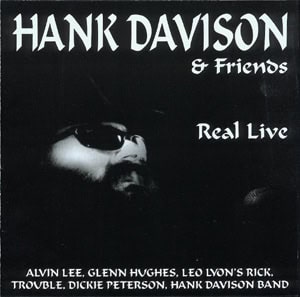
Hank Davison & Friends – Real Live – 1996

1. Get Your Kicks On Route 66 – Trouble – 3:12
2. Feel Good About It – Leo Lyons Kick – 6:07
3. Living It Up – Leo Lyons Kick – 4:21
4. Intro (B.T.B.W.) – 2:06 – Hank Davison Band
5. Panhead `49 (Born To Be Free) – 4:01 – Hank Davidson Band
6. Come On and Say Yeah – 5:03 – Hank Davison Band
7. Nutbush City Limits – 4:25 – Hank Davison Band
8. Prisoner Blues – 3:27 – Hank Davison Band
9. Slow Blues In C – 6:53 – Alvin Lee & Hank Davison Band
10. Summertime Blues – 4:49 – Dickie Peterson & Hank Davison Band
11. Hoochie Coochie Man – 7:46 – Dickie Peterson & Hank Davison Band
12. The Liar – 4:36 – Glenn Hughes & Hank Davison Band
13. Highway Star – 6:01 – Glenn Hughes & Hank Davison Band
14. She’s Gone – 5:47 – Trouble
Produced by Hank Davison – Recorded live at the Biker Union Annual Meeting in Schleiz / Germany – Recorded by Signon Sound Engineering – Live Mix by Thomas Schafer – Engineered and mixed by Mike “Spike” Streefkerk at Park Studios, Munich, Germany – Mastered by Manfred Melchior at M.M. – Sound, Gütersloh, Germany.
The Bands:
Trouble
Ralf Scherer – Blues Harp / Vocals
Klaus Wittor – Guitar
Rolf Bredtschneider – Bass Guitar
Rudiger Gniesmer – Drums
Leo Lyons’ Kick
Leo Lyons – Bass Guitar / Vocals
Tony Crooks – Guitar / Vocals
Jon Willoughby – Guitar / Vocals
Mark Price – Drums
The Hank Davison Band
Hank Davison – Vocals
Wolfgang Schludi – Guitar
Patrick Wieland – Guitar
Lewis Glover – Blues Harp
Goth Krumbach – Keyboards
Eberhard “Erbse” Heinrich – Bass Guitar
Markus Becker – Drums
Special Guests with the Hank Davison Band:
Alvin Lee – Guitar / Vocals (Ten Years After)
Glenn Hughes – Vocals (Deep Purple)
Richard “Dickie” Peterson – Bass / Vocals – Founding Member of “Blue Cheer”.
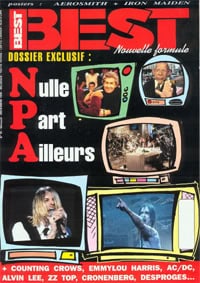
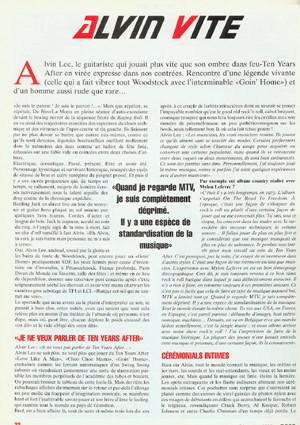
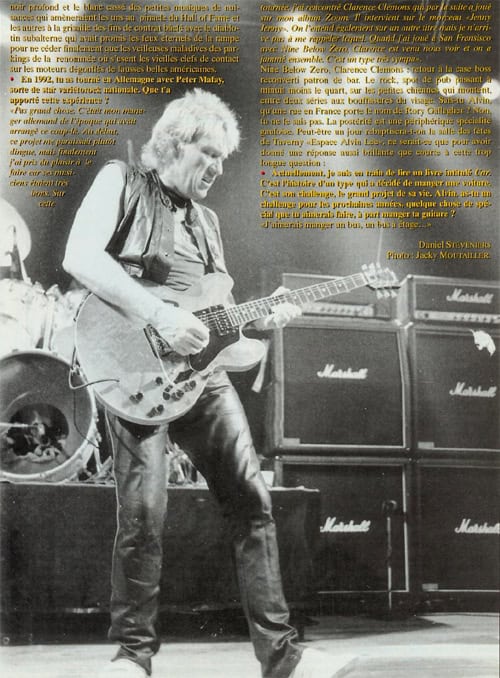
December 1996 – BEST Magazine

click to enlarge
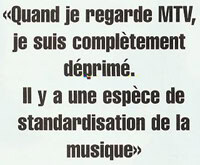
Translation:
ALVIN VITE
Alvin Lee, the guitarist who played faster than his shadow in the late Ten Years After on an express tour through our lands. A meeting with a living legend (the one who made all of Woodstock vibrate with the interminable “Goin’ Home”) and with a man as rough as he is rare…
“I’m the boss! I’m the boss!…” Words repeated over and over by De Niro/La Motta during a self-exorcism session in front of the boxing mirror in the final scene of Raging Bull. Thus go those muscular trajectories superimposed on a chaos of technical virtuosity and uppercuts and left hooks. They end up no longer having to fight against themselves, against what they have become—bloated legends oscillating softly in the memory of ages like a party balloon finally deflated onto a weak video or wedged between two referee chairs.
Electric, acoustic. Past, present. To be and to have been. A hysterical character and a historical survivor, rescued from excesses of speed in the arms and another regime of the pressed wrist. And then there are those sacred projectors which, from time to time, light up again—cigarette butts of light nervously crushed under the sharp talent of the chronicler on duty.
Battling Jack live, driven by memory, and guitar hero planted in A minor by a few transfixed fans. Steel strings and blues language. Jack the jester, perched at the corner of the death blow, gives a knowing wink to fast Alvin. “Eh Alvin, you see, I fought but no one knocked me down.”
Yes, Alvin Lee, undead, stunned by glory and the Woodstock crowd baths, can still play a “Goin’ Home,” practically SDF (homeless), eyes closed for reasons of involuntary blindness or for sale, in Pétaouchnok. Deep France, Paris Divan du Monde or Taverne, function room; and even in this place of perdition, give a post-concert interview after carefully drying his hair and having just vigorously shaken up the cameras—gross sabotage of TF1 and LCI. “Put that lens away, it can’t see me!”
The show we had the pleasure of attending that evening took place behind closed doors, among initiates, those who know that all this is more or less theatre of the absurd where no one is fooled but where, perhaps, everyone deplores the excessive weight of “what is said” and the empty obligation of “what is not said.”
“I DON’T WANT TO TALK ABOUT TEN YEARS AFTER”
Alvin Lee: “I don’t want to talk about Ten Years After…”
Alvin Lee no longer is, no longer wants to play in Ten Years After. “Love Like a Man,” “Choo Choo Mama,” “Goin’ Home,” strung together like the automatic forces of a Swinging cabaret where people would come to consume a kind of peaceful damnation—perpetual members of the academy of hits and standards. One could paint the picture like that. But behind the bragging displayed by the trickster on the return trip and beyond a somewhat soft extension of musical imagination, manifests itself loudly and clearly the unalterable know-how and his soul brother the feeling, which brings everyone back to the land of emotion.
In short, we are indeed dealing here, right away and even three times over, with a couple of miraculous scamps without whom the imperturbable lumberjack that is good old rock ’n’ roll—noisy cabin boy, cosmic trooper—could not do without. He will once again make our ears smile with his slightly outdated rock-fan number on the edges, but so good where it hits hard!
Alvin Lee: “Real musicians remain. They play what they love without worrying about fashions. Some performers change style according to the mood of the times in order to acquire or maintain a certain popularity, but when they find themselves between two waves or two movements, they are very embarrassed. They are like fish out of water. Personally, I have always played the same music, even if I sometimes have done a few experiments with other musicians.”
For example, this country album made with Mylon LeFevre?
“It was a long time ago, in 1973. The album was called On The Road To Freedom. At the time, it was a way of moving away from rock ’n’ roll or at least from a certain way of playing that no longer suited me. You know, all that circus—the concerts in stadiums with overbidding technical means, the sound volume… You had to play louder and louder and I felt that my music lacked more and more substance. I was losing all interest in my work within Ten Years After. That’s why afterwards I tried to venture into other styles. It was a way of rediscovering myself as a musician. The experience with Mylon LeFevre is a good testimony in my discography. That said, I have always come back to that good old basic rock in which I finally found my roots. There’s nothing to be done—we always return to our first loves. It’s not as easy as that to make this kind of music today; MTV has damaged everything. When I watch MTV, I’m completely depressed. There’s a kind of standardization of music. Everyone listens to the same thing. You go to the USA, to France, to Spain—it’s the same everywhere: a flood of images, metronomic beat, machines… Tomorrow we’re going to Belgium and what’s working over there at the moment is jungle music; and we’ll arrive with our rock ’n’ roll show! I have the impression of making heretical music. Most young people have never heard this music and yet, in a certain way, they know it.”
INTIMATE CEREMONIALS
Of course Alvin, everyone knows music, the idiots and the stars, the deaf and the hard of hearing, the old and the young, etc. But when the music is over, turn off the light. The outrageous spots and indiscreet flashes do not appreciate intimate ceremonies. These sleeves without surprise that would open with pleasure like nyloned thighs with photos on vinyl, those faces of angry beginners who hung on to the wild and dark complexion, claiming Chuck Berry, Al Kooper, Robert Johnson and that other Charlie Christian from a time already gone.
• In 1992, you toured Germany with Peter Maffay, a national rock star. What did that experience bring you?
“Not much. It was my manager at the time who arranged that deal. At first, the project seemed rather crazy to me, but in the end I enjoyed doing it because the musicians were very good. On that tour I met Clarence Clemons, who later played on my album Zoom. He appears on the track ‘Jenny Jenny.’ We can also hear him on another title but I can’t remember which one. When I played in San Francisco with Nine Below Zero, Clarence came to see us and we jammed together. He’s a very nice guy.”
Nine Below Zero, Clarence Clemons: back to square one, boss converted into bar owner. Rock, pub sport spending at quarter to midnight in small provincial bars that annoyingly get in between two series of face beatings. Do you know, Alvin, that one street in France bears the name of Rory Gallagher? “No, I don’t know.” Posterity is a specialized provincial periphery. Perhaps one day the Taverne function hall will be renamed “Espace Alvin Lee.” Wouldn’t that be enough to have given as brilliant as it is brief an answer to this overly long question?
• At the moment, I’m reading a book entitled Car. It’s the story of a guy who decided to eat his car. It’s his challenge, the big project of his life. Alvin, isn’t a challenge for the coming years something special you’d like to do—apart from eating the guitar?
“I’d like to eat a bus. A bus on stage…”
Daniel Stevens
Photo: Jacky Moutailler
(BEST, December 1996)