

John Platt Interview with Alvin Lee – Rockspective 1993
JP: Alvin, anybody who has listened to any of your music for the last twenty five years or so would know that your roots are firmly in the blues, but how did a young boy growing up in late 1950’s England get to hear the blues?
AL: My father used to collect blues, he was an avid fan of chain/prison work songs, chain-gang songs, that kind of thing and I grew up with that, it was always playing around the house. He was a fanatic, he used to listen to Big Bill Broonzy and Lonnie Johnson, more the delta blues and the Mississippi blues rather than the city blues and he had a very ethnic collection of stuff which is as I say, it just must have sort of got into my brain at a very early age. One day I remember very vividly I was twelve years old and he went to see Big Bill Broonzy playing in Nottingham in a club where I lived and he brought him back to the house and they went and woke me up so I could see this guy. I remember sitting on the floor looking up at this giant man stomping away playing the blues and I think that was probably what started it all off, like the next day I decided to become a blues player.
JP: Were your first influences the country blues players that your father liked?
AL: Yeah, they were I suppose. It was a mixed thing. Previously to that I had played the clarinet for a year and I didn’t like it. It was one of those things where they said “we want you to play an instrument – what do you want to play”. I don’t know why I said the clarinet but I played the clarinet. Then through listening to Benny Goodman I heard Charlie Christian and I decided I liked what Charlie was doing much more than what Benny Goodman was doing, so I definitely had a feeling for the guitar. It’s difficult to say, all those years ago but the guitar to me, I think it’s the Big Bill Broonzy thing that really clinched it, I just went and swapped my clarinet for a guitar in fact.

JP: Perhaps you could give us an idea of the sort of thing that Bill was playing that influenced you?
AL: Well Big Bill, he used to play his blues, he would keep the rhythm going and play with his fingers to give it a great effect (Alvin plays a song that sounds just like Don’t Want You Woman on guitar which shows the Big Bill Broonzy style and the big influence he had on Alvin)
JP: Well presumably in time you got to hear and appreciate the city blues players like I assume like BB King, Buddy Guy etc.
AL: Yeah, well the next step for me -to be honest- was Chuck Berry. When I heard Chuck Berry I was probably fourteen or fifteen years old and to me it sounded like the blues with more energy. The first track I heard of Chuck Berry I think was probably Sweet Little Rock’n Roller or something like that. It just got to me and I just loved the energy cause Chuck would play that kind of…Johnny B. Goode. The truth is I was interested in the guitar in all its forms. I listen to classical Andres Segovia, I listen to flamenco stuff and Merle Travis, the country guys – all good guitar players. I was keen to dabble in all those things.
JP: Well when you started playing in bands presumably the R & B and the Blues scene started to take over.
AL: Well, the first bands I played with, most of the gigs were pretty much Top 40 type, and you had to play what was in the charts and in those days it was pretty grim. It was like Frankie Lane and Pat Boone and stuff like that. We used to play clubs and maybe do three sets and the last set we’d go on at one o’clock in the morning and there’s a half a dozen people there and we’d play blues and like a couple of people would come up and say I really liked that ya know. That was fun to me, that was more rewarding than the whole audience all jumping up and down to me playing some current pop song.
JP: Presumably by the time you came down to London in 1966 you were pretty much established as a blues player this was the impression we had of you at the time.
AL: Yeah, that’s right but I did still like Rock and Roll and I used to play blues with more energy. It was quite funny, these purist blues fanatics,they would come and they all would wear leather coats for some reason and all stand around almost taking notes as you were playing and watching very intently and they used to come back and say hey, you’ve played that Elmore James solo wrong! That really used to annoy me because I said I play what I feel – I’m not copying somebody else and they’d say ‘I know but you played it wrong it doesn’t go like that’ and so I kicked against all that. I used to purposely kind of make it a bit more crazy and add some energy and try to rock it up a bit, which is the basis of English Blues to me. I mean it’s American music and I learned it from Americans and American blues artists, added a bit of energy and kind of took it back, recycled it and took it back to America and they called it British Blues which I always thought was very strange.
JP: Did you see yourself as part of the big blues explosion of the late 1960’s? I mean there certainly was a movement but did you see your band as being part of that?
AL: Not really, I think when you’re on the inside of a band that’s happening you’re kind of the last to know. To me it was gigs and the whole thing was trying to fill the date sheet and try to make enough money to eat really, we got more gigs and it seemed good but I didn’t feel that it was part of any explosion at the time.
JP: And what about America? Because you became phenomenally successful in America quite quickly – what do you think would account for that?
AL: One of the reasons was that the second album Undead was released in America and Bill Graham heard it and he wrote us a telegram, saying he had this gig called the Fillmore West and he was shortly to be opening one called the Fillmore East and he’d like to book the band at both those gigs! So we suddenly thought ah we can go to America and I mean I was American mad. You know anything I had – American cars, American guitars and anything American I thought was cool and I just wanted to get there no matter what.
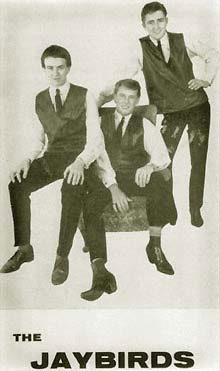
JP: Alvin I think your first proper band was probably the Jaybirds, do you want to tell us something about them?

AL: The Jaybirds was a bit later, the first band was the Jailbreakers. I was thirteen years old and I did a gig, the first gig that I’d ever done. It was a cinema in Sandiacre and we played between the B movie and the main feature, like a ten minute spot, and that was my first introduction to show business. The Jailbreakers did kind of R & B stuff and a couple of other little units but then the original, the start of the Jaybirds was the Jaymen, which then became the Jaycats which then became the Jaybirds, so a lot of confusion over what to call ourselves at that time. The Jaybirds was going pretty strong for about four or five years and we were quite big in Nottingham. That made things difficult because we kept moving up to London and then working in Nottingham cause we were well known in Nottingham you know! We thought we got to go break in London, so we ought to go down and get a flat and live in London and then have to travel to Nottingham every Friday to do the gigs, because we got better money there. We did that three times, moved to London three times, third time stayed there.
JP: What sort of stuff were you playing then with the Jaybirds?
AL: It was rock’n roll; basically R & B, a bit of blues, we did some Chuck Berry tunes that kind of thing with the R & B leanings that was the forerunner of Ten Years After.
JP: So how did you effect your first big break then – you said you’d come down to London three times and the last time you stayed?
AL: Well it all started around 1966; we started to get good work in the clubs in London, we got a residency at the Marquee Friday nights. Now that was a big deal in those days because Friday night was the hot night and we were there every week and there were places called Bluesville, Madhouse, pub ‘Cricketers Arms’, but they were all pretty good blues clubs ya know, and so we had a circuit we were working four or five nights a week in London on the club circuit and started to get a name for ourselves as a live band….
Deram records is a part of Decca, actually it’s a funny story because we’d done an audition for Decca records and there was a producer there, he gave us this song to play and we went off and worked it out and came back and played it. Then somebody came down to the Marquee and said we want to give you an album deal you know to record an LP which was very unusual in those days cause you had to record a single and if that was a hit they’d let you record an album. We were I think one of the first bands to actually start with an album which I thought was pretty cool, so we actually went into the studio and started to record this album and then we got a letter from Decca who signed us up saying we failed the audition! So it was a good clue as to how the music industry is, the one arm didn’t know what the other was doing, we were signed on and turned down shortly after by the same company.
We did the Ten Years After album first which is pretty easy to do because it’s your live set, You’ve got your repertoire of your live set and the numbers you know which work and you just basically go in and play them and that’s pretty good. I think it’s by the time you get to your third album it’s a bit of a struggle cause then you run out of the songs you used live and you have to start thinking of new ones that’s always the crunch. It’s funny, we used to play clubs and I remember one particular time the manager of the club came up and we played the first hour and then we had two more sets to do. He came up and said I’m afraid we’ve had lots of complaints, the audience can’t dance to you and we don’t want you to play anymore. For some strange reason I had so much teenage confidence that I thought well they’re all wrong and I’m right. It’s funny cause it seemed that way ya know and later on when the blues boom happened and suddenly that music was accepted I thought oh, it’s about time now it’s going my way.

JP: I seem to remember that you also used to play on what was known at the time as the underground circuit. You did Middle Earth and places like that, I wondered whether in fact you liked the fact they were having bills of bands who played in totally different styles?
AL: Yeah I loved that, thought it was great, I used to love those things you used to get a four piece string quartet and then a rock and roll band and then a poet. I used to think it was great, it was all very arty and I loved the underground, I loved being part of it, cause it was a very exciting period, it was the period when the whole music thing changed. Up until then the bands had to wear suits and ties and smile while they sang and ya, know it was all pretty much a bull-shitty kind of thing. The underground was the first time you could go on in your street clothes, play with your eyes closed, just play what you wanted, incredibly long guitar solos – it was all accepted. To me it was freedom, freedom from the showbiz kind of thing which I never really wanted to be part of. To me it was natural you know what I mean, it was like you didn’t have to wear a lamée suit or anything, just go on with a t-shirt and jeans and play and that was great, it was truthful and it was free.

JP: What about Woodstock?
AL: I was there ya know, a lot of people come up and say, ya know I was at Woodstock and I’d say so was I, yeah Woodstock was great. It was an amazing event – but then again nobody knew history was being made at the time! I knew it was going to be a bit different when they told us that we couldn’t drive to the gig and we had get a helicopter that was amazing…and it was an open sided helicopter so I put on the old harness and I was hanging out of the helicopter over a half a million people. There was a strong smell of marijuana coming up and it was an amazing start to the day. Actual memories ya know, it’s all very blurred purple haze.
JP: I was thinking also in terms not just of the gig itself but the film which must have taken your music to an enormous number of people.
AL: Yeah, it was the film that in fact made the difference. We did the festival and then we were playing like two to three thousand seater Kinetic Playground type of gigs, Fillmore type of gigs those things, we did Woodstock, it was an amazing event, I personally had a good time there but thought nothing of it and then we carried on for a year playing two and three thousand seaters. Then the movie came out and that’s when it all got silly and soon we were playing ice hockey arenas and that kind of thing which actually I didn’t find all that good. I didn’t like playing those places, we were playing to security guards with cotton wool in their ear and a big orchestra pit with barriers. It seemed to me that no one was listening. I prefer the underground phase, like the Fillmore type gigs. They were more clubby and I prefer a clubby vibe, sweat dripping down the walls and the sound pounding on the walls and that’s some of the best gigs that I’ve ever done.
JP: Alvin – you said that the whole move to stadium rock was one of the reasons that you decided ultimately to break the band up.
AL: Well, it was the whole band who got disenchanted, it was that feeling of what are we doing here, no one is listening, ya know a lot of people say Woodstock made Ten Years After but in fact it was the beginning of the end when the movie came out there was a lot of disenchantment, I didn’t like being a rock and roll star in inverted corners, I thought of myself as a musician. I was very naive in those days ya know, I thought I’ve already made much more money than I should do anyway and that wasn’t kind of part of the plan and I tried to hold it all back in fact I did what I called deescalated the whole thing and stopped doing all the interviews and all that and didn’t really want to play that game at all which seemed to even make it worse, then they thought I was Greta Garbo. No, it’s funny the success that everybody thought it really must be great when you made it but that wasn’t that good at all, I prefer the earlier parts.
JP: But you still kept on going to the states I believe you did something like twenty eight tours in five years or something which is a phenomenal amount of work to get through.
AL: Yeah well the band was over toured, I remember complaining about that because we would do like a thirteen week tour of America, come back to London, have two days off and then start on a ten week tour of Europe, and then some bright spot would call me up on the telephone and say your in the studio next week we hope you’ve got the songs ready, and I was writing songs in the taxi on the way to the session and things like that and I was just getting too much pressure and I needed time off, and there was an album called A Space in Time which was a dedication to that time off that I managed to dig my heals into the ground and say that’s it, I’m not working, I want to write songs, I want to be a musician, but they kept saying but Alvin you can make millions of dollars, there was a demand for the music but I didn’t feel that I was living up to it. I didn’t feel I was getting enough creative time to supply good music, cause you had to rush it all and I was over toured. It’s
funny because when you start a band off you just want to fill your date sheet up that’s your ambition to work six nights a week, when that happens you go four five or six years maybe just doing that and being glad of it but suddenly or sooner or later you think where are we going from here, I used to say we’re turning into a travelling juke-box, it sometimes used to feel that way ya know, you’d arrive at a gig, then plug in and play and take it out and off to the next town same thing, and you do that like fifty or sixty times in a row and you start to loose the spontaneity.
JP: So was your first solo album which I think was the one with Mylon Le Fevre a deliberate attempt to get away from the old band sound?

AL: Yeah, it was it more of a country kind of feel – more melodic, more tunes, and it wasn’t rock and roll. I was getting away from that rock and roll kind of tag and, of course, I was probably a bit too aware at the time of criticism and press people who used to call me Captain Speed Fingers and All Haste and No Taste and things like that. I was turning against the whole rock and roll thing for awhile, in fact there was a period where I didn’t play any rock and roll just to get away from that image – it was a personal problem. I had it all wrong to be honest, ya know I say I was very naive, but I was trying to keep my credibility and that has always been the important thing to me, I think if you lose that then you’re in trouble!. If I started to feel that I was a rip off and I wasn’t being truthful to myself then I couldn’t really play thinking that. You have to have your own credibility to continue it’s very important. In fact there was a band, I did an album called In Flight and it was called Alvin Lee and Co. It was an eight piece band, a percussion player, two girl singers, Mel Collins on sax. It was quite a funky little outfit, actually, and I enjoyed playing that. I got totally away from rock and roll and I didn’t do all the classic songs, I didn’t do any Ten Years After songs and that was the rebel again ya see. It’s a funny thing how you turn against what makes you famous. I know Jimi Hendrix he hated to play Hey Joe which I thought is a great number! I still play Hey Joe, he hated it because it was so popular and I for awhile I felt like that about I’m Going Home. It’s like it’s the only thing we played – everyone would shout I’m Going Home all the way through the set. It gets kind of annoying, so I did this whole set played for about a year never played any of those tunes but one day I went to see Jerry Lee Lewis, he was playing in Birmingham England. I’ve always been a big fan of Jerry Lee and he was playing Country and Western, he was going through a funny phase and he didn’t play Whole Lotta Shakin’ and Great Balls of Fire and I came out of that gig greatly disappointed and realized that if people came to see me and I didn’t play I’m Going Home or Love Like A Man they’d feel the exact way that I felt. I didn’t want my audience to feeling like that when they left the gig, so the very next day I went back to the band and said I’m doing I’m Going Home tonight and played it and it felt great, it was like finding an old friend after a few years ya know.
JP: Alvin now you’ve got a great new album out and to me, despite the fact that it still has the blues feeling you know, the rock and roll feeling, it sounds pretty modern to me, particularly on a track like “Real Life Blues”. Tell me something about the track and how it came about.
AL: Real Life Blues, it’s a real life feeling. I was working in the studio until about two in the morning and I decided I needed a little break just to lighten my head a bit, so I went in the house and switched on the TV and just caught the war breaking out in Yugoslavia, a hijacking and several murders and it really affected me. I was trying to be creative and thought, so much trouble in the world – it’s time we had some better news, maybe a song in there, so I wrote the song basically on that feeling that came back into the studio. It was a bring-down to me and I was angry. The song is kind of a mellow chord, I didn’t play any lead at first I had the song, and then I did a lead guitar it was really angry, I was angry at the world ya know and so much trouble in the world, I was doing all this really manic guitar.
I then called up George Harrison, he’s always been a mate of mine and he’s played on a lot of my albums and I’ve played on his and I said any chance that you come play a bit of slide on this tune, it needs a bit of slide and he said I’ll be right over and he came over and he played.

I took my guitar out of the mix ok so he just had the basic chord feel of it and he played this beautiful sympathetic slide guitar that was so wonderful! It turned the whole song around for me ’cause instead of so much trouble in the world it was like so much trouble in the world and he did the guitar fills and the first solo and I was going to play the second solo. I checked out what I was playing by the end of the track and it was crazyness ya know, it didn’t fit at all so I had to rethink the whole end of the solo and make it more kind of mellow and sympathetic and that’s what he did to it. He took the angry bit out of it and he turned it around and made it much more interesting for me. It’s nice when that happens.
JP: There’s a real variety of songs on the album everything from R & B Rock and Roll and a certain amount of blues. Something like Jenny Jenny which superficially sounds like a Chuck Berry riff but there’s all kinds of 1950’s things going on in there as well.
AL: Yeah that’s right, I was very happy with that, it took me about ten minutes to write that one. In fact I was working with my song writing colleague Steve Gould and we’d been working all day on this other song and getting nowhere. I said to hell with this, let’s play some rock and roll and we wrote Jenny Jenny in ten minutes! I was very happy with it because to me it sounds like it was a song that should have been written in 1958 and escaped. That’s basically it and to me I thought it was Jerry Lee Lewis cause the guitar fills are Chuck Berry, but the rhythm is Jerry Lee Lewis.
JP: To some listeners who maybe haven’t heard your music in some time there is a superficial difference between I’m Going Home and the stuff on the new album, but do you really see it as that different?
AL: I don’t, I see Jenny Jenny and Going Home to me are very very similar, it’s just cooking rock and roll twelve bars. They have different flavors, but to me it’s all the same roots. That’s rock and roll – it’s Jerry Lee Lewis, Little Richard, Chuck Berry and what you can do with that whole feeling.
JP: How do you think – I mean people still regard you as a guitar player as well as everything else and very much a solo guitar player, I mean do you think your solo playing has changed much over the years?
AL: Some, I’d like to think its got better I’ve got more control I think. Now, I’m probably appreciating spaces more – a gap between the notes is sometimes more important than putting notes in, ya know it’s like light and shade and everything else.

JP: In thirty, forty, fifty, sixty or whatever how many years time it is and that great bluesman in the sky calls you to play that last lick – how would you like to be remembered?
AL: I’d like to be remembered as a musician, I’ve always tried to be a musician rather than a pop star. I hate anything to do with pop music and I don’t really like show business. As I’ve said my heroes are people like John Lee Hooker and Muddy Waters and John Lee Hooker – he is over eighty now and still playing and I think that’s great. If I ever make it to eighty I hope I’m still playing too, in fact I’m sure I will be because I don’t want to stop now, and it’s too late for me to get a proper job.

Alvin talks about his album ZOOM

Q: Alvin how did you come up with Zoom for the album title?
AL: Well, Zoom seemed to get the best reaction from people.
Q: Can you tell us about the songs on this record?
AL: The songs have been written over the past two years or so, I write songs all the time, it’s my hobby and my trade as well. It’s a pretty good collection of songs and I’m really happy with “Real Life Blues” “Jenny Jenny” and “Remember Me” (when I’m dead and gone) which is actually about my own epitaph. I’m looking forward to people hearing “Jenny Jenny”; it’s like a fifties rock and roll song that sounds like it should have been written over twenty years ago, and Clarence Clemons (from Bruce Springsteen’s E Street Band) is on it too. I was thinking yesterday that my favorite song was “Use That Power” which to me has a double meaning. It’s all about ecology, protecting the environment and about being pissed off about dumping all that shit into our environment, so Use That Power is a warning cry to stop it now. It also means Use That Power as in use your power and change things back to the way it ought to be, and use all your power.
Q: Alvin, are all the compositions on Zoom your originals?
AL: Yes, although I co-wrote some of them with a man named Robbie Sideman who is an American living in LA, he came over to England and we wrote “Anything For You” as a middle of the road song on this collection, but it’s still in the good old rock and roll style. It’s a good jamming blues song and Jon Lord (from Deep Purple) plays the Hammond organ and Clarence is on sax.
Q: Describe if you would the style of music that you consider Zoom to be under.
AL: It’s a blues-based-rock and roll thing I suppose, if you needed to pigeon hole the thing, it’s basically blues, with the roots of rock and roll with some progressive leanings. I’ve always thought of myself as a progressive musician.
Q: Who have been your most important influences in music?
AL: Well, to begin with I was brought up listening to all kinds of blues, as my father had a huge collection of blues records and I moved towards the most ethnic kind of blues, people such as Muddy Waters, John Lee Hooker and Lonnie Johnson were the original artists that I picked up on.


As I was growing up, Big Bill came to visit my house, my parents went to one of his shows in Nottingham and brought him home with them. I think I was twelve at the time and the whole thing had a big impact on me. Bill sat in our living room and played his guitar, after that I discovered Chuck Berry, rock and roll, Jerry Lee Lewis and all the rest of them. I still listen to Jazz guitar, Wes Montgomery, Barney Kessel and George Benson. It’s thanks to my parents that I was exposed to quite a lot of different music and I feel the thirties swing stuff had a big influence on the history of rock and roll as we know it today.
Q: When did you decide to take these influences and venture out on your own?
AL: I think in 1962 was the start, as there was a blues boom headed by John Mayall and suddenly the blues became the “IN thing”. I always loved to play the blues before it became popular but before it was accepted. We used to get tossed out of clubs because people complained that they couldn’t dance to our music, so I went back to basic rock and roll. When the blues boom came I already knew all of the great songs because I’d been exposed to them all my life, so suddenly I found myself back in the blues. It all goes in cycles – I went through years where I’m very blues based, then I move to rock and roll then into a psychedelic period and then onto progressive, and then back into the blues, and around it goes. My first time in America back in 1967 I was amazed to discover that most Americans didn’t know who Big Bill Broonzy or Lonnie Johnson were. After all, this is your music, your heritage, all we did was copy it, so in fact I was playing American music with some English energy added to it and then recycling it and sending it back to America. I’ve always been a fan of American music.
Q: Alvin, how did you get George Harrison, Jon Lord and Clarence Clemons to help you on Zoom?
AL: Well, I’ve known George since 1973 when Mylon LeFevre and I were working on the On the Road to Freedom recording, which for me was a positive step away from rock and roll. George wrote a song on that album called “So Sad (no love of his own)” and ever since that time he likes to come over with a guitar in hand and a bottleneck, he plays a very good slide guitar by the way. Jon Lord I’ve known since the 1960’s, he’s played on some of my albums and I’ve played on his. George, Jon and I all live very close to each other in the part of England called The Thames Valley. Clarence I met on the Peter Maffay tour recently in Germany and Clarence and I get along just great, we shared a dressing room, sat around and just jammed, Clarence said I’ll be on your album if you’ll do the same for me. Clarence is great, I love him and he’s certainly a “larger than life human being”.

Q: Alvin,who else do you have in your band right now?
AL: Alan Young is with us as drummer and has been for the last three years and as his name implies he’s the young-blood in the band. Our bass player on live gigs is Steve Gould and he and I wrote Jenny Jenny together. On this album though I used Steve Grant. We all have a good relationship and we’re going to keep working on it.
Q: Alvin, what do you think of the new generation of blues guitar artist coming along now, like Gary Moore for instance?
AL: Yeah well, I think it’s great and I know Gary pretty well, he was very surprised that his album did so well, because the record company made it very clear that they didn’t want blues – they wanted heavy metal. Gary had gotten away from his heavy metal image and now all the record labels want the blues. Gary plays city blues and not the country blues, which is in the more acoustic style, like the Mississippi Delta Blues. There are so many forms and variations of the blues that hopefully this craze will embrace all of them.
Q: Do you think Gary may be using some of the work that you yourself pioneered as a member of Ten Years After?
AL: Yes, well I might have pioneered something with Ten Years After, just as BB King did it before me. It’s just influences and Gary told me that I was his biggest influence after seeing a Ten Years After gig. He never forgot it because he fell off his motorbike on his way home from the concert. It’s good to be an influence like that, I’ve met a lot of guitarists on the road who want to play my guitar, they show me their version of the intro to “I’m Going Home” and they play it exactly the same way that I did, note for not. Even I don’t do that, I change it a little bit, so I say to them that’s very good – now go off and learn your own licks!
Q: Would I be close in saying that Zoom highlights each part of your music career?
AL: All the styles that I play, blues, rock and roll progressive or even psychedelic are all in evidence on this record. It sounds like me but it also pays tribute to the roots too.
Q: Then are you happy with the overall results on Zoom?
AL: Yes I’m happy as a sandman, I just heard it last night for the first time and it sounded great. It’s the first time because for the last three months I’ve been working on it everyday and I think it’s my favorite album so far.
Quotes:
Jimmy Page said of Alvin Lee, “he’s just great” said the most unimpressionable Jimmy, as his eyes were spellbound from watching Lee’s fingers!
When someone asked Alvin about being the fastest guitarist in the world his firm reply was: “I don’t think so, no way. There are plenty of guitarists faster than me. Django Reinhardt was faster than me and he only had two working fingers. It’s a silly title anyway. I never was, I never will be and who’s counting anyway?” Alvin Lee in 1984
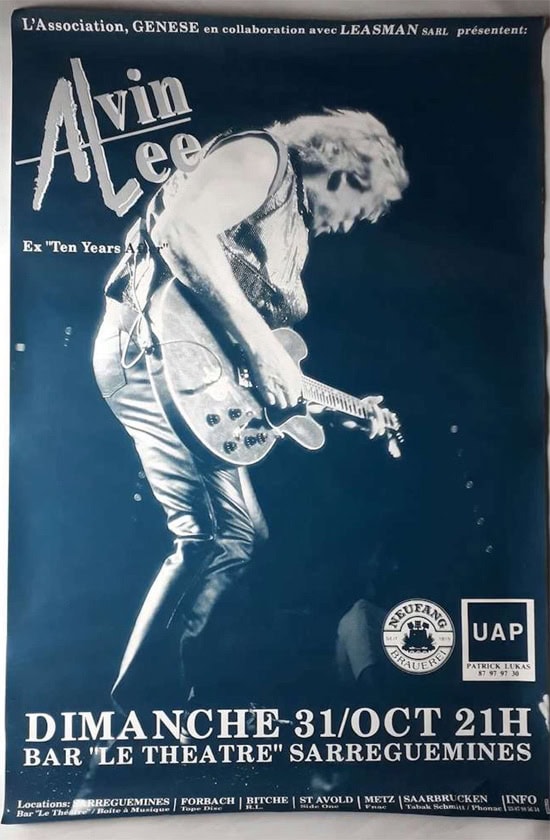
October 31, 1993 – Sarreguemines, France
Heritage Alvin Lee model


The Heritage ALVIN LEE MODEL was the ES-335 style semi-hollow bodied signature model of Alvin Lee and is based on Lee’s iconic 1958 Gibson ES-335.
The Heritage Alvin Lee Model was made from 1993 to 1996 and had a cream bound solid curly maple top and back with solid curly maple sides. The set neck was one piece mahogany, cream bound with a 24.75″ scale length and ebony fingerboard with dot inlays. This guitar had two humbucking pickups plus a single coil in the middle position (Alvin Lee modded his original ES-335 by adding a stratocaster single coil pickup in the middle position). Hardware was chrome plated and the transparent cherry finished body was 16 inches wide and 1.5 inches thick.

Album release ‘1994’ Nineteen-ninety-four
It’s one of those albums that feels like hanging out with a seasoned friend who just gets rock & roll. From the moment “Keep On Rockin’” kicks in you can tell Alvin was having a blast — it’s loose, fun, and just plain good-hearted rock music. On the bluesy gem “The Bluest Blues” where Alvin’s guitar work really shines it’s an extra treat hearing George Harrison’s slide guitar weaving through — he adds a thoughtful, bluesy sparkle that lifts the whole vibe.
And then there’s Joe Brown’s playful vocals and banjo on songs like “I Hear You Knockin’” and “Boogie All Day” — it feels like friends jamming in the living room (because that’s what they were!). Backing vocals from Sam Brown and Deena Payne give tracks such as “Long Legs” and “Give Me Your Love” a soulful lift, and Tim Hinkley’s Hammond and piano touches add nice warmth throughout.
It’s not polished to perfection, but that’s part of its charm — this record is all about heart, groove, and the joy of playing music with folks you enjoy. If you love honest guitar-driven rock with a bluesy smile, this album feels like a great time.


Review:
At a time when almost no one expected it anymore, Alvin Lee actually released another killer album, one that would clearly overshadow the last ten years of his work. “Nineteen Ninety-Four”, released in the US as “I Hear You Rockin'”, shows the great Alvin finally back in top form.
And more importantly: the spark ignites the listener immediately with the opening title track. “Ain’t Nobody’s Business” and the laconic blues number “Long Legs” also clearly convey the feeling that the Briton himself had rediscovered a great deal of fun, energy, and joy in playing. Okay, the reviewer could have done without the old classic “I Hear You Knockin’,” but it doesn’t detract from the overall experience.
In contrast, “The Bluest Blues” is absolutely sensational, brimming with brilliant guitar work from Lee on lead guitar and George Harrison on slide.
The lively “Boogie All Day” lives up to its name, and “My Baby Come Back To Me,” which closes the second side, is also a winner.
The third side opens with the stomping rocker “Take It Easy,” which, while not a compositional masterpiece, impresses with its assertive and demanding message.
With its smooth boogie-woogie piano, “Play It Like It Used To Be” follows, along with the subtle dig,
“…Go tell Madonna, she don’t do nothing to me… I want that rock ‘n’ roll music played like it used to be!”.
This track also delivers a finely crafted dose of rock ‘n’ roll. After “Give Me Your Love,”
side four kicks off with the cool blues rocker “I Don’t Give A Damn,” bringing the album to a close.
The crowning finale of this double album is the ten-minute Beatles cover “I Want You (She’s So Heavy).”
Naturally, the ever-present George Harrison makes an appearance with his slide guitar.
The version presented here essentially adheres to the original with all its psychedelic nuances, but has been expanded and prepared into an interesting, unique reading.
An epic, worthy, and well-deserved finale to a very strong album!
The protagonist here seems almost as if he has risen like a phoenix from the ashes after a deep sleep of more than ten years,
rediscovering his zest, energy, and passion for music. “Keep On Rockin'” comes across as significantly fresher and more polished
than its two predecessors and the 180g double vinyl album, re-released a few weeks ago, crosses the finish line as the clear winner.
Adding to its appeal is the wonderfully warm, earthy sound of the vinyl, which also comes in padded, i.e., protective, inner sleeves.
by Markus Kerren, Rocktimes, Germany
Short Takes
– AS YEARS GO BY – DECCA RECORDS
From 1993

Mark Paytress remembers the days when Decca was the nerve centre of British Pop:
As Years Go By – the 1960’s revolution at British Decca.
David Wedgbury and JohnTracy
They gave away the Beatles, and even let eager young starlets like David Bowie, Marc Bolan, Joe Cocker, David Essex, Olivia Newton John and Rod Stewart through their grasp. But to every Rolling Stones fan, Decca remains the quintessential 1960’s label.
You knew its offices were crammed with stuffed-shirt executives who had their hands forced into doing business with acne-riddled suburban lads on the make; but that didn’t matter. It was obvious that Tom Jones and Engelbert Humperdinck were its golden boys, but the urgency and glamour of the Stones, Marianne Faithfull and their confrontational manager Andrew Oldham provided Decca with a large helping of 1960’s Zeitgeist that no amount of myth destruction can shake off.
Then one morning the 1960’s were over, and so too were Decca’s glory days: the Rolling Stones had quit, Tom Jones packed his bags for Las Vegas, the label invested unwisely in progressive rock, and the emerging glam rock craze was missed completely.
All Decca had left was a past, which it began to recycle rather shamefully during the 1970’s.
Thus annoying the Stones to such an extent that the band had placed full-page ad’s requesting consumers not to buy the label’s repackages. This rapid fall from grace – which eventually led to a takeover by Polygram Records in the early 1980’s wasn’t good news for it’s shareholders; but it did reinforce the notion that the company was as inextricably entwined with the 1960’s as “Twiggy” and “I’m Backing Britain” campaigns.
Nostalgia for that decade, which has continued apace since around 1980, has ensured that, via the subsidiary Deram imprint, the back-catalogue has been polished up for the contemporary CD consumption. This has largely been through the efforts of John Tracy, who is a gentle giant of a man whose knowledge and attention to detail has resulted in a remarkably well-conceived stream of archive reissues. Bonus Tracks, enriching sleeve notes, and fine sound, not to mention the “Special Price” stickers, has ensured that the Decca catalogue remains a highly attractive proposition.
And now, to confirm the label’s prime position at the expense of 1960’s pop culture comes the latest project, a book CD tie-in titled, not unexpectedly, “As Years Go By”. The music provides an interesting resumee of Decca’s hits (Billy Fury, The Small Faces) and misses (Marc Bolin and David Bowie), while the accompanying book (published by Pavilion Press) brings the era alive in gloomy, monochromatic glory, via the distinguished photography of Decca staffer David Wedgbury.
Wedgbury spent the entire decade at Decca, shooting hundreds of record sleeves, publicty photos and advertising material. And his magnificent pictures have a vaguely classical quality about them, artfully composed, but rarely ostentatious. “Being the staff photographer, you ended up doing everything that was wanted,” he recalls, “including going round the dining-table photographing Mick Jagger Jagger eating with Sir Edward Lewis, and catching them signing the contract afterwards. Actually, I didn’t really enjoy that kind of social photography very much at all.”
What Wedgbury reveled in was welcoming artists into Decca’s design studio at Black Prince Road, Lambeth, and spending a couple of hours with them on a shoot. Despite being an in-house photographer, he maintains that he had a free hand, and was keen to put his considerable training to good use. “I pursued a very poised, serious approach to photography. I really wanted to get away from the cheesy, Cliff Richard – type shots, holding a guitar and smiling for the camera, and treat the whole thing in a much more profound way.”
Inevitably, minor servings of “Cheese” find their way into anyone’s portfolio – witness the toffee-apple-chewing Applejacks outside a confectionist’s or a decidedly bland (and youthful) Olivia Newton John at the outset of her career. But with the right subject, Wedgbury’s acute ability to capture an artist’s essence comes into its own.
One of the most dramatic pictures captures a quietly confident Marianne Faithfull, at the outset of her career, when she still played the knowing virgin. “She was very intense when she posed for the camera,” recalls the photographer, who took the session at the singer’s new London flat. “She gave the impression that she was trying to seduce you, pull you through the camera lens. She basically struck those poses herself; she was very much a natural, very easy to photograph.”
On the other hand, a real trickier subject was Roy Orbison, who looked very strange without his dark sunglasses and provided numerous “Glare” problems when he wore them. “That was taken in a corridor at Television Centre on the way to the set of “Top Of The Pops,” says Wedgbury. “I was particularly struck with the personalised guitar strap and thought I’d make something of that.” The results provide a fine variant of the smiling-with-guitar pose.
Not every subject he worked with had a natural charisma, though, and a quick glance through “As Years Go By” provides an amusing resume of many of Decca’s less than alluring investments. Collectable recording artists the Beat-Stalkers may be, but their line in flared tartan strides and demeanor that brings new meaning to the word clueless will ensure them a place in rock ‘n rolls vast amusement arcade. Likewise the band called “Timebox”, a mostly quintet who, judging by the photo here, certainly put the freak into freak-beat. Whatever happened to the guy who struck the near-perfect “I Am Not Here” Warhol Pose?
Wedgbury identifies three categories of subject during his years as a pop photographer: those who could be photographed with little prompting; those who required considerable manipulation; and those who, whatever you did, were entirely useless. The photographer remembers two young mid 1960’s would be stars, Marc Bolin and David Bowie falling into the first category. “Every frame of every film I took of them was printable and usable.”
He insists. Wedgbury took both to outdoor locations: “I strolled around the Inns Of Court with David Bowie,” he recalls. “It was autumn and the leaves were falling. There was quite an interesting light, it was a bright autumn day, and he did everything I wanted him to do. But to be honest, I can’t remember much in terms of conversation.
“The Bolan session was done in Holborn. I bought him lunch afterwards, and while he was eating, he really opened up. He had it all sussed, he was really going to be big and make a lot of money.” But did it sound convincing? “No, he was just a teenager and I was already in my early 20’s. I dismissed him as a young kid.”
Decca may have had little success with the likes of Bowie and Bolan: but the fact that so many future stars were at one time linked to the label confirms its status at the heart of the 1960’s pop culture, if not its artistic development skills. And that’s what the book’s subtitle,
“The 1960’s Revolution At British Decca” reflects, rather than any counter-culture demand for the impossible. Though, somewhat incongruously, the label did have the era’s leading mischief-makers – The Rolling Stones – under its wing. The Rolling Stones, under the tutelage of Andrew Oldham, were at loggerheads with their pay-masters for much of their seven years at Decca. They determined where they’d record, and broke with the mold by recruiting their own photographers for their record sleeves. Nevertheless, Wedgbury photographed them throughout the decade, for press shots like the “Beggars Banquet” party and for their Christmas cards. And, he says, they were truculent from the start: “For the very first session, I had the band booked into the studio. Two of them, Charlie Watts and Bill Wyman turned up on time. Mick Jagger telephoned twenty minutes later to say that he wouldn’t be able to make it, and the other two didn’t even turn up at all.” That really set the tone. “I can remember several occasions when the Stones came to lunch with Sir Edward Lewis – (Decca’s bigger than life chairman). One time, they arrived in a wide assortment of clothing, and Mick Jagger wore a French-style, horizontally striped T-shirt that was loose on the shoulder. Sir Edward and the suits were horrified. The Stones had this belligerent attitude and treated everybody in a fairly disdainful way. That’s what really set them apart.”
The Rolling Stones’ revolutionary gestures were a far cry from the reality of the Decca set-up, though. “Sir Edward Lewis was an accountant who made his pile of money before the war,” remembers Wedgbury, “and the Albert Embankment head office was run in a very disciplined way, rather like a spoof of the Civil Service. He had a lift for personal use, and there was a whole series of dinning arrangements, the chairman’s dinning- room was complete with heavy wood and silver service, the executives dinning-room, and the workers dining-room where you could queue up at the counter or pay an extra 6d and have waitress service”.
Despite the “Stones” towering presence at Decca, the group that best captured the mood of the decade, according to Wedgbury, was The Who. “They had a tremendous presence, they were innovative in that they into Union Jacks and visually exciting clothing, and they were co-operative!” The band only had a short spell with Decca – (via its Brunswick subsidiary), but after one particularly successful session, their manager Kit Lambert employed the photographer on a freelance basis. “I used to arrive at their Sloane Square office, and from there, we’d travel in a black limousine to their concerts. It was the time when they were smashing their instruments and the idea was that I’d go out with them and publicise that activity. I worked with them right up to the “My Generation” album cover, which we shot in Docklands. When I hear “My Generation” even now, it still makes the hairs rise on my neck.”
Thanks to: David Wedgbury, John Tracy and Hannah Griffiths at Pavilion.


1994 – Album release “I Hear You Rockin'” in the US
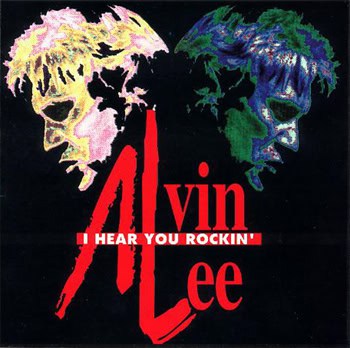
From the opening crunch of “Keep On Rockin’,” Alvin Lee sounds relaxed, confident, and fully in control, delivering biting guitar lines that feel lived-in rather than flashy for the sake of it.
What makes *I Hear You Rockin’* work is its honesty. It doesn’t chase trends or tries to relive Woodstock glory days. Instead, it leans into groove, melody, and the simple joy of playing rock & roll with heart. Solid songwriting, strong supporting players, and Alvin Lee’s unmistakable guitar tone make this a rewarding listen — especially for fans who appreciate blues-based rock that knows when to smile and when to dig deep.
In short, this album proves that experience, taste, and a great guitar still go a long way.
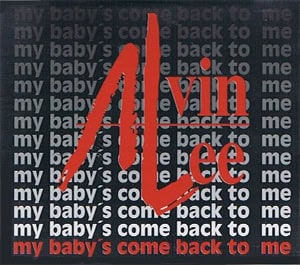
April 7, 1994 – “Ohne Filter Extra” (German TV show)
The Alvin Lee Band appears live on stage for the TV show aired on SWF.
Track list: Keep On Rockin’, Long Legs, I Hear You Knockin’, Good Morning Little Schoolgirl, Slow Blues In C, I Don’t Give A Damn, Johnny B. Goode, I’m Going Home, Choo Choo Mama, Rip It Up.
It also features a five minute interview with Alvin Lee.
May 1, 1994 – Louvain La Neuve, Belgium

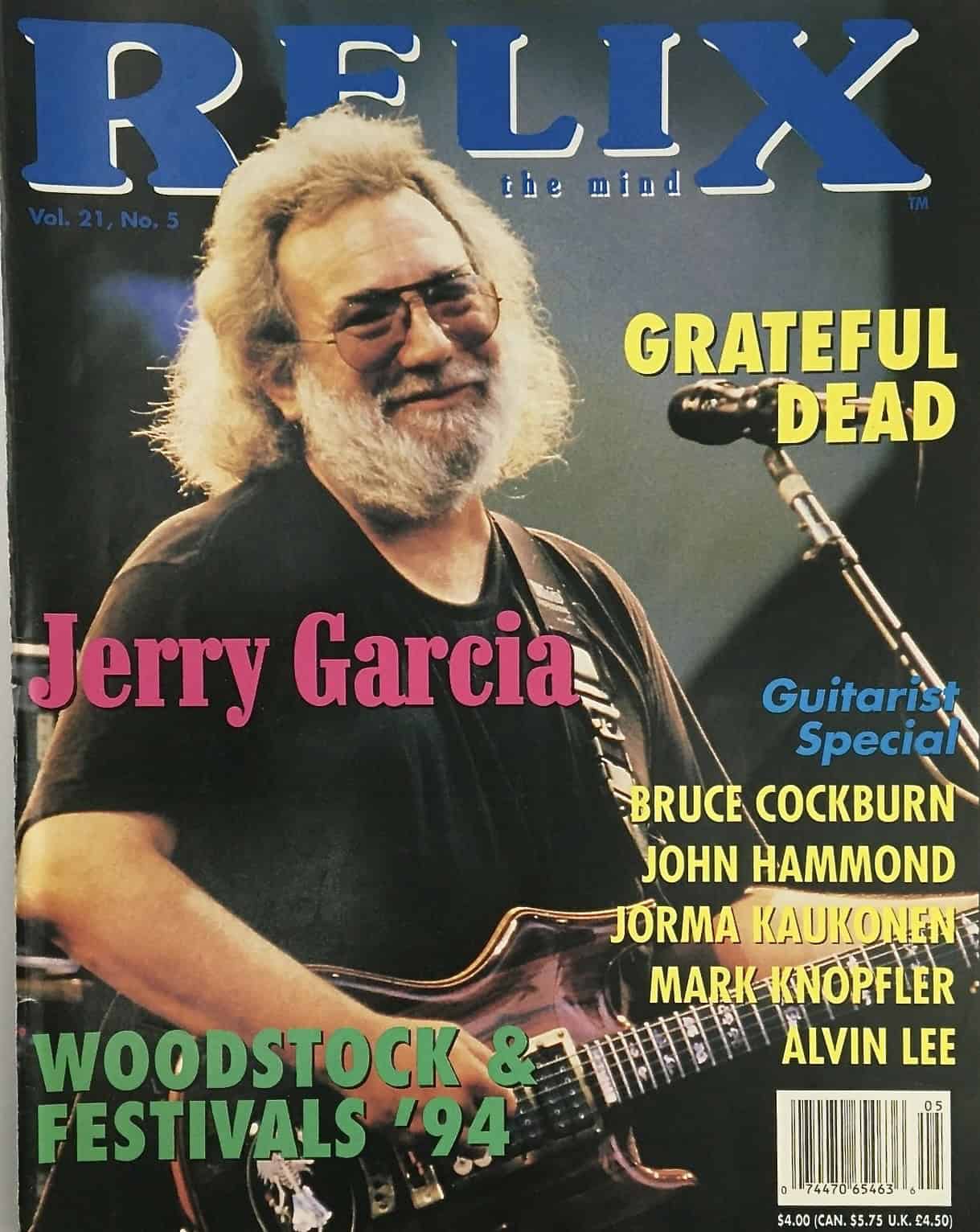
RELIX magazine – Vol. 21 No. 5

“I love what I’m doing,” boasts Alvin Lee about his musical career, now in its third successful decade. His satisfied joy can be heard throughout “I Hear You Rockin'” the fabled guitarist’s newest recording from Viceroy Records. Lee’s career started with early encouragement from his music-loving family. Born in England’s historic village of Nottingham in December 1944, Lee’s parents, fans of diverse pioneers such as Segovia, Leadbelly and Charlie Christian, supported his early embrace of the guitar. The direction of his career was steered by a dramatic visit from one of his idols. “My real love at that time was Delta country blues,” remembers Lee. “Big Bill Broonzy was someone I truly admired. I actually met him when I was 12 years old. My parents had gone to one of his gigs and invited him back to our house afterwards. He was playing guitar in our front room, and I was sitting on the floor looking up at him. He so inspired me that day, that I decided then to become a blues musician like him.”
In addition to Broonzy’s passionate folk blues, Lee was thrilled by the exotic electric sounds of another American, Chuck Berry. “He sounded like the blues with more energy,” said Lee.
Eager to showcase his own hybrid of blues, rockabilly and rock and roll, the young guitarist still only 13, formed the “Jailbreakers,” his first band. Two years later, Lee along with fellow Nottingham teenager Leo Lyons, formed “The Jaybirds”. By 1964, the Jaybirds had earned considerable notice among Britain’s burgeoning blues cult via its energetic stage shows and billing as “Britain’s Largest Sounding Trio”. Seasoned by many small gigs throughout the country, Lee and Lyons relocated to London. Lee ability as a soloist stood out in that crowed field, which included Mick Taylor, Peter Green and Paul Kossoff. Eager to measure their efforts against established blues outfits, like those headed by Alexis Korner and John Mayall, Lee and Lyons established Ten Years After, whom they recruited drummer Ric Lee and keyboardist Chick Churchill for. The group’s early club appearances had an immediate impact, as Lee’s fluid dexterity and slashing solos helped to enhance the group’s momentum.
With the blues movement in full bloom, the group secured a contract with Deram, a subsidiary of London Records. “Ten Years After”, the band’s impressive debut disc, whisked them off to a rousing start. Lee’s fast advancing reputation and a coveted Friday residency at London’s Marquee Club afforded Ten Years After a critical advantage in an increasingly competitive field. “Undead”, its second release, provided them with a U.K. chart break-through, reaching number two in September 1968. Recorded at Klooks Kleek, the London nightspot where John Mayall had recorded his debut disc, the superb “Undead” showcased the group’s impressive grasp of blues, psychedelic rock and even elements of jazz and without sacrificing its vaunted stage energy. By early 1969, the U.K. success of “Undead” and news of Ten Years After’s incendiary club gigs, had kindled interest across the Atlantic.
Promoter Bill Graham invited the group to come to America and perform at both Fillmores, East and West. Such acceptance helped spur U.S. sales of “Stonedhenge”, the groups third disc, and led to an invitation to perform at the Woodstock Festival. The band enjoyed a warm reception from the massive festival audience that August 1969 evening. But it was the inclusion of a frantic, extended rendition of “I’m Going Home” featuring Lee’s inspired, screaming guitar solo in the documentary “Woodstock” released nine months after the show, that elevated the group to stardom. “I know first hand that it was the release of the film that broke Ten Years After in America,” remembers Lee. “We did the festival, and it was a very special event and a great time, but it was just another gig on a long American tour. After the festival, we went for nearly a year performing in venues like the Fillmore East and Fillmore West, until the movie came out, and that’s when all the ballyhoo took place.
The silver screen does make things larger than life. That film rocketed us into the stadiums. A lot of people say that’s what made the band, but in a lot of ways, it was the beginning of the end, as it wasn’t much fun playing arenas. Ten Years After moved to the forefront of the British Blues Movement. “SSSH” and 1970’s “Cricklewood Green” along with “Watt” each broke Billboards Top 30, while the earlier albums, “Ten Years After” and “Undead” enjoyed steady U.S. sales, being re-discovered by a wealth of new / younger admirers. By 1971, the incredible pace of the group’s success seemed to have spiraled out of control. Coupled with a rigorous touring schedule, they recorded four albums in just two years. This ran in marked contrast to Lee’s own personal ambition. “I was looking at longevity,” Lee recalls. “My heroes were people like Muddy Waters and John Lee Hooker. Today, Hooker’s close to 80, and he’s still playing. I never wanted to be a pop star, because it seemed so tasteless and short-lived. I knew very early on, that I wanted to be a working musician, not a rock star.”
Adamant about being given enough time to prepare for the group’s next album, Lee won an uneasy truce for 1971’s “A Space In Time”. “That title came from me digging my heels into the ground,” explains Lee. “I told my managers and agents that I wouldn’t work because I needed time to create good music. I took six months off to write, because I was tired of writing lyrics in the back of a taxi on the way to the studio, then acting as if I had the tunes under wraps for months. The songs for the first two albums were drawn from our live repertoire. We already knew these songs well and knew they worked with our audience.
When we got to albums three and four, I suddenly had to start writing new songs, and it was hard to get those songs up to the quality of the ones we had been playing in our live gigs.”
Nonetheless, Lee’s investment paid off handsomely, as the rejuvenated Ten Years After, on the strength of the album’s hit single, “I’d Love To Change The World,” enjoyed its largest selling effort to date. When Lee was vindicated by the resounding success of A Space In Time, the album’s impressive showing increased the call for more albums and longer tours. “I didn’t like the so-called big time,” admits Lee. “When Ten Years After first started to happen in America, it was great. We were playing places like the Fillmore’s or the Electric Factory and the Kinetic Playground and those were great gigs, playing before two thousand people. Later, however, it grew into playing ice hockey arenas and stadiums, and I hated that. The music was secondary. People weren’t really listening to the music, and I was playing to an orchestra pit full of cops and security guys with their backs turned and cotton wool in their ears. I was thinking to myself, what am I doing this for? The answer at the time should have been money. But the peace of mind that I needed was much more important than the money. I knew too many people who had gone under or cracked from that kind on pressure.” Equally ironic was that while Lee struggled with the concept of rock stardom, his love for live performance never diminished. “Live gigs are what keeps me going.” Says Lee simply. “It’s in my blood, I put up with all the traveling and hotel life because it’s part of the pleasure of performing for people. These days, I actually find touring easier and more enjoyable. In the early years, I think I made things hard on myself. We would do a twelve week tour and I wouldn’t want to work again for three months. But I’ve learned to pace it more now, three weeks on, one week off. That way, over a year’s time, you do more work without having to endure the grim side of it. If you do more than three weeks at a time, the performances lose their spontaneity. With Ten Years After, I used to look at tour itineraries on paper and wonder how I would live through them, it would just seem so daunting.”
By 1973, with the group’s spirited blues rock a staple of the “Underground FM” stations throughout the US, Lee made his move as a solo artists. Bolstered by the likes of George Harrison, Steve Winwood, and Mick Fleetwood, Lee joined company with American vocalist Mylon LeFevre to record 1973’s prophetic “On The Road To Freedom” album. His heart set on establishing a solo career, Lee still rallied Ten Years After to record 1974’s “Positive Vibrations”, the group’s swan song. At the close of an extensive American tour in 1975, Ten Years After formally disbanded. (although no one officially admitted it).
His reputation firmly established, Lee began touring and recording under the umbrella of Alvin Lee and Company. In 1978, the guitarist formed Ten Years Later, recording two acclaimed albums, “Rocket Fuel” and “Ride On” before resuming his solo career once more in June of 1980. Save for a one-shot Ten Years After reunion in 1988, Lee remains content to shoulder the load on his own. One notable exception, however, came in 1981, when former Rolling Stones guitarist Mick Taylor was recruited to the fold. This unit toured Europe and the US. Reviews of their scintillating, duel guitar interplay fostered hope that the two might formalize the partnership and possibly record. Sessions were held in 1982, but the tapes, says Lee, remain unfinished and unreleased. “Taylor is such a superb slide player,” remembers Lee. “We worked well together.” Where many of his successful contemporaries have struggled to accept lower profiles and diminished sales significance in the 1990’s Lee thrives within the parameters he established. Rather than simply replicate the high-speed fret-work memorialized by the Woodstock film,, Lee has continued to refine his sound and style.
“I Hear You Rockin'” is Lee’s strongest effort in years, attributable to, he says, a dogged, back-to-the-roots approach to writing and recording. “Recording this album as I did was almost a revelation for me,” says Lee. “Normally, because I have a home studio, I make demos. It takes me about four months to create fifteen new demos. I’d play them to the band, but I wouldn’t get any real input from them. They would just try to assimilate what I had already done as best they could. This time around, I sat with the band in a room, picked up my guitar, and played my song ideas to them. This way, the band joins in, and if a song works in the room, then it’s going to work live. It’s always been an ambition of mine to record an album and walk on stage and say, “I’ve just recorded an album, and here it is for you. With this album, that’s what I’ve been doing and it’s been a real buzz!” As so much of Lee’s sound and style is derived from his raw, charged live performances, it comes as little surprise, that he chose to capture that same spirit by recording the album’s basic tracks live in the studio.
“You have to keep the technical side of recording studios from taking over,” argues Lee.
“They put the drummer in one room and the guitar player in another. You can’t even see the guys you’re working with. Okay, you get a clear sound, but with my kind of music, it’s the feel that’s important, not the sound. If there are a few glitches and rough edges, fine, I like that. You can not beat the eye contact of sitting around and looking at each other, playing off one another.” “I Hear You Rockin'” also continues Lee’s intriguing collaboration with long time friend George Harrison. Harrison guests on a spirited remake of the Beatles “I Want You” and lends a salacious slide guitar to Lee’s own, “Bluest Blues,” a dark moody ballad and the album’s strongest track. “I first hooked up with George in 1973. when he wrote and played “So Sad,” a song he wrote for “On The Road To Freedom,” my first solo album. Following that I played on George’s “Dark Horse” and 33 1/3 albums for him. Since then we’ve become very good friends. He’s played on the last three solo albums I’ve done. I don’t play slide well and he’s very good, so I call upon George. It’s getting to be a bit of a tradition, I only wish I could get him out there with me!” With, or without Harrison in tow, Lee shows no signs of slowing down. He’s currently formalizing plans for yet another extensive American tour. “Hey, he laughs, “I hope I’ll still be at it when I’m 80. It’s a bit too late for me to get a proper job at this point in my life, don’t you think?”
Record Collector – August 1994


front cover back cover
LA Times – Night Life
by Bill Logey
concert from November 5, 1994
Los Angeles Times 2010
Alvin Lee, the “Guitar God” of Ten Years After, Ventura (California) – Bound. He plays “Basic Root Blues” high energy and he doesn’t neglect the memory songs for his fans of yesteryear.
Attention parents: Be careful who you bring home to your impressionable offspring. If you were to invite Willie the Wino, Jack The Ripper or The Pillsbury Dough Boy to the house, well, who knows what strangeness may ensue?
Now, once upon a time in scary olde England, the Lee’s brought home famous blues dude “Big Bill Broonzy” and their boy, young Alvin, ended up being a “Guitar God” fronting “Ten Years After”. Alvin Lee made several hit albums, millions of dollars and drew plenty of rock fans who couldn’t get enough of that wailing guitar.
Now, nearly Thirty Years Later, Alvin Lee returns with a new album, “I Hear You Rockin'”, and a Saturday night gig at the venerable Ventura Theatre. The new album is a throwback to Ten Years After’s 1966 self titled debut album. It’s bluesy, but not boring, because Alvin knows too many licks to induce drowsiness. Alvin could also write those mean blues lyrics.
From “A Sad Song” a sample line: “My face in the mirror, reminds me of you. It’s the one that you lied to, when you said you’d be true”. But Ten Years After, among other things, is remembered for perhaps the most famous song, “I’m Going Home” on the endless “Woodstock” movie. Recently Alvin Lee, who speaks slower than he plays guitar, talked to me by phone from a Rhode Island hotel room.
Q. – Where’s the old Ten Years After guys. Chick Churchill, Leo Lyons and Ric Lee?
AL. – We had a reformation in 1989 to support our “About Time” release. But we closed that down after a few months. It was kind of like getting back together with your ex-wife, it’s fine for a couple of months. Leo has his own band called “Kick” – the other two, I’ve lost track of.
Q. – Ten Years After, like a lot of other British bands, started out as a blues band. How did you get those blues?
AL. – My father was always playing this ethnic blues stuff around the house, and both my parents played. Then one day, my father brought home Big Bill Broonzy, and there he was sitting in our living room playing, and blues was in my heart, from the time I was twelve years old. I took lessons for a year and learned all the chords, and I had my first band when I was thirteen, it was called, “The Jailbreakers”.
Q. – What was it like making the jump from small clubs to the giant venues that you played with Ten Years After?
AL. – It wasn’t very satisfying playing the big arenas, but it was good as far as a pay check was concerned. But the sound was terrible, especially in those hockey arenas. The sound would go on for thirty seconds after we’d quite playing. Also, they didn’t have security staff back then, but real police officers with guns. You can’t hear anything, you can’t see anything, except for the backsides of policemen. It just wasn’t very conducive for having fun.
We used to do songs like “Woodchoppers Ball” but these songs didn’t work at all in a big room. Again, the sound becomes really heavy and we loose the Rock `n’ Roll. Then when we’d play a little club, there’d be trouble outside, because everyone couldn’t get in. I just wanted to enjoy what I was doing, but I wasn’t enjoying that at all.
Q. – So being a “Rock Star” in the 1960’s and 1970’s was good or bad for you?
AL. – Absolutely, good and bad. I always wanted just to be a blues guitarist, and I don’t think I was quite ready for all that went with it, and I had what they refer to as “Head Problems”.
There were a lot of responsibilities, especially with the media which were so overwhelming.
I’d do twelve of these interviews in a day. Then we’d tour for three months straight, then get two days off, then they’d call and say, “You’re in the studio next week – hope you have the songs ready”.
Q. – Ten Years After went away when you guys changed your record labels and released “A Space In Time” in the 70’s (1971). What happened there?
AL. – It was entirely coincidental. “A Space In Time” is about the time off that I managed to take off, to work on the album. They’d be telling me, “Alvin, you can make a millions of dollars in the next six months.” But I thought, “I just made a million dollars in the last six months, and it’s not doing me any good.” Anyway, I thought I wrote a lot of good songs for that album. No longer do I let the pace of work interfere with the creative forces. This will be just a five week tour.
Q. – Do you still play Ten Years After songs?
AL. – Of course I still do, and “I’m Going Home” is the last song. But for awhile I quit playing it. When we’d do a gig I could hear people shouting for “I’m Going Home” after the first song and I’d tell them, “So, go home then”. You know, Jimi Hendrix got tired of playing “Hey Joe”. Then in 1979 or 1980 I saw Jerry Lee Lewis playing in Birmingham, and he was going through his country and western phase at the time, and he didn’t do any of his hits, I was very disappointed. It made me realize, that if I didn’t play the songs that people wanted to hear, they wouldn’t want to come back and see me.
Q. – What’s Alvin Lee’s brand of blues?
AL. – We were doing stuff that was called blues rock at the time, then it became underground rock, then it was psychedelic rock, but it was all the same thing, really. It’s basic root blues, high energy. I don’t describe it, I just play it.
Q. – I read a review once that said you were just “ten fast fingers and a pretty face”. What did the critics get wrong about you?
AL. – I suppose it was the whole “Captain Speed Fingers” thing, the fastest guitar player, and all that. I never tried to be the fastest; I even tried to slow myself down. A lot of these new guys can play ridiculously fast, but there’s no light and no shade, and most of them run out of licks in a few minutes, anyway. Sometimes, it actually sounds faster, if you play slower.
Like the song says, I want to keep on rockin’. Those old guys like John Lee Hooker, who must be what, 80? And he’s still going strong!
Details:
Alvin Lee with Nine Below Zero
The Majestic Ventura Theatre, 26 Chestnut Street
Saturday 8:00 PM
Tickets Cost: $16.50
To Stay Happy, Guitarist Alvin Lee Only Needs A Bumper Crop of Blues:
Article by Michael Kinsman – Staff Writer
Date Book:
Alvin Lee with Nine Below Zero, 9 tonight.
Coach House San Diego (formerly The Cafe)
10475 San Diego Mission Road, Mission Valley. $16.50; 563-0024.
Reprinted from original article from the San Diego Union Tribune from November 16, 1994
Alvin Lee, the hell-on wheels guitarist best remembered for searing the crowd with his impassioned blues-rock at the 1969 Woodstock festival, is looking for eye contact. On the verge of his first U.S. tour in four years, he’s spent only three days practicing with the band Nine Below Zero, trying to get the feel of the music. “Eye contact is very important to that”, the British guitarist says from New Jersey. “You can know the music, but you’ve got to get the feel, too. A lot of times if you see the eyes of the gentleman, you can see if they’re getting it. Some things just come with a nod and a wink.”
Twenty-five years after his incendiary Woodstock performance with Ten Years After on “I’m Going Home”, Lee is excited by the prospect of still playing music for people. “All I’ve ever gotten out of music is the pleasure of playing it,” says the 49-year old singer-guitarist, who appears tonight at the Coach House San Diego (formerly The Cafe in Mission Valley). “Everything else is secondary.”
Lee’s finest public moment – the scorching Woodstock performance – may have also been his most distressing professional moment. “That was really sort of the beginning of the end, strange as that sounds,” he says. “As soon as the movie came out, it sort of boosted Ten Years After to another level. We started playing ice-hockey arenas, and it started getting out of hand. There would be this horrible sound ringing around the roof of the arena, and I’d be on stage looking at the backs of policemen with cotton balls in their ears. I like places where you can react with the audience, but that wasn’t happening. I had no feel,” Lee said. “The arena shows forced the band to change its sound. We sort of auditorium-alized it,” he says, coining a term. “It was sad because that really was the end of the band.”
The band lumbered on the road for a few years, eventually calling it quits in 1976. An outgrowth of several years of teen-age experimentation, Lee’s Ten Years After had earned a reputation as a British blues band in the mold of Fleetwood Mac and Savoy Brown and had risen high to pop stardom in 10 years. “I never really wanted to be a rock star”, Lee says, “I just wanted to be a blues player.”
He remembers that his father collected jazz and blues records, particularly chain-gang and prison work songs. “I was pretty lucky, really, to be growing up around that,” he says. “My father listened to traditional jazz, some swing…I guess he was basically a bebopper. We had a guitar that he would fool around with, but he couldn’t play much. He would plunk on it.”
A key moment for him came the evening his parents invited American blues man Big Bill Broonzy to their Nottingham home after a concert. “I was 12 years old and they woke me up,” he says. “I was sitting on the living-room floor looking up at this giant black man playing blues. That’s when I decided I wanted to play the blues.”
Lee forgot his clarinet lessons and started learning guitar chords. Soon enough, he heard a Chuck Berry record and knew he was hearing his future. “Chuck Berry sort of brought it together for me,” he says. “He was the first guy to put the energy into the blues.” And while pop music grew in the 60’s to encompass social conscience, Lee was having none of it. “Music should stand on its own,” he says. “I never liked those deep heavy messages. I liked the fun in music. I’m sort of a Don’t Step On My Blue Suede Shoes-Come On Over, Baby, There’s A Whole Lotta Shakin’ Going On, kind of guy.
Eventually, Lee’s blues became supercharged rock, dependent on his lightning-quick playing. “In a way, I think I may have started this frenetic guitar-soloing stuff,” he says. “They used to call me Captain Fast Fingers, but I always tempered it with slow parts. The dynamics really are what music is all about, not how fast you can play.” What Lee enjoys is playing guitar riffs that are melodic and graceful. On his “I Hear You Rockin’ ” recording released earlier this year, he mixes his leads with the slide guitar of friend George Harrison. Lee has been recording with Harrison on and off since 1973 and until a few months ago lived only a few minutes away from the ex-Beatle west of London.
“We have the sort of relationship where we can pop in on each other”, Lee says. “I think he likes that because his life is made of appointments. He doesn’t have many friends who drop in for a cup of tea, play guitar for 10 minutes and then leave. We both seem to enjoy those moments.”
Lee refused to participate in last summer’s Woodstock festival, fearing that the magic of 1969 was being sold out to greed. “I have good memories of Woodstock,” he says, “but I didn’t want to repeat something that had been an accident. This time it just seemed like there were a lot of people trying to make some money. If they really wanted to have a Woodstock festival, I think they should have had people like Michael Jackson and Bon Jovi. The first Woodstock had all the biggest names of the day. Why shouldn’t this one?
For now, Lee is happy to be playing music that people want to hear in cozy clubs. “It’s a good thing for that.” He says. “It’s too late for me to get a proper job.”
Alvin Lee’s backing band, Nine Below Zero at that time consisted of:
Gerry McAvoy (ex Rory Gallagher) on bass guitar
Brendan O’Neill (ex Rory Gallagher) on drums
Alan Glen on harmonica for a few songs
Dennis Greaves on guitar for the encores