1988
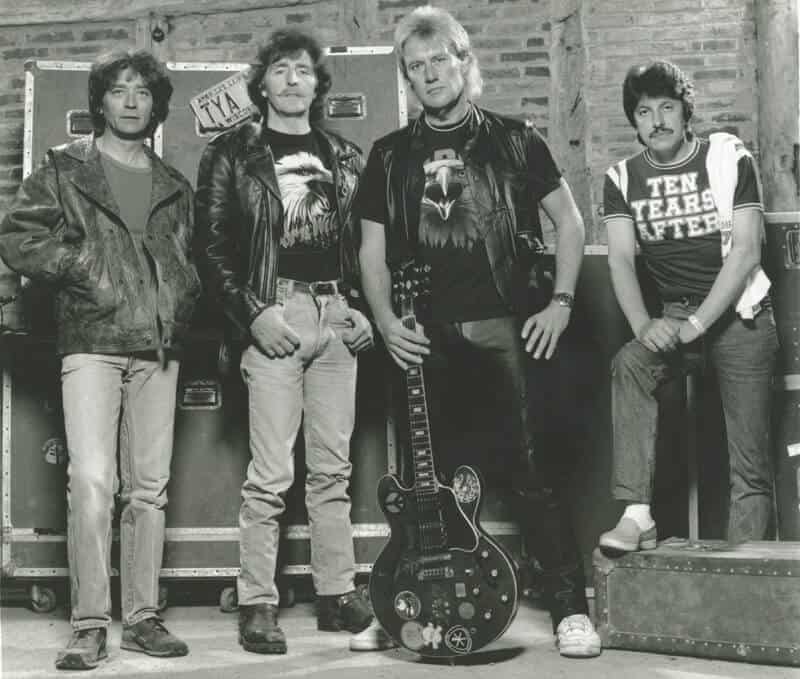
April 3, 1988 – Burgerweeshuis, Deventer, Holland
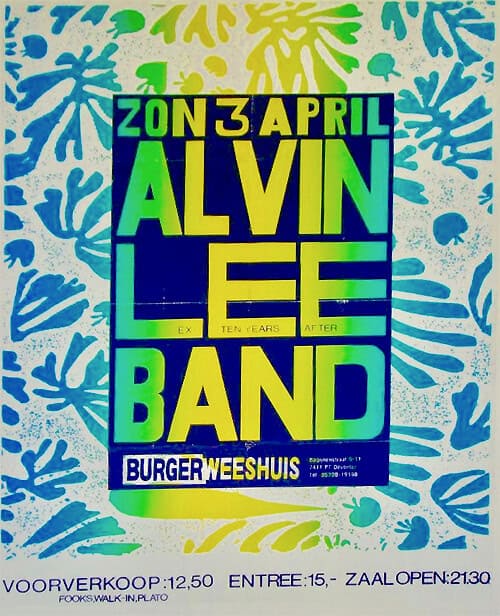
June 8, 1988 – Paris, France
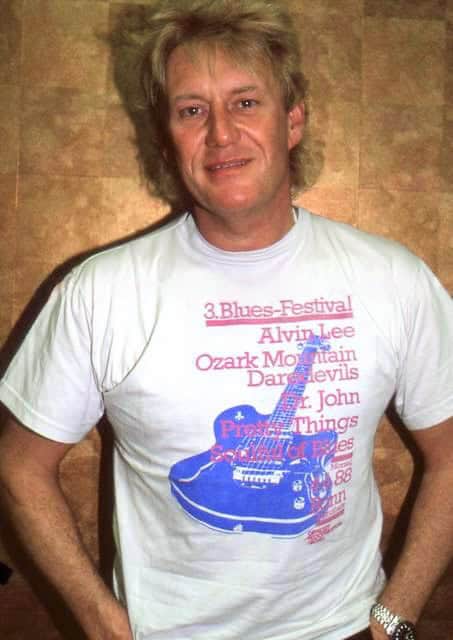
Théâtre de la Mutualité – backstage – photo by Georges Amann
June 9, 1988 – Clermont Ferrand, France
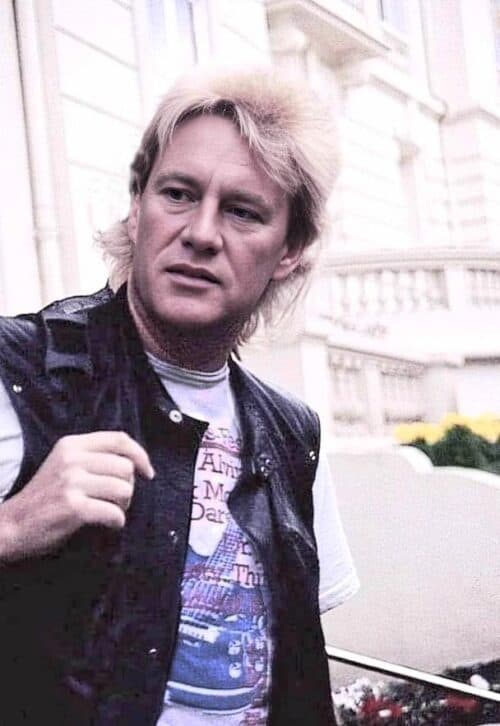
photo Jack Moutaillier
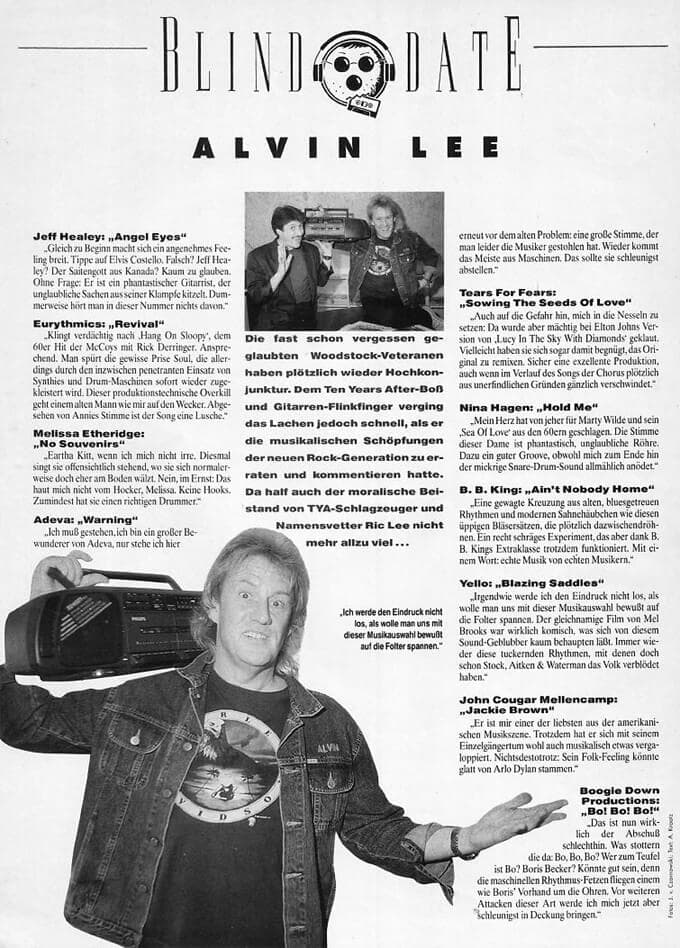
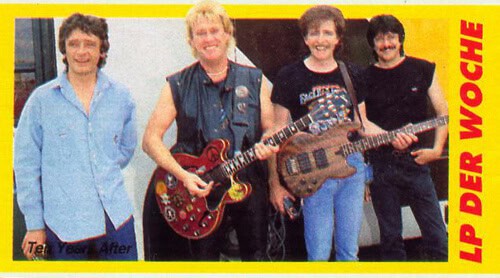
Fotos: J. von Czarnowski – Text: A. Krootz
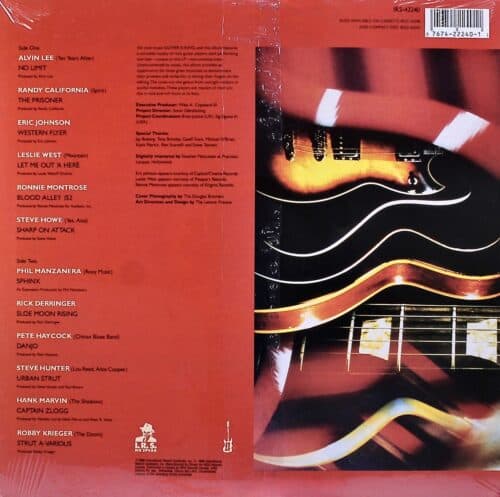
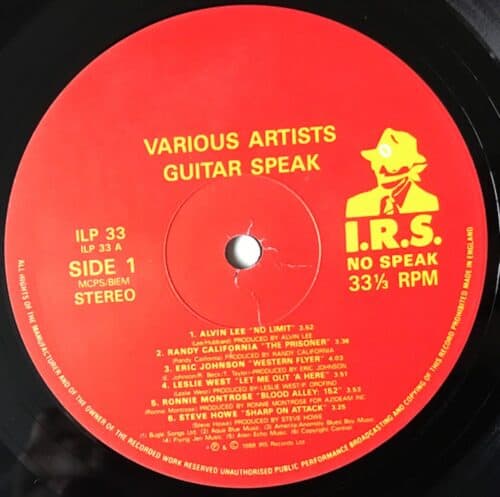
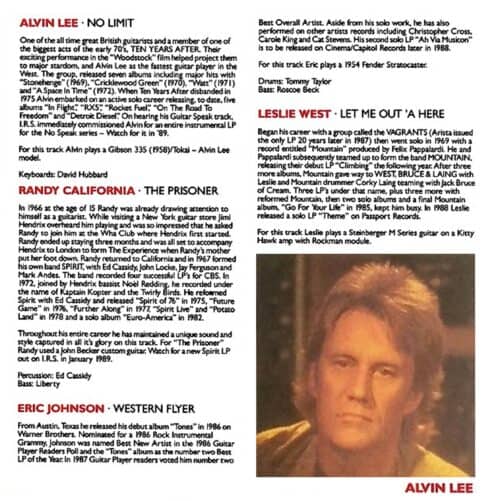
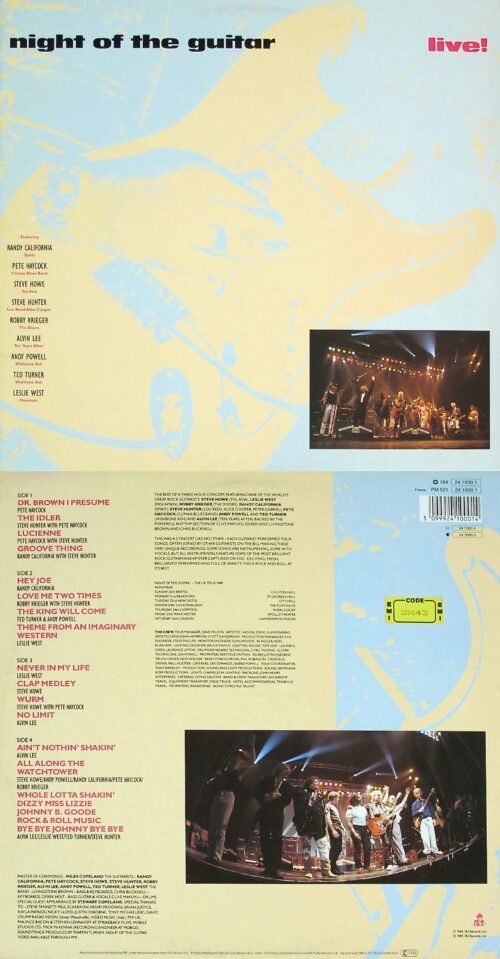
October 17, 1988 – Album Release “Guitar Speak”
label: I.R.S. “No Speak”
“Guitar Speak” is a standout instrumental collection that celebrates expressive, guitar-led music. Alvin Lee’s contribution “No Limits” is a clear highlight, showcasing his unmistakable blues-rock fire, fluid phrasing, and melodic authority. Guided by Miles Copeland’s vision, the album remains a compelling snapshot of late-’80s instrumental guitar work and a rewarding listen for fans of great musicianship.
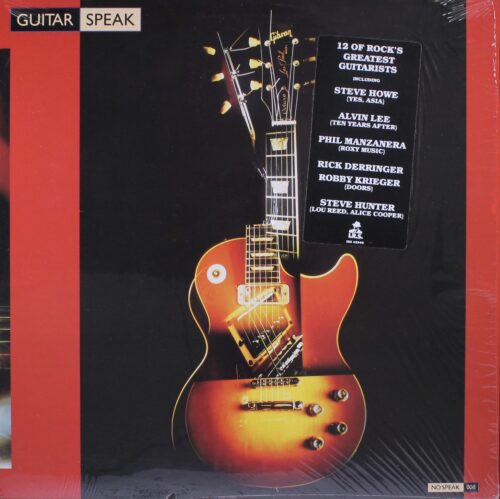
For more than a decade, popular music has been indistinguishable from fashion. A parade of hip styles attached to hit singles, with songs and artists designed only to last until the next big thing. The guitar, once the proud king of the rock and roll jungle, has been relegated to the role of specialist. Need a rocking edge on that lame top 40 number? Just pop in this generic solo packed with lots of distortion, high squealing notes and whammy bar tricks. Yes sir that’s the ticket alright!
Into this void stepped Miles Copeland and his all instrumental series called, “No Speak”. The concept was simple, send some of the world’s most gifted musicians into the studio with these basic instructions: Forget about singing. Forget about hit singles. Let your instruments do all the talking, and make it rock!
Admittedly, Miles’ motivation was a selfish one, he wanted to hear some butt-kicking, instrumental music. Lo and behold, he found a huge audience, of both young and old alike, that were starved for the exact same thing. Trends were shifting and musicianship was finally in again. The logical next step, was to take the show out on the road, in order to return this music, back to its natural habitat – the stage! What better way to do this than a monster caravan package tour, featuring nine of the world’s top rock guitarist.
It was dubbed, “Night Of The Guitar”, and it rock and rolled through the United Kingdom for seven days in November of 1988. Each guitarist performed four selections, that were usually backed by other guitarist on the bill, which included the rock solid house band of: Clive Mayuyu, Derek Holt, Livingstone Brown and Chris Bucknell. There were brand new songs, some old memorable songs, some vocal tunes and a few very special jam sessions included. Brash, melodic music that was driven by adrenaline – laced- nervous energy, every tune boosted the exquisite guitar work that only comes when veterans are granted free reign to step into the spotlight and play whatever they please.
The very best of these unique three hour concerts, were captured on a two record set, “Night Of The Guitar Live”! It’s a document as rough as it is inspired. An aural snapshot of one particular time and place. Can it be referred to as definitive? No, not a chance, because definitive implies an ending. Nothing is definitive, when you’re discussing living, breathing, working musicians.
Night of the Guitar live! contains no drum machines, no funny haircuts and no poseurs. Just nine brilliant musicians, on stage and doing what they do best of all, playing rock and roll guitar. It’s about time isn’t it?
Richard J. Grula, writer for Guitar World
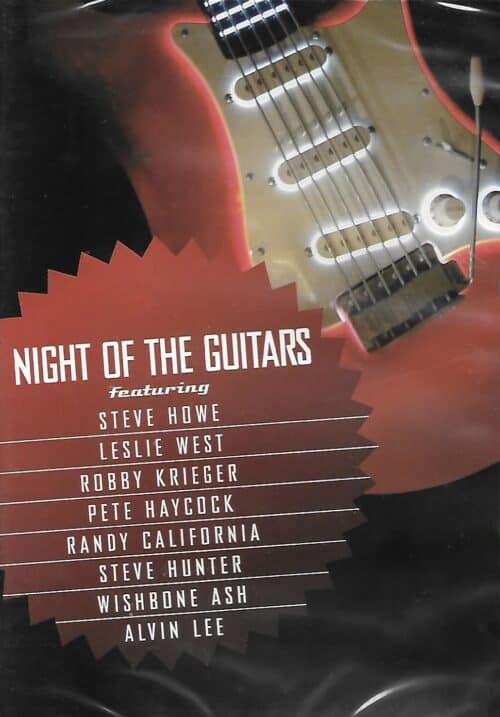
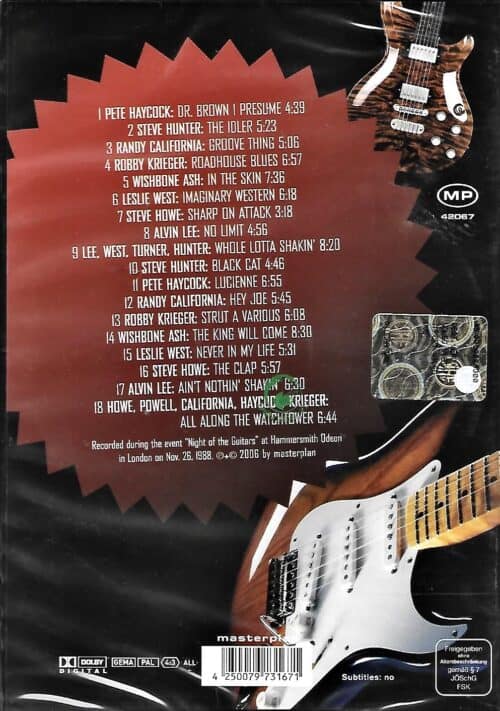
“Night Of The Guitars”, November 1988
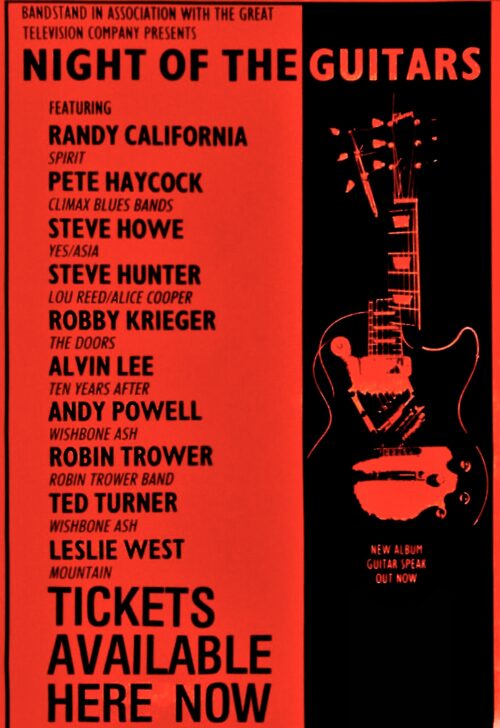
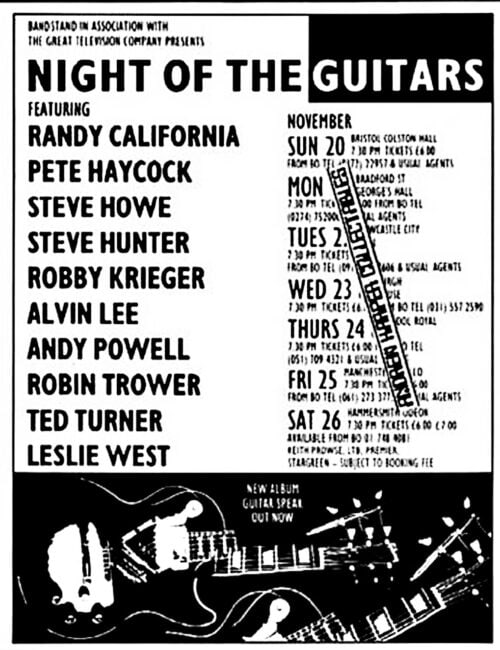
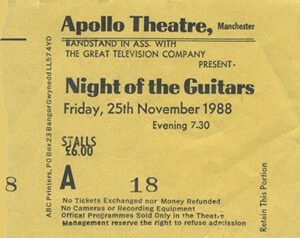
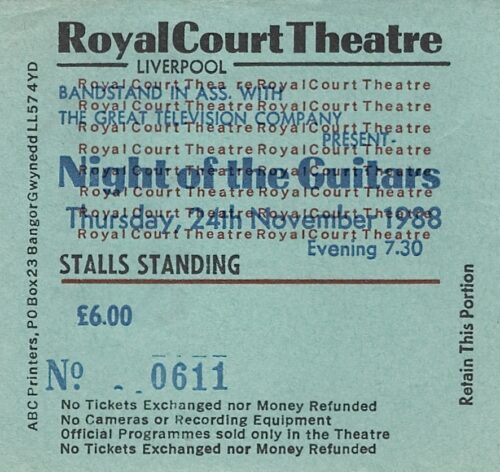
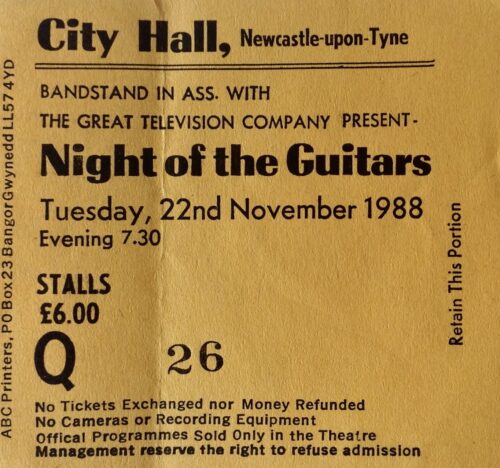
Ticket stubs
Tour T-shirt
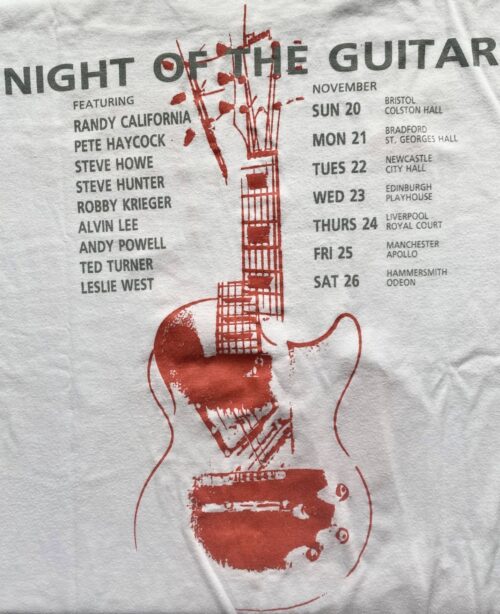
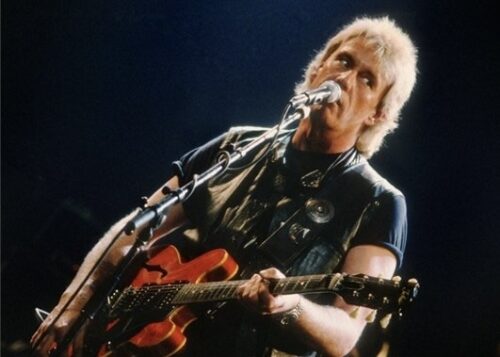
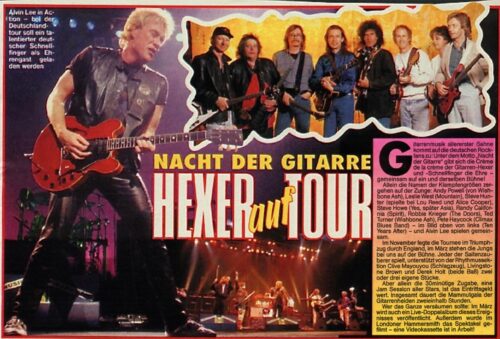
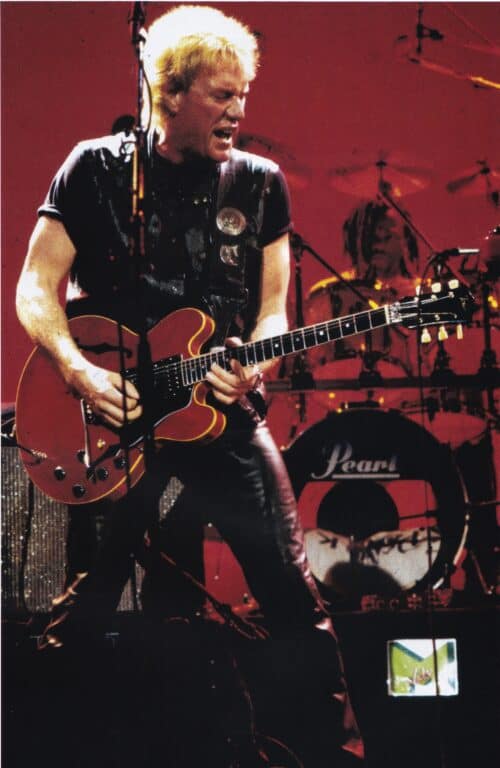
“Night of the Guitars” was a thrilling all-star tour that celebrated the electric guitar in its purest form. Alvin Lee was a clear highlight, delivering powerful performances of “No Limits” and “Ain’t Nothin’ Shakin’,” both infused with his trademark blues-rock fire and melodic confidence. A particularly memorable aspect of the shows was Lee’s on-stage collaboration with Leslie West, where the two guitar legends traded riffs and solos with infectious energy and mutual respect. The tour captured the spirit of spontaneous musicianship and remains a standout moment in live guitar history.
The concert at Hammersmith Odeon was released on CD and DVD.
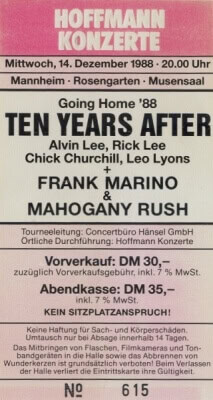
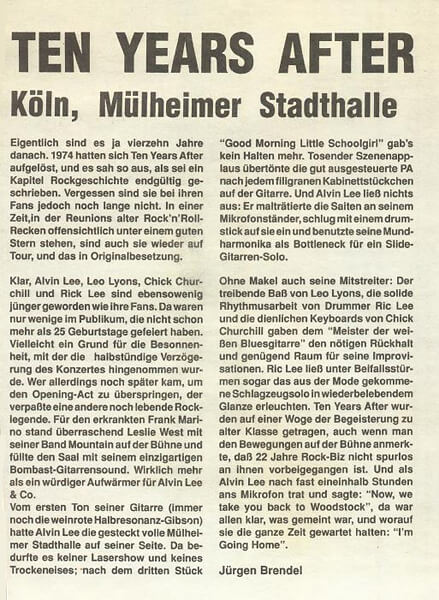
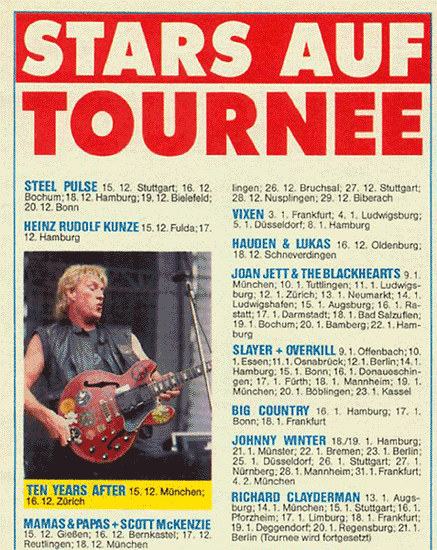
TYA on the road again
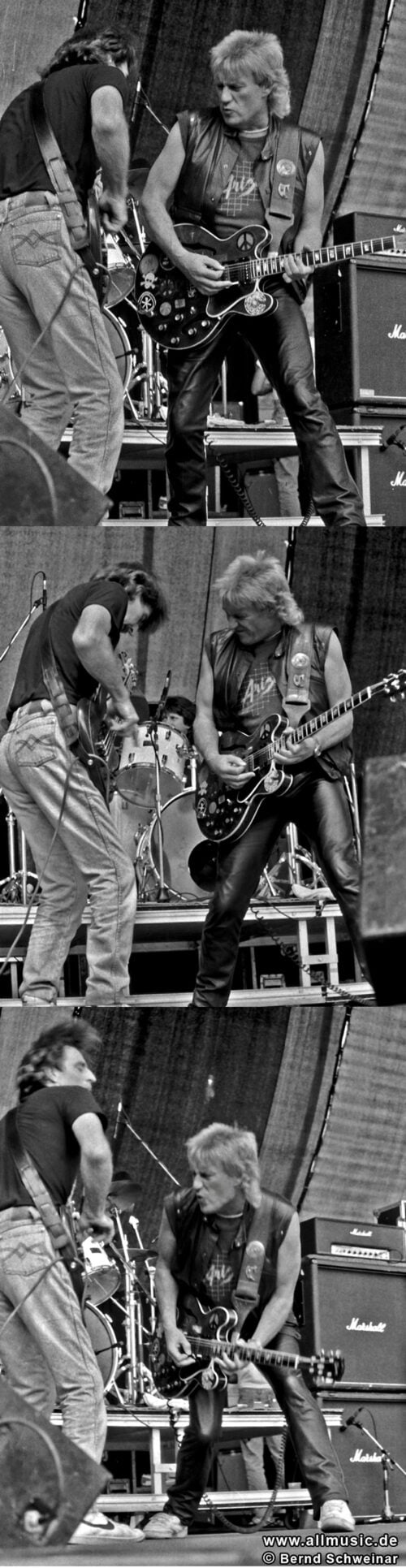
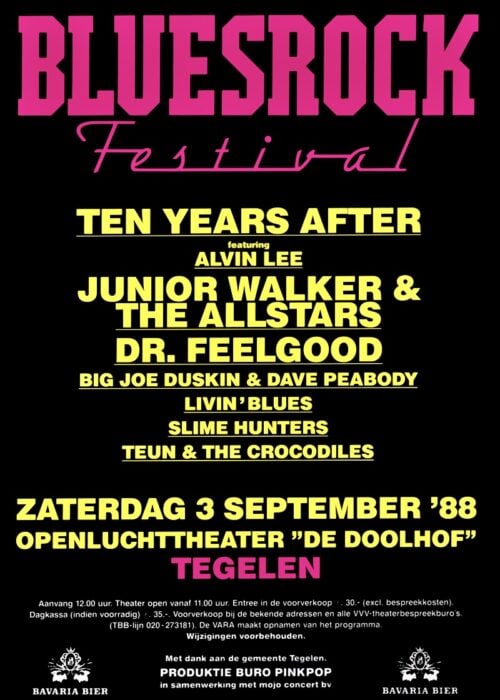
July 1988 – Nürnberg, Germany, Out in the Green Festival
photos Bernd Schweinar
1989
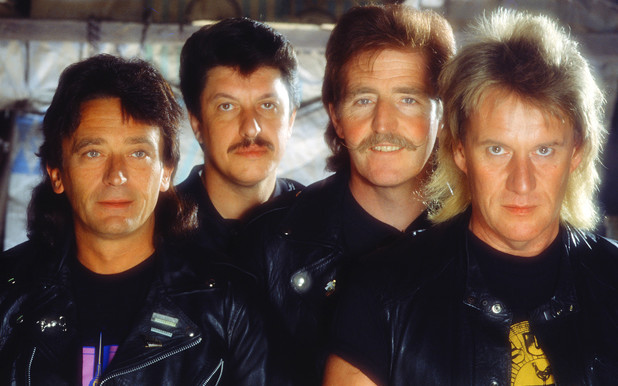
June 15, 1989 – Neckarsulm, Germany

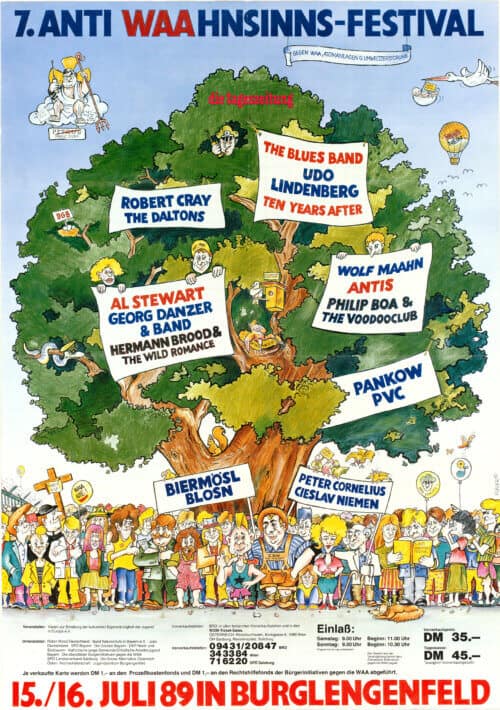
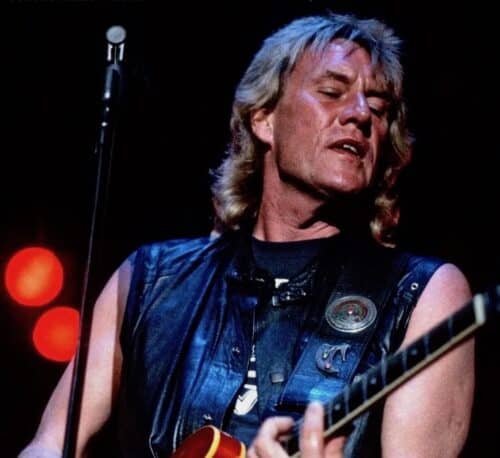
July 16, 1989 – Anti-WAAhnsinns-Festival, Burglengenfeld, Germany
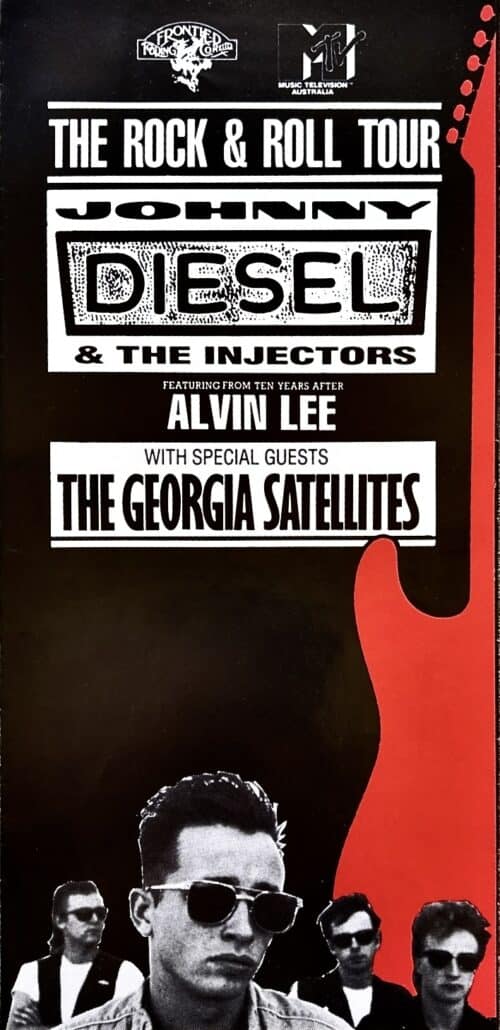
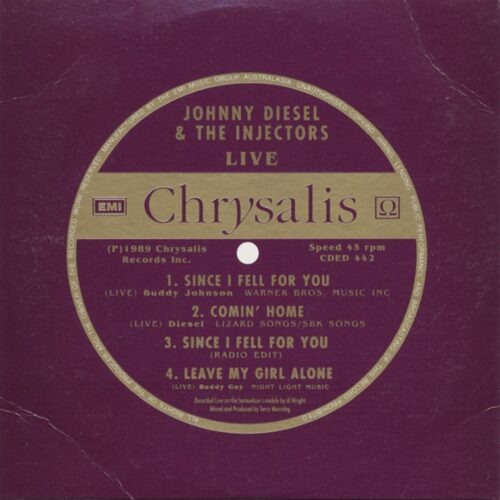
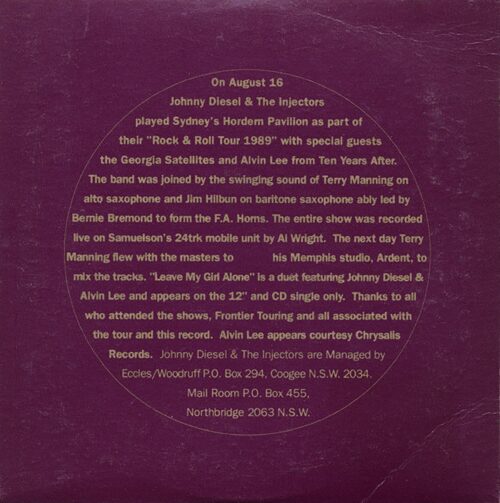
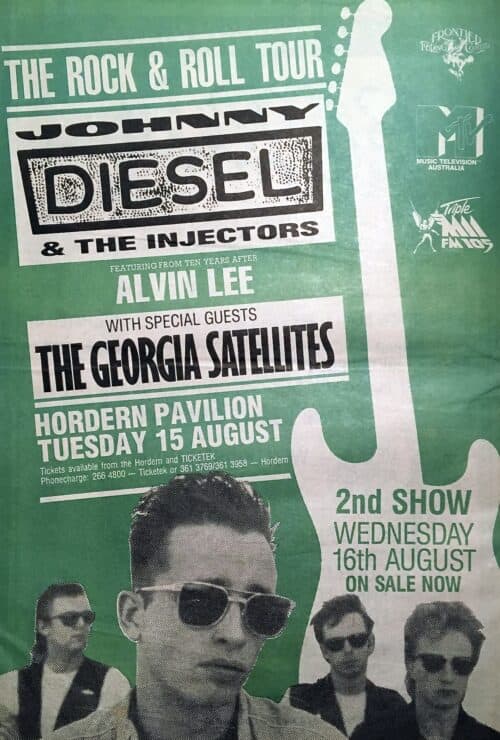
Interlude … August 2-19, 1989 – Alvin’s only visit to Australia!
… as guest star on Johnny Diesel tour
…
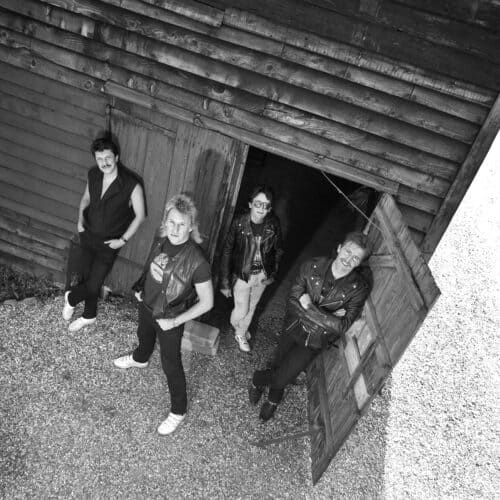
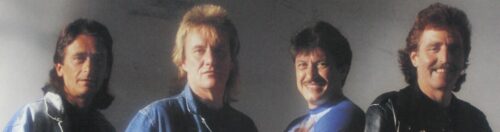
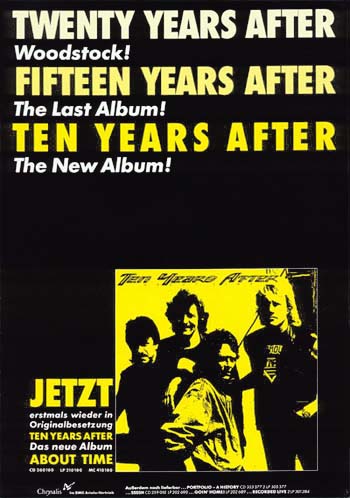
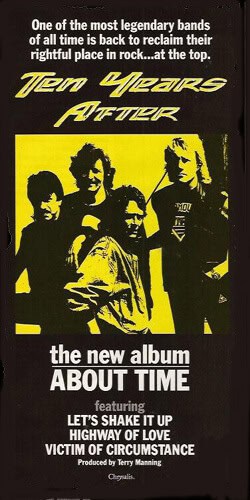
Goldmine Magazine – October 6, 1989
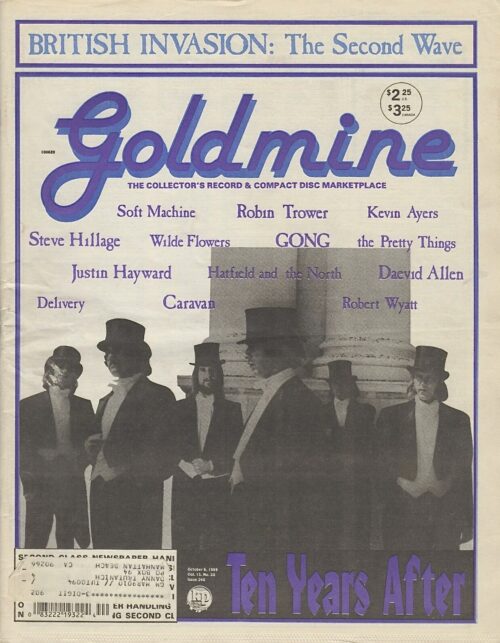
ABOUT TIME
Although several of the reformed rock groups recording and touring the country in this reunion year also played at what has become 1989’s big commemorative event, the 1969 Woodstock Music And Art Fair, only one remains primarily identified with the event. The Who and Jefferson Airplane both played there, but it is Ten Years After, a band that broke up fifteen years ago, that will always remain tied to its extended treatment of lead guitarist Alvin Lee’s “I’m Going Home”, as shown on the split screens of the Woodstock movie released a year after the event.
A closer examination of the band’s career, however, reveals that that performance, while not unrepresentative of the group’s music and concert work, gives us only a small reaction of Ten Years After’s importance to rock history. And with a new album, aptly titled “About Time” and featuring the group’s four original members, there may be some history yet to be written.
Ten Years After originally appeared in clubs in London as part of the ongoing blues revival that had already given birth to the Rolling Stones after having been founded by such figures as Alexis Korner and John Mayall.
Alvin Lee, born December 19, 1944 in Nottingham, and bassist Leo Lyons, born November 30, 1944, in Bedfordshire, were childhood friends who grew up together in Nottingham. Both were playing by their early teens, combining American blues and jazz influences, and Lee even backed John Lee Hooker at the Marquee Club in the early 60’s.
In 1964 they performed in Hamburg, West Germany and elsewhere in Europe as “Britain’s Largest Sounding Trio”.
Back in Nottingham, under the name “The Jaybirds”, they acquired Ric (no relation to Alvin) Lee, born October 20, 1945, Staffordshire, as drummer from “The Mansfield’s” in August 1965. In 1966, they moved to London, where they picked up work in clubs as well as accompanying the play “Saturday Night and Sunday Morning” and touring as backup group to the Ivy League. By November, they had been taken on by manager Chris Wright, whose agency with Terry Ellis, named Chrysalis ( Chris / Ellis), would have a major impact on their career. They also acquired keyboard player Chick Churchill (born January 2, 1949).
After a single gig under the name “The Blues Yard” they became “Ten Years After”. In the spring of 1967, they were overheard by the Marquee Club’s manager, John Gee, playing Woody Herman’s “At The Woodchoppers Ball”. This led to a residency at the influential club and to the band’s signing to Decca Records, which would release their recordings on the new “Progressive” Deram label.
The group’s first eponymous album was released October 27, 1967, featuring both standards like Willie Dixon’s “Spoonful” and originals by Alvin Lee. It didn’t chart, and neither did a one-off single, “Portable People” and “The Sounds”, issued in February.
For so active a road band, it was appropriate that their second album, “Undead”, was recorded live, at Klooks Kleek Club. Featuring “At The Woodchoppers Ball”, “Summertime” and “I’m Going Home”, it was recorded August 16, 1968 and issued September 21. In Great Britain, the album reached number 26, while in the U.S. it got to number 115.
By this time, the band had begun to tour the U.S. at the behest of Bill Graham, who arranged gigs at his Fillmore clubs. By the time of their demise, they would claim to have done more U.S. tours – 28 – than any other British Invasion Group. Alvin Lee now claims more than fifty U.S. tours himself.
The touring would affect Ten Years After’s U.S. popularity drastically, but the influence of America – especially the psychedelic influence which also had its impact on the band’s music, as can be heard starting with their third album, “Stonedhenge”, recorded from September 3rd to the 15th 1968 and released February 22, 1969. Continuing the group’s gradual sales increase, it peaked at number 6 in the U.K. and rose to number 61 in the U.S.
A contract negotiation saw the group signed directly to Chrysalis, which licensed their records to Decca. In later years, when Chrysalis became a record company, many of Ten Years After’s albums would be reissued on that label.x›¥¥¥¥¥¥¥¥¥¥¥¥¥›››
In June, the group recorded a new album, “Ssssh”, and then returned to the U.S. to tour, hitting the festival circuit. They played on August 15 and Ssssh issued the same month became their biggest selling hit yet, reaching number 4 in the U.K. and number 20 in the U.S.
Their next album was “Cricklewood Green”, a slight return to the blues, albeit psychedelic blues, which was issued in April of 1970, again going to number 4 in the U.K. and hitting number 14 in the U.S. with a single, “Love Like A Man”, which reached number 10 in the U.K. but only got to number 98 in America.
With the release of “Woodstock” the movie in August of 1970, Ten Years After became a major concert attraction, though its relentless schedule was beginning to hurt the quality of its record releases.
“Watt” was issued in December of 1970, and got to number 5 in the U.K. and to number 21 in the U.S. indicating that, despite Woodstock, the bands record sales were levelling off. The band then took three months off the road to prepare its next album, which would be its first under a new contract with Columbia Records.
“A Space In Time”, featuring a more electronic sound and more reflective songs from Alvin Lee, was issued in August and became Ten Years After’s biggest U.S. seller, going gold by December and producing the Top 40 hit “I’d Love To Change The World”. It was to be the band’s commercial peak.
Deram picked this exact time to issue a compilation of unreleased British tracks, called “Alvin Lee & Company,” which reached number 55 in 1972. The bands official follow up was “Rock & Roll Music To The World”, which was issued in October of 1972 and only got to number 43 – followed closely by their “Recorded Live” album (known as the official Ten Years After “Bootleg”) and was released in June of 1973 – it reached number 39.
At this point, the group took six months off for solo projects, among them Alvin Lee’s album with Mylon LeFevre , entitled “On The Road To Freedom”, which reached number 138 early in 1974. And by that point, Ten Years After was in the studio once again, but by the time they’d finished recording “Positive Vibrations” they had all decided to disband, playing a farewell gig on March 22, 1974 at the Rainbow Theatre in London.
Not surprisingly, their final album only reached number 81. The following year, Ten Years After reformed for a single lucrative U.S. tour in July and August, and that was it.
Most visible since the split has been Alvin Lee, whose bands, including one called “Ten Years Later”, have put out albums periodically. There have also been periodic Ten Years After compilations, and in the last year Decca has issued the first three albums on CD, while Chrysalis has put out the rest, so that the band is one of the few 1960’s acts to have its entire catalogue in print and on CD.
And now comes “About Time” which, on a July day in 1989, brought Ten Years After’s four original members (plus their manager Derek Sutton) together to sit in a hotel room in front of “Goldmine’s” tape recorder and talk about their past, present and future.
Goldmine: Let’s start at the period in 1966-1967 at which the band got the name Ten Years After and signed to Decca Records.
Alvin Lee: Originally, it was the Jaybirds. That was the band with me and Leo. For a short period, we were called the Blues Yard, (for only one or a few gigs at that) then we decided that tied us down to one kind of music too much. The first happening thing in London was the Marquee residency and that’s when we decided we needed a name to take us through into the 1970’s as it were. Ten Years After has got no real meaning, it’s just a nice phrase. It’s not particularly 10 years after anything. We did realize that by accident it was 10 years after Elvis Presley became famous, to us in England, anyway. But we were nearly called “Life Without Mother”. That was the second one / choice.
Ric Lee: Yeah, it could have been worse.
Alvin Lee: (no relation to Ric) I quite like that, actually . So, the name was picked and the Marquee residency led – it was the situation in those days where we were getting a good name on the club circuit in London and we got approached by Decca Records. Did we want to make an album? And I think we were one of the first bands to actually make an album first, because in those days you used to make a single and if it did any good then they’d let you make an album.
Ric Lee: (no relation to Alvin Lee) Funny thing about that was we did an audition for them a few weeks before, didn’t we?
Alvin Lee: We actually did an audition for Decca and failed it, and then they called us up a few months later and said, “We want to make an album with you.” We just got hooked up with the wrong A&R man when we did the audition.
Goldmine: Tell me about Mike Vernon, the producer of your first three albums.
Alvin Lee: He was kind of an in house producer, to be honest he wasn’t that active. He turned up and helped out. He wasn’t a great force. He admitted himself that he didn’t really understand what we were trying to do.
Ric Lee: Mike was a very pure blues fanatic.
Alvin Lee: Yeah, he was a pure blues fanatic, and remember the “blues boom” that John Mayall started? That was probably the turn-around for Ten Years After to take off. Because I’d been brought up with my father collecting chain gang songs, very ethnic rural blues stuff, and of course, for the occasional one o’ clock set in the morning when you do three sets a night, we’d do a bit of the blues and a bit of jazz; there was no real outlet for it. And then, when the blues boom happened, suddenly I had a whole list of, a repertoire of great blues songs which I could start putting in the set.
Ric Lee: Plus the rock n roll, Little Richard stuff we’ve always loved.
Alvin Lee: Right, in other words, Chuck Berry, Jerry Lee Lewis, early Elvis, and blues.
Goldmine: The reputation of the band was always that it had a much more diverse set of styles than many of the blues bands of that time.
Ric Lee. I think that’s the different people in the band. As Alvin just outlined his influences, mine were jazz, like Joe Morello, Buddy Rich, those types. Leo’s were Scott La Faro in those days.
Alvin Lee: Bill Black and Scott La Faro!
Ric Lee: He was the bass player with Bill Evens. Scott was killed in an automobile accident very early on, unfortunately…and Chick Churchill’s influences were Oscar Peterson, and that area, and I think when you put those four influences together, that’s why you get the amalgam you get.
Alvin Lee: I did used to like Count Basie quite a lot too, I think the swing thing we all came together on that.
Ric Lee: And George Benson, before anybody ever heard of him.
Alvin Lee: And Brother Jack McDuff. At that time, when we were teenagers in the 1950’s there wasn’t really that much, apart from the blues and very ethnic R&B, before we’d heard of Chuck Berry. We were mainly listening to American swing jazz for our inspirations. So we had a four-piece band and we were playing Count Basie numbers, which didn’t sound much like Count Basie, but our own style came out of it. And “Woodchoppers Ball” was a Woody Herman song. In fact, we used to do backing work and back cabaret artists and when they went off waving, we used to play “Woodchoppers Ball”. And sometimes we’d carry on for five minutes and go down better than the orchestra we were backing.
Ric Lee: We actually got two gigs out of that, on our own, just on the strength of doing that as a play-out song for another band. But we used to do it at a rate of noughts’ as well. It was about fifteen times faster than Woody Herman!
Alvin Lee: I remember John Gee suggested that we do a concert with Woody Herman and play “Woodchoppers Ball” together. I said, “I don’t think that’ll work, somehow!”
Goldmine: Tell me about Ten Years After, the first album.
Alvin Lee: The first album was, in fact, basically our live set. We didn’t have to think much or write anything. And the album, I think, was recorded in two days, one of those situations where you record the song, and say, “Thank you,” and they don’t even let you listen to it, and then you just went on to the next one.
Ric Lee: We had a problem with “Help Me,” didn’t we? We were trying to get the atmosphere of that onto the album. We did about three takes of it, and the third take was really happening. It’s a very, very slow number. It’s very difficult to get the feel of it in the studio as opposed to live. And we came back and the tape operator had wiped the first one clean – (erased it altogether).
Alvin Lee: I’ll tell you, it was 10 minutes long; they weren’t used to long numbers, and what they used to do was record one number on this side of the tape and turn it over, and record another number on the other side. And the two overlapped, because we used to do long numbers. We were the cause of them stopping that particular way of recording.
Goldmine: Did you have any problem moving from being exclusively a live band, to now doing studio recordings?
Alvin Lee: Oh, yeah. Straightaway, the technicians then weren’t used to – you couldn’t go in with four Marshalls. It was unheard of. They’d think you were a maniac and they’d always get you to play through smaller amps. So we had a hard time just getting our own sound happening, because they encouraged you to play quieter. Also, they want you to do the backing track and then they go back and you overdub the vocals. The first time I’d done that…lose a little of the feel by doing that, too.
Ric Lee: Also, drum-wise, you’d only have probably two mikes live, one overhead and one on the bass drum, which tends to get a better balance across the kit, on the top of the kit, on one mike, if you place it correctly. In fact, I found out, Terry Manning who was just on the new album (Ten Years After – About Time – as the bands producer) was telling me that he engineered the Led Zeppelin 3 album, and John Bonham insisted on having two mikes on the kit when he recorded. He said, “I’ll get the levels, you place the mikes to get it right.” Which I think accounts for the drum sound he got on the albums.
Alvin Lee: That’s right, you’ve got to control your own dynamics.
Goldmine: I assume, being in the studio for the first time, though, this was the sort of situation where, pretty much, the engineers were setting things up and more or less telling you.
Alvin Lee: Yeah, they just said, “You just play and leave the rest to us”.
Ric Lee: Which is your first mistake.
Alvin Lee: And from doing that, then we started to experiment ourselves, and take more time and get more complicated, which finally leads up to the situation today where some bands take a year to make a record. We never got that bad. I think that eight weeks is a maximum. I’ve seen a lot of bands, you get through two albums and you’re doing your live set, you record your live set, then you have to start writing new material and often you can see bands start to droop a little because you’re playing stuff you’ve had in your set for five or six years, and it’s very rehearsed and very tight, and basically you just play it and it’s recorded as it is. But then you get to the point where you’re writing material and you play and you want to hear it back and see how it sounds. It gets to the point some bands start writing in the studio, which is very dangerous, because it can go on for months, that way. The first two albums were easy, then you have to start thinking.
Goldmine: You had to go from being a band that played primarily cover material, to being one that played primarily original material. Was that a natural transition for you?
Alvin Lee: It was, really, but as I say, when you’re on the third album and suddenly you need eight new or ten new songs, you can do a couple of covers and then try to write the rest yourself; that’s a vast departure. I think on the first album I wrote about three or four, maybe five, (one of which was co-written by Chick Churchill, and one by engineer Gus Dudgeon), which is not to hard. When you have to come up with a whole album concept and everything else…
Ric Lee: It must also be difficult to get stuff with a band that’s got as diverse influences as we had then, getting stuff that suits everybody to play.
Alvin Lee: It was trial and error, to be honest. We were experimenting a lot in the studio. We’d say, “Let’s try a country-style number”, “Let’s try a slightly funky number”. We weren’t saying, “This is definitely our music”. Was the second album Undead? (asked Alvin).
Ric Lee and Goldmine: Yes
Alvin Lee: That was recorded live at Klooks Kleek and I remember when it came out I was delighted. I heard it in L.A. when we came here on the first tour (1968 – Fillmore West) and I thought, “Well, that’s it. What can we do? That’s everything. That’s probably as best as I’ll ever play.” I thought it really captured the band at its best. And I kind of had an inkling that there were going to be problems in the future recording, because what was on those two albums encompassed everything the band could do.
Goldmine: Up to that time
Alvin Lee: Yeah
Goldmine: The next album, “Stonedhenge”, sounded like a movement in the band’s sound to different kinds of things.
Alvin Lee: That was the first experimental album, and also the influence of the West Coast. The San Francisco thing, the Jefferson Airplane and the Grateful Dead, were already creeping in there, with the strange sound effects and oddities going on.
Ric Lee: That was the album, also, we all did a separate track, which was a bit of a giggle.
Leo Lyons: Twenty years later, perhaps, not so much of a giggle!
Goldmine: It was very much in keeping with the times.
Leo Lyons: Yes, it was
Alvin Lee: Absolutely.
Ric Lee: (speaking to Alvin) They tried to get you to do a mini-opera at one point, because the Who were doing it. Didn’t they?
Alvin Lee: Yeah, it was mentioned. I think it was good that everybody had a little chance in those days to do something special, and different, as well. What we were doing with those albums, because of the psychedelic kind of influences, you record different songs, but then you try and tie it together and make a concept, so you make the whole album like a “trip”. So that one side would be a twenty minute piece, although it may be five or six different songs in it, and we’d link them up with sound effects and try and make a little adventure out of it.
Goldmine: One of the things too, that was happening at this time, in a career sense, that I note, is that you finished a contract with those three albums.
Ric Lee: No, the contract was for six albums. The other three were on Decca, as well.
Leo Lyons: To a certain extent you’re right, because there was a production company that came in between, so it was the formation of Chrysalis Productions. When we got a production deal with Chrysalis between us and Decca, we were allowed to record whenever we wanted to, with a budget. Prior to that, we were told when to record, how long we were recording, and more or less we had to record at Decca studios. So we moved over then to an independent recording studio called Morgan Studios, and it’s now called The Workhouse. And that was an eight track. So the “Ssssh” album was the first one that was done on the eight-track. So Ssssh for us was the turning point.
Goldmine: By this point, also, the band was growing in popularity. Did that put greater pressure on the band? Ssssh came out just after you played Woodstock.
Alvin Lee: Woodstock was not a particularly – it was an event, obviously, we were aware when we arrived. But we weren’t ready for any event, it was just another name on the date sheet.
Ric Lee: We’d done a bunch of quite large festivals. It was just another festival.
Alvin Lee: In fact, we weren’t even that aware that it was that different when we left there. Obviously, it was special, but we weren’t aware that it was going to be remembered so strongly. Had it not been for the rain storm, we’d have probably flown in by helicopter, played, and gone out again within two hours and probably would never have even seen it. But we were about to go on and the rain storm broke. There was no way anybody could play with the sparks flying up on stage. The rain storm was actually the highlight of Woodstock for me. I thought it was better than all the bands. There’s no way half a million people can run for shelter, so they just sat there and started singing, and I took a walk around the lake and kind of joined in with the audience and experienced it first hand, which was good.
But we didn’t play that well at all, because when we finally did go on there was a lot of brouhaha, because nobody wanted to go on first due to the risk of shock, and I think we took the plunge eventually and said, “Oh, what the hell. If we get electrocuted, we’ll get good publicity.” And we went out and actually had to stop playing during “Good Morning Little School Girl” and re-tune because of the atmospherics. The storm had done so many changes in the atmosphere, the guitars went way out of tune. I actually had to say, “excuse us, but we’ve got to stop and re-tune”. The audience didn’t seem to mind; they were just having fun anyway. But it wasn’t particularly a good gig, playing wise, we didn’t rate it at the top. It’s all in retrospect that it’s such a huge event.
Goldmine: One of the things, obviously that had a big effect was when the Woodstock movie came out a year later.
Ric Lee: I think the pressure probably came then.
Goldmine: Was there a reaction immediately after the festival?
Alvin Lee: Not at all. We went on for a year playing the same three to five thousand seat venues. When the movie came out, we suddenly shot up from 5,000 seat venues to 20,000 seat venues.
Leo Lyons: I think what happened with the movie was, it opened up all the small towns in between the large towns we were already playing.
Alvin Lee: It crossed us over to the masses rather than a cult following thing. It was the end of the underground. A lot people say that Woodstock made Ten Years After, but it only catapulted us into that mass market and in a way it was the beginning of the end. Going into the ice hockey arenas, where you can’t hear much, the sound’s terrible, you can’t see the audience, it wasn’t that much fun and it was a decline of enjoying touring as much as we had done previously. Also, the sad thing about Woodstock it seemed it was the peace generation all coming together, and then they all went back home again, and never got together again, as it all dissipated afterwards.
Goldmine: By talking about Woodstock, we’ve skipped over the next album, Cricklewood Green, which almost shows a moving back towards blues or a more basic sound.
Alvin Lee: It was still experimenting, but I suppose we did start looking for our roots. We didn’t want to get too far from the roots. Cricklewood Green had “Year 3,000 Blues”. “I thought that was quite an innovative song at the time, a blues based on living in the year 3,000. Automatic bloodhounds chasing people.
Leo Lyons: I think by the time of Ssssh and Cricklewood Green we’d been exposed, quite overexposed, to the American drug culture of the time, too and I think that had an influence on the albums.
Alvin Lee: On Cricklewood Green, at one point, “Working On The Road”, which is still one of my favourite songs, actually, the tape slurs. It slows. Somebody leaned on the tape machine when we were recording it, and nobody even noticed at the time! So that gives you a clue as to what state we were in. Producers, engineers and band, no one noticed it.
Goldmine: There’s also a fair amount of quieter music that you play on these albums, Ssssh and Cricklewood Green, and the next one, “Watt”, and in some cases slower music. I wondered if that was a reaction since there was so much writing about the speed at which you could play.
Alvin Lee: Yeah, I was kicking against that criticism. In retrospect, I shouldn’t have done that, but in those days I hadn’t quite got my professional opinions sorted out, my own attitudes. I was having a few personal problems. I was starting to become marketed, and I felt like a box of cornflakes, and I wanted to be known as a musician and not a pop star. Now you’ve brought that up, that’s the first time I’ve realized that was the period that started. And probably I wasn’t too aware of it at the time, but I was definitely having thoughts in that area.
Goldmine: Part of the effect of the Woodstock film was to separate you out as a celebrity apart from the group.
Alvin Lee: Yeah,, we had always been a communal band, and I was trying to kick against that to some degree. I was actually trying to de-escalate the “getting famous” aspect.
Leo Lyons: Which probably made it even worse.
Alvin Lee: Also, you’ve got to remember, for the idealistic 1960’s, it was also very un-cool to be rich and famous. It wasn’t one of the things we were striving to be. We were striving to be credible musicians, much more than trying to be pop stars. I’ve never wanted to be a pop star, it was never an ambition, and it seemed to be happening, and I was kicking against it. I was kicking against the criticism. People were saying I was just a flashy, fast guitarist that didn’t really have any taste and couldn’t really play, and that was upsetting me. So I suppose that was all coming into the music.
Goldmine: One album that stands out is “A Space In Time”
Leo Lyons: Well, that was a new contract. That had a lot to do with it.
Alvin Lee: Ah, but remember, we’re talking of working on the road, which was the Ssssh album, “Working on the road for fifteen years, blowing my mind and blasting my ears” (Working on the Road is from Cricklewood Green), and I was basically saying, “It’s time to take a break.” And I was campaigning for a break, because in those days, we would do like a ten week tour of America, come back to England for three days, then do a five week tour of Germany, then another three days off, then onto Scandinavia and Italy, and after that somebody say, “You’re in the studio next week for the next album”. And I was writing songs in the taxi on the way to the studio, and not really having any time. Watt was definitely suffering from no time to write. In fact, even the original title – was suppose to be called “WHAT” and not “WATT” – but it came out as the latter.
Leo Lyons: Ten Years After What, wasn’t it?
Alvin Lee: I eventually dug my heals in and said, “I’ve just got to have some time”. And I wanted six months off, which was ludicrous. I think it ended up being about three or four months off. It gave me time to sit down with the acoustic guitar and write some good songs, and I think “A SPACE IN TIME” was the culmination of that. A bit of time and there was the space to write A Space In Time !
Chick Churchill: That was why it was called that, is it? I never knew.
Alvin Lee: I think “A Space In Time” is still my favourite Ten Years After album, because we had time to work on it. “I’d Love To Change The World” was that on “A Space In Time?” asked Alvin.
Goldmine, Ric, Lyons, and Churchill: Yeah
Alvin Lee: I was embarrassed about that song because I don’t like preaching in music. I like music to be apolitical and I thought I was maybe pushing my luck. To start off, I was criticizing freaks and hairies in the first line, and I thought, “I’m going upset a lot of people with this song”, and I very nearly didn’t even put the song forward. But it was a good song and it’s a good job I did in the end. But I don’t think it’s a typical Ten Years After song. In fact, we never have played it live.
Sutton: Much to the management’s disgust!
Alvin Lee: The record company would come to the gig and say “When are you doing your hit?” And I’d say, “We don’t play it.” “What?” I said, “What’s the point? It’s a hit already.” But, you know, it was evident that people didn’t come to the concerts to hear us play the records, they come for the whole immersion in the live concert thing.
Goldmine: Is there a point here where there’s a diversion between the albums and the live gigs?
Leo Lyons: Very much so, yes
Ric Lee: Yeah, Right
Alvin Lee: What album was “Choo Choo Mama” on ?
Leo Lyons: The live one.
Chick Churchill: Live.
Ric Lee: No, Rock and Roll Music To The World.
Alvin Lee: And that was the one after “A Space In Time” and after the “I’d Love To Change The World” and we didn’t play it live. After that embarrassment, (Columbia Records president) Clive Davis actually picked a song, I don’t know which one it was…
Chick Churchill: “Tomorrow I’ll Be Out Of Town.”
Leo Lyons: The “Positive Vibrations” album you mean. What a wonderful title.
Alvin Lee: A very inept title, in fact. That was the least positive thing we’d done.
Goldmine: I guess the band had broken up by then.
Ric Lee: It almost didn’t get finished.
Alvin Lee: Of course we were also going through the Country House Syndrome there. We all had nice houses in the country and were starting families and things like that and there wasn’t really that much will to go out and sit in the Holiday Inn for six months.
Leo Lyons: Funnily enough, there were one or two tracks on the “Positive Vibrations” album that I quite liked, some of the rocker tracks. The Little Richard number, “Going Back To Birmingham,” I quite liked that and one or two others.
Alvin Lee: Also, the other syndrome of a band breaking up was that we were all building our own home recording studio’s and nobody wanted to go out and play, we all wanted to stay in and make our own music. I think it’s a natural thing to happen. I think we just weren’t communicating. We’d just spent all those years working together and I think quite naturally we all just drifted apart a bit, and started to find other interest besides the band.
Sutton: That tour you did, that 1975 tour, was a very big tour, and then you just stopped touring.
Alvin Lee: We were just bribed into doing that tour. We had broken up by then, we were just bribed to go and do one more.
Sutton: But it was enormous and it was a huge tour, and then you stopped touring, and it was not like a lot of other bands, where it gets worse and the audiences get fewer and then suddenly it falls apart.
Alvin Lee: I think in a way, it was quite fitting that we finished then, because we were always very honest. It was a very honest band, there was no bullshit, no hyping, and really, the honesty was going out of it, and we got disenchanted with that. We were going out and playing automatically. I think I started quoting the band as being “a travelling jukebox”.
Goldmine: I think “honesty” is a good word here, because it would be natural that there would have been pressure on you (Alvin) to hire some people and call it Ten Years After and go out there.
Alvin Lee: Yeah, it was suggested at the time.
Goldmine: You called the band Ten Years Later.
Alvin Lee: Yeah, but that was considerably later, anyway.
Ric Lee: That’s because I sued him! (Laughter)
Goldmine: There’s a long time between that break-up and now.
Leo Lyons: Fourteen years. The positive thing of Woodstock – we’ve talked about all the negative aspects of it – is, that is probably the reason why we’ve got the opportunity, in many respects, to be able to start all over again.
Goldmine: What brought about the reunion?
Alvin Lee: It was sparked off by a German promoter who called me up and said he’d like to book Ten Years After, the original band, for four festivals in Germany, which was last summer 1988, which then prompted me to call round the guys, and say, “How about it!”
Goldmine: The new album “About Time” came out on August 22, 1989. Is there a tour?
Alvin Lee: Yeah, it starts on October 1st in the U.S.A.
Article Written By William Ruhlmann
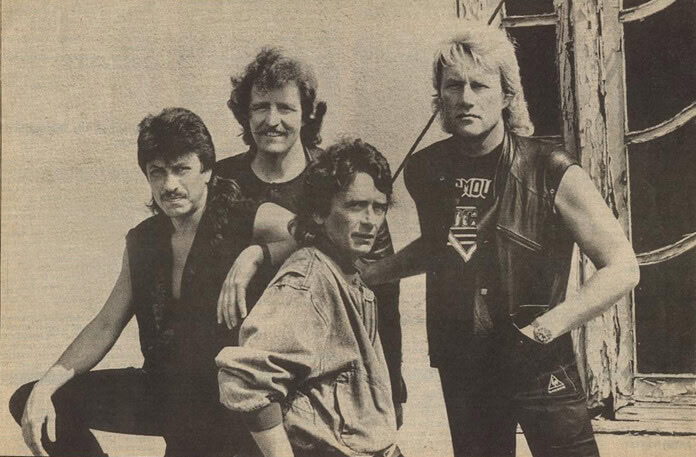
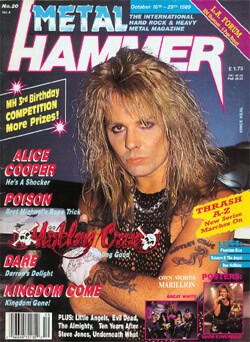
Metal Hammer magazine – October 16, 1989

Article by Chris Welch
In days of yore when guitar heroes were bold and bands played the blues, Ten Years After were one of the giants. They were the band who stormed out of Nottingham’s fair city, playing rock and blues with a flair and drive that was astounding. The team of Alvin Lee (guitars), Chick Churchill (keyboards), Ric Lee (drums / percussion) and Leo Lyons (bassist) won over first the club goers of the 1960’s and then battled to the top of the festival circuit.
They hit a break peak in with their performance at the 1969 Woodstock Festival, when Alvin Lee was known as the fastest guitarist in the West after his burn up on “I’m Going Home”. With albums like “Undead” and “Ssshh” Ten Years After became one of the most successful and popular touring bands of the age, and along with Jethro Tull helped found the fortunes of the Chrysalis label.
Formed in 1966 they broke up in 1974. Most of the ex-members went into producing and publishing, while Alvin carried on with such bands asüpöä “Alvin Lee & Company” and “Ten Years Later” which ran from 1978 to 1980. In recent years, Alvin has been touring mostly in the States and Germany. But now the original line up have got back together and made an album “About Time” which is undoubtedly one of the best produced and performed in their career.
Says Alvin: “Terry Manning was the producer and we did it in Ardent studios in Memphis, Tennessee. It took ten weeks and we had fifty songs, believe it or not, to choose from. We all played together and did it the old fashioned way. It was a high tech studio, with high tech equipment, and we used a low tech method. Terry was particularly good in keeping the playing simple, to give the basic rock and roll effect. Whenever we tried to get clever, or Ric wanted to put a bar of 5/4 time in, he’d say NOPE! Ha-Ha! One of my favourite songs is “Victim Of Circumstance” which is five minutes long and took me six minutes to write. I sat down with the guitar and a tape recorder and the riff, melody and words all came at once. It doesn’t happen a lot these days. I don’t know if it will be a single, we leave that up to record company. We have always done a variety of rock and blues tunes on our albums with the odd commercial track. There’s one track called “Waiting For Judgement Day” which I really wrote for Deep Purple. I played it to them without a guitar solo, then I played a version with guitar on and liked it so much I thought we’d keep it for Ten Years After.”
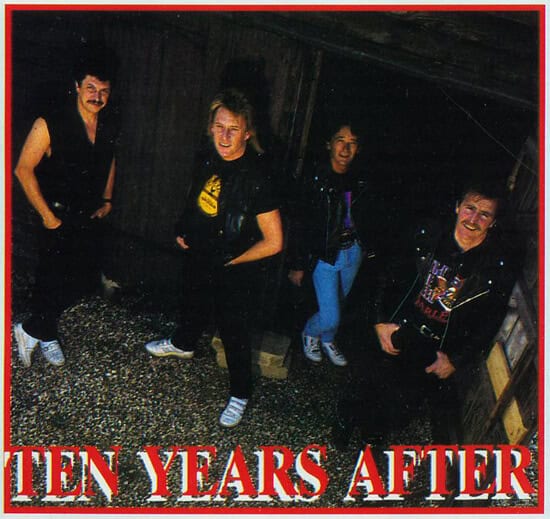
Legends:
“Ten Years After reformed briefly for the Marquee Silver Anniversary in 1983. We hoped somebody would pick up on it then but it was bad timing. Any band members who were over twenty years old were considered ‘Boring Old Farts’ – but now we are ‘Living Legends’ !”
Later Alvin was approached by German promoter Reiner Haensel who wanted the original Ten Years After for four rock festivals in Germany. Lee called up the boys and they were all keen to play again. After a couple of days rehearsal they were ready to play the festivals.
“There were 20,000 fans at each festival and they had banners out welcoming us back. The obvious thing to do was put the band together again permanently, by public demand. That was last summer. We decided that rather than do a nostalgia tour, we’d put out a brand new album, and do it properly. Chrysalis gave us the green light and said they wouldn’t have us go to any other label. I have been accused of jumping on the bandwagon, but we started this over a year ago. Now everybody and their uncle is reforming now, from The Rolling Stones to The Who.
We are starting a world tour with dates in the States, at the end of October, then we come to Europe in December. We do our first English tour in January. Our first English tour in fifteen years that is! Then we’ll be off to Australia and Japan.” How did Alvin Lee feel about being able to come back after so long? “It’s great to have the band back together again. We broke up in 1975 after many years of abuse and over touring, and it was a unanimous decision. Everyone had had enough at the time, but now there is more energy and enthusiasm than there ever was. It’s better than it used to be, we’re playing better as a team and I have certainly kept the licks up. I’ve been listening to the young kids coming up, and there are some great guitarist around. I particularly like Joe Satriani, and Robert Cray, and Eddie Van Halen. When I heard him I thought “Hello, hello, I had better start practising!” Jeff Healey is good too.”
“I’ve kept working. I’ve done club tours of America and festivals in Europe with my own band, which kept me alive and happening. You try retiring and find it’s too boring, so the only thing to do is get back to your roots.”
Alvin used to get knocked for playing too fast, but now EVERYBODY wants to play fast. How did Alvin feel about that? “Yeah, a lot of it seems a bit pointless when it’s mixed up with outrageous images in order to get attention, but good bands always come out of that situation. Who they will be I couldn’t tell you. Hopefully not W.A.S.P. I don’t care for them.”
Take It – Guitar Speak 1988-1989
Alvin recently did the “Guitar Speak” tour for producer Miles Copeland in which he joined forces with ten lead guitar players including Steve Howe. Alvin says: “I thought it came off pretty good. At the end we all played a rock n roll medley. I shouted – “Everybody Take It” and we all played the “Johnny B. Goode” solo in unison. Well….nearly all of us anyway. I won’t say who couldn’t make it ! There’s a video of the show knocking around.”
Ten Years After have already done their own video for “About Time” featuring the track “Highway Of Love” which they made in Hollywood, California. They just play and there’s an attempt at acting or as Alvin says, “Walking through cornfields”. They’ve also done thirty gigs together including a concert in East Berlin, in front of 80,000 people. In Hannover they did a huge show when they played a lot of new songs. They plan to play future shows with fifty percent old favourites and the rest new stuff.
“This is the easiest album that we’ve ever had to re-create on stage except for one track, “Wild Is The River” which I don’t think should have gone on myself. The record company particularly wanted it on as a crossover single. But I think everybody should ignore it !!!!!! It’s quite a catchy little number, but a bit too poppy for Ten Years After.”
The band didn’t play at the 1989 “Makes A Difference Festival” in Moscow which was suppose to celebrate the anniversary of Woodstock. Explains Alvin Lee: “No, I kind of didn’t feel right about recreations of Woodstock. To me it was a great moment, but I wanted to let it remain a cherished memory. To recreate something like that is impossible. We had all sorts offers. We had one offer to do a Woodstock package of all the bands that were still left alive. But I felt the same way. It was too much of a nostalgia thing. It’s more important to move into the 1990’s. We’re all looking back to the 1960’s too much. At the gigs we have been doing, all the fans have been eighteen year olds, and they are not coming to see the band as it used to be. They’re a brand new audience and we are turning on young people to our kind of music that they haven’t heard played live before.” The big question remains: Were Ten Years After wearing flared jeans on stage? “No sir. We are not stuck in the 1960’s. Although I do hear flare jeans are coming back into fashion again too!!!”.
NEON – Alvin Lee Interview with Lorry Doll
“My heroes were the blues players … you sit down with a bottle of Scotch … playing a funky blues club with lots of cigarette smoke and booze – singing the blues.”
Ten Years After’s self-titled first album was released in 1967, but 1969’s Sssh was their break-out release following their appearance at the Woodstock music festival. Alvin Lee’s blazing blues-inspired licks on “Going Home” in the documentary film chronicling that historic event introduced him to a wide and appreciative audience. After the British band’s demise, Lee carried on with a critically acclaimed solo career and occasionally Ten Years After would regroup. NEON’s Lorry Doll met up with Lee at Chrysalis Records New York offices in 1989 right after the release of the Ten Years After album About Time.
Lorry Doll: I like your new album a lot.
Alvin Lee: Thanks a lot, so do I.
You did it at Ardent Studios in Memphis. You like Memphis?
I love Memphis. I suggested we do it there with Terry Manning, he works out of there a lot. Personally, I thought I always wanted to go to Graceland and actually I achieved an ambition there. A friend of mine lent me a big ‘ole Cadillac and I drove in the front gates! And of course Beale Street was a lot of fun. We were jammin’ down on Beale Street after the sessions at a place called Rum Boogie, with the house band, Dominick. . . damn I wanted to give ’em a plug and now I forgot their name!
How long were you in the studio?
Ten weeks all together. Half that time it was scheduling the tracks we didn’t record. We had about fifty tunes. Everybody in the band brought songs. We thought the fairest thing to do was let Terry Manning pick the songs. We did fifty demos and let him pick ten out of that. He picked about sixteen, seventeen songs and we tried them live in the studio. When you record, some songs get better some don’t. Most of the time, probably four weeks, was taken doing that.
How do you get those great squeaks? Do you pinch the pick or something?
I call them scroggs. Yeah, you hold the pick very shallow and as you pick you let your thumb catch afterwards and you get a harmonic, but you have to be quite accurate where you do it.
I almost had a heart attack when I read in the liner notes “… Alvin Lee uses exclusively Scalar.” I thought, “What, he’s not using the (Gibson) 335?” Then I read on and it was the strings they were talking about, whew! Scalar are new strings that are made in California. They’re very good. They got a high-density center wire and they get more level and they last longer.
Do you use like a .046 to a .010?
No, I use a .048 to .009. I go .009, .011, .015, which is very light and the .028, .038 and .048. I used to use .052’s. Dean Farley, who makes these Scalar strings, he tried. I rang him up and I did a digital test recording to find that these strings weren’t that loud and the bass strings weren’t as loud as the top strings and he advised me. He actually sat down and worked out what the best gauges were for me. I need a very heavy gauge ’cause I do a lot of open E’s, hit the bass strings real hard and if you have very light strings they go sharp. He did a bit of research for me and came up with the ideal set. That’s why I use Scalar strings exclusively.
In all the time that I’ve enjoyed your music a lot has happened in the state of rock ‘n’ roll.
Well so they say. They keep telling me that.
I was always thankful that you never veered too far from your original sound.
I explored a way from my roots in 1973-1976. Ten Years After broke up in ’75 and I went through that whole trip of trying to be tasty and trying to answer the critics who said that I was all flash and no quality. They would say that I played lots of notes and he’s got no taste and it used to bug me in those days.
Yeah, but they don’t know how to play guitar.
That’s true and it was wrong of me to get bugged. My mistake. But I did let it happen. I went through this phase where I did funky tasty music, and I did this tour with this band called Alvin Lee and Company, and I didn’t do any of the Ten Years After material. I did all this tasty stuff. The funny thing was that I got great reviews from all the critics saying, “Oh, this guy can really play.” But I missed the rock ‘n’ roll. I’d get to a kinda place where there was a rowdy crowd and I’d want to break into something hot and steamy and the band wasn’t quite capable ’cause it was too tasty. I had to go through that to realize that it wasn’t the direction I wanted to go in. What I realized was that you have to appreciate that what you do easiest is probably what you do best and that rock ‘n’ roll and blues to me is no hard work at all, it’s just fun. I can knock out a rock tune in ten minutes and I kinda think, “If that’s so easy, I ought to do something that’s a challenge. I’ll try to write Paul Simon type of songs.”
Yeah, but isn’t it a challenge to write the same A-D-E…?
Yeah, it is. It was a misguided thing and I got away from my roots. Another thing which told me, seeing the writing on the wall, I went to see Jerry Lee Lewis, he played in Nottingham, England, and I was expecting to hear “Great Balls Of Fire” and “Whole Lot of Shakin” and he did all country tunes. I came out of there feeling really disappointed. It didn’t take me long to realize that if people came to see me and I didn’t do “Goin’ Home” or “Good Morning Little School Girl” they’d be disappointed too.
I wouldn’t.
You wouldn’t, then you must be a real fan then. For a little while I had that band Ten Years Later…
The “Rocket Fuel” album?
That’s right. I wasn’t really pinching the name, it was the tenth anniversary of Ten Years After. I couldn’t carry it on ’cause then it’d have to be Eleven Years Later, etc. But that really was the coming back to my roots and playing’ rock ‘n’ roll and I’ve had no qualms ever since. If you remember like Eric Clapton, Jeff Beck … all these guys, they changed their styles. They all left their roots and went into playing softer music – a little bit less energetic.
When I heard your new record, I said, Good. Man, this isn’t the same old songs twenty years later but a contemporary version of what you would be doing ten or twenty years later, it’s rock ‘n’ roll!
I was very pleased with the way the album turned out. Terry Manning stands a lot of credit for that. He kept us playing simple. We have a tendency to get complicated and start throwing in bars of 5/4 rhythm and maybe trying too hard and Terry would say, “Come boys this is rock ‘n’ roll, let’s keep it simple.” I think in being simple, it’s probably turned out the nearest a studio album could to our live sound. We’ve been trying to do that for years and Terry is amazing ’cause somewhere in his head, very early on, he seemed to have a picture … he didn’t tell us what to play, he kind of steered us.
He wasn’t a Svengali producer, like some of these producers that say, “This is my record and you’ll do what I say.” Terry just brought out the best in the band.
What I wanted out of making the album was, not to be old fashioned – that could have been the worst thing we could have done – to sound like we were still stuck in the sixties. I wanted it to sound fresh but I didn’t want it to sound modern, because I think modern music is kind of synthesized-computerized and that people are kind of fed up with that and that’s why they’re looking back to established bands for reality in music.
You got bands going out now miming to tapes on stage and I think it’s disgusting and it’s not fooling the audiences. They go to see someone they like – seeing four or five people on stage and hearing ten people. Even those that see some guy up there playing a million notes a minute and they think, “This is a good guitar player.”
Whereas someone who plays tasteful like you or Billy Gibbons or. . .
Billy came down to see us in Houston. It was great to see him again. He’s always been one of my favorites. That guy he can play one note instead of ten and that’s more to where I’m leaning nowadays. But then again it’s not even how many notes. A lot of people think if you’re fast you’re good, but you can play real simple lines and easy notes fast. It’s not really how fast you play, it’s what you’re actually playing. There’s not many people who can tell.
And not many of them can get good squeaks!
Ah, me and Billy are the squeak masters.
I like the song, “I’m Working In A Parking Lot.”
Nobody ever did work in a parking lot (laughs).
You had a recording studio a while back, didn’t you?
Well, I have one that’s moved around a lot. I have one in my house. I live in Oxfordshire, about forty miles west of London. Near the airport, easy for touring. I use it more as workshop, as a song writing tool, it keeps me off the streets when I’m not doing gigs. Us going to Memphis was a really good thing to do. The whole environment of Memphis added something. The blues and jazz and it made you feel you were somewhere a bit special. I think it rubs off on the record. It’s good to get away from the telephone. If I’m working at home and have a personal life that I have to take care of which you don’t really need when you’re making a record and you have to concentrate 100% on the recording.
At home, do you practice or run through scales?
I’ve never run through scales. I play a lot. I pick up the guitar and fiddle. I play by instinct, from the hip. I just pick up and play what seems to come natural and that seems to work. Which is great ’cause that means I almost don’t have to practice. I have to practice keeping my mind free of not playing scales but adding those to my itinerary of licks. Basically, I just hear something in my head, more a fast reaction, if I hear something I go through it very quick. The best gigs for me, and the sad thing is that no one knows, ’cause I can play within the limits if I’m really cool and professional I’ll stay 90% within the limits don’t go wrong…
Play it safe.
Yeah, keeping in control. And they think, “Great.” they can’t compare my best to my 90%. They think if I don’t make any mistakes I’m going great. When I’m really hot I’m going like 100% and you’re liable to make mistakes. Some people are gonna think, “Hmm, he’s not up tonight. He’s making bad notes.” But on a good night I’ll hear something, like a flash of an instinct, and hear something and go for it and on a good night I’ll get it and that’s the buzz for me. That’s where I get my kicks ’cause I’ll think, “I’ve never done that before!” But no one else knows. If I screw it up they’ll know! But I prefer to do that, there’s no need to play it safe live. There’s a few tricks, like if you play a wrong note – play it twice and people will think it’s right! (laughs) I’ve never been studious, there was always guitars when I was learning, blues. My father used to like chain-gang work songs – prison work songs – pretty ethnic stuff for a white kid from England to be listening to but I grew up with that kind of playing around the house. I tried to emulate the sounds without copying the notes. If I could make a guitar sound like John Lee Hooker and by doing it that way I didn’t copy the notes. But some of the best guitarists, they would sit down with Chet Atkins record – `Shit Hopkins’ as we used to call him – he’s like a really good technician – could play anything, and some guys would sit down and in five or six hours get it perfect note for note and sound almost as good as those chaps. I didn’t really see the point in that, ’cause I’m only gonna sound almost as good as Chet and who needs two Chets anyway. And I’m gonna sound almost as good as those other guys copying it so what I did was try to get the overall effect that he was getting and using my own notes. Which, I think is important, that’s what I tell young guitarists, don’t copy those solos note for note just try to do your own version of it, make your guitar sound like the guy but use your own notes and develop your own style.
You’re still using Marshall.
Yeah, for however many years. Unfortunately I’m not using a Gibson these days. Sad to say the Japanese are making Tokai. They’re making a better ’58 Gibson then Gibson. I’ve been down to Gibson. I showed ’em this Tokai and said this is actually your shaped guitar. It looks just like one and it plays better then theirs, and said why don’t you make one like this? They said, “Oh yeah, we will, we will.” But they haven’t followed it through. The Gibson name is magic and I’d rather be playing a Gibson, but the Japanese bought up all the best wood ten years ago. When I took my original `58 Gibson out I had a host of Japanese technicians swarming around it. They measured the density of the wood, they measured the hardness of the frets and it came out better. It’s amazing. I still got my original Woodstock Gibson with all the peace signs on it, but it’s kind of getting too valuable to take it out on the road. I don’t like hanging guitars up on the wall, but the Hard Rock Cafe offered me fifty grand for it and it’s worth much more to me. I do take it out on some gigs, but on this tour I didn’t know the crew personally and so I didn’t want to risk losing it.
How would you describe the difference in eras in rock?
It’s like, the different innovators. Django Reinhardt was the great guitarist of the forties and Jimmy Hendrix was the great guitarist of the sixties. The seventies was a bit hazy. . . and it’s all a matter of taste. There’s no “Best” guitarist. The eighties, there’s so many good guitarists, Joe Satriani, Jeff Healy, Stevie Rey Vaughan, Mark Knopfler, Eddie Van Halen. . .
I was really shocked when I read that Billy Gibbons was his (Van Halen’s) inspiration. . .
Eddie is good, he’s a very good guitarist He’s not like that guy Yngwie Malmsteen. Eddie’s a hot technician. A bit over the top really, but even Eddie backs off occasionally!
I like the song, “Going To Chicago”.
Yeah, looking to the roots, that’s what that one’s all about. The black masters, the people I used to listen to when I was growing up, are kind of sadly forgotten, particularly in America. See I was brought up on American music. I had relatives there that would send me stuff when it would come out. When I first came to America in ’67-’68, I expected everyone in America would know who Big Bill Broonzy and John Lee Hooker was. It’s American heritage and I was amazed hardly anybody had heard of these guys. Maybe 20% of them had heard of B.B. King and not many of them had heard of Freddy King or Albert King, Buddy Guy and all that. We were going around and touring and they (the critics) were saying, “. . . this British blues music you play is great.” And I’m sayin’, “It’s American music.” I’ve been copying American music all my life. So that song, “Going To Chicago” it’s a dedication to those black guys. You can go down to a blues club there and see the real thing. Chuck Berry has been so influential to rock `n’ roll, the Rolling Stones and Ten Years After and every band I know has at least one Chuck Berry song on the set. Muddy Waters has always been a hero of mine. And they’re heroes ’cause of their attitude. Someone was asking me the other day, all the kids these days listen to Eddy Van Halen or Joe Satriani and they stand in front of the mirror and practice and so who did you stand in front of the mirror and copy? I never thought about it, I never stood in front of the mirror. My heroes were the blues players and you don’t stand in front of the mirror to play blues. You sit down, with a bottle of Scotch and that’s my image of a musician, playing a funky blues club with lots of cigarette smoke and booze singing the blues. Not wearing leopard-skin leotards and doing that. Okay, let’s get to the meat of it. You want to ask all about the sex and the drugs and the rock `n’ roll! (Laughs)
Okay, so how have things changed?
There was a big talk about that last night with the band. ‘Oh, how the business has changed so much.’ I’m not really into business, to me it hardly changed at all. People still love rock `n’ roll. Doing live gigs the reaction to me seems the way it’s always been. In fact it seems almost like the same people who haven’t grown up. They still get off on rock `n’ roll. It’s like “Jungle Drums”, shake it up, the rhythm is gonna get you like the jungle drums. Just like jungle drums move people, it gets in your soul, rock `n’ roll is the same. Rock `n’ roll will never die!
Editor’s Note: Lorry Doll met some pretty big stars not only through her work with NEON, but throughout her music career. But the Alvin Lee meeting was the only time I ever saw her get pre-interview jitters. In the days before boy bands, a teen-aged Lorry had been a starry-eyed fan of Ten Years After and in particular Lee. Not only did she have every album he ever appeared on, but throughout the many years I knew her, we never missed a single Ten Years After or Alvin Lee tour. So when the time came to finally meet one of her biggest music heroes, she was frantic with worry that he would turn out to be a jerk and destroy her long-time image of him. But Alvin Lee’s easy going manner soon put an end to her fears. Ever the professional, Lorry tried to keep her feelings to herself and conducted a very informative interview until the session ended. Then when it concluded, Lee got a real kick out of the numerous frayed, faded and well-used albums that Lorry pulled from her bag for his autograph.
– Jeff Rey
Interview conducted by Lorry Doll
Copyright 1989, 2003 NEON and blue door productions
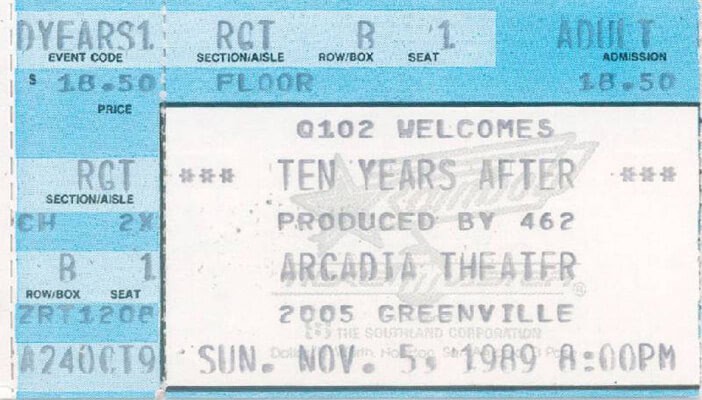
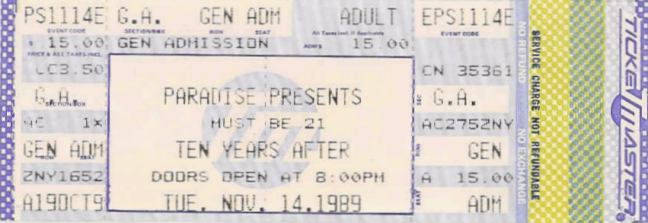
November 23, 1989
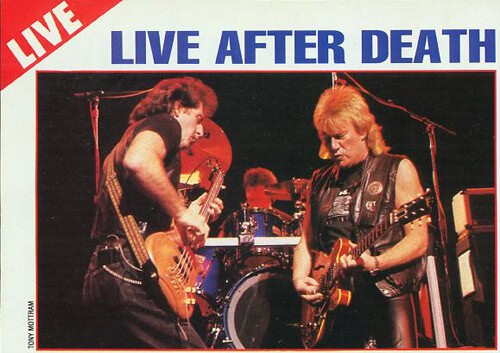
Ten Years After – Live After Death
The Ritz, New York City, Staten Island
Article by Sylvie Simmons
Who would have thought it ? Ten Years After, seminal 1960’s Rockers, do a comeback tour (like every other bleeding seminal 1960’s Rockers this year) having only played together as a band once or twice in the past fourteen years, and they play a show tighter than Rod Stewart when it’s his turn to buy a round ! And bursting with energy like they’re a bunch of sixteen year old boys on testosterone overdrive rather than a band who played “Woodstock 1969” For Christ Sake, twenty years ago it made my ears bleed, my fingers twitch and my old heart soar.
The last time I saw guitar legend Alvin Lee play was at the execrable “Night Of The Guitars” thing in 1988, where (Leslie West aside) his flying fingers shooting like amphetamined meteors up and down the guitar, he woke me up after an hour of terminal boredom. It boded well; but what about the others? Weren’t they selling Tupperware – Door to Door after the band called it a day in the middle 1970’s?
Still, the comeback album, “About Time”, promised fine things too. As Malcolm Dome said in his review, “It sounds like the album ZZ Top should have made after “Eliminator”. It does onstage too, though without the dancing and the beards.
Live Ten Years After completely forgot about plugging stuff off the new album, until five or six songs into their set, and launch into chunks of their back catalogue. A hell of a back-catalogue it is: this lot were not only pre-NWOBHM, they were pre-Old WOBHM, back when it was still called – “British Blues Rock”.
“Hear Me Calling”, off of a twenty one year old album, is ace Blues Boogie, shuffling along in the gutter like a happy tramp and then launched with a slippery-fingered guitar solo that sounds so easy. “Good Morning Little Schoolgirl” is a pile-driver of a Rock Riff, and sounds, well-dirty. It’s played with more balls than a herd of bison, and Alvin Lee flies off onto some astral plane of guitar-diddling. He hasn’t lost it at all.
But such serious finger massacre calls for slowing down and we do get some blues, featuring a tasteful and definitely non-parpy keyboard bit from Chick Churchill, like a beefed-up bar piano. Ric Lee’s drum solo a bit later is similarly no-nonsense, no upside-down platforms and lasers, just a muscular jungle beat.
Alvin’s long guitar solo, meanwhile, is an axe aficionado’s dream: gritting his teeth and pumping out power, thwacking it with a drumstick, giving it a drubbing on the mike-stand, taking it higher and higher until you think you’re going to witness the first ever self combusting Gibson.
There’s not much more to say, except that, Ten Years After still sound great, and you can’t even get pissed off that they only did two encores (well, how can you follow “Going Home”?) when they’ve played for an hour and three quarters ?
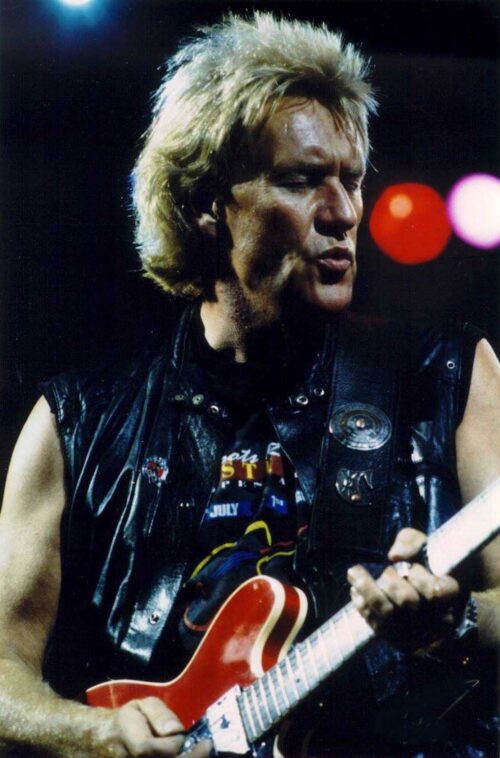
Ten Years After In Concert At The Ritz, New York
It’s been fourteen or fifteen years since Ten Years After last played in New York, or played in America for that matter. It’s only one year less since they last played at all! Back together again with the original line-up and a brand new album, called (appropriately enough) “About Time” to promote one thing is clear: Ten Years After are not trying to cash in on past glories.
Some things, of course haven’t changed. Alvin Lee still grimaces the way he used to, lower jaw jutted out, mouth turned down sharply at the edges, and still regularly lets rip with those bluesy, jazz-tinged solos peppered with fluid, rapid fire clusters of notes that stamped Ten Years After with a different hallmark to most others of their ilk in the late 1960’s and early 1970’s.
But far from sailing a wave of nostalgia, Ten Years After are picking up where they left off, and also with a detectable determination to prove wrong any cynics who might think that Ten Years After in 1989 have nothing more to offer than playing a back catalogue of favourites to audiences who remember them from the last time around.
A major success of “About Time” is that the band have succeeded, in the difficult task of coming up with some modern sounding material whilst staying true to their roots. And when playing live the fact that it can at times be difficult to distinguish between the old and the new prevents the band suffering the kind of “schizophrenia” that can easily arise from playing songs separated by twenty years or more. Though it may be fairly safe to assume that the new songs “Let’s Shake It Up” – “Bad Blood” – “Victim Of Circumstance” are the main sources of enjoyment as far as Ten Years After are concerned, and understandably it is their “Classics” that are perhaps the most warmly received – such as “Love Like A Man”, “Good Morning Little Schoolgirl” and in particular, the still epic, frenetic “I’m Going Home”.
But rather than the “Oldies” being churned out in an off-hand, crowd pleasing manner, they are characterised by an injection of the sort of energetic chance-taking improvisation that is sadly lacking these days outside of the blues and rhythm and blues idiom.
“Good Morning Little Schoolgirl” is typical of this approach, whereby the guitar and bass interplay between Alvin Lee and Leo Lyons builds steadily from exploratory stabs to full blown jamming – superbly executed and genuinely exciting. Plus a song that I didn’t catch the name of, but introduced as: “An Acid Blues” though loudly echoing the late 1960’s and early 1970’s turned out to be a hypnotic tour de force performed with admirable style.
Ten Years After are certainly not the new kids on the block, and they are more or less doing what they’ve always done. If there’s any surprise, it’s that fifteen years on, they are probably doing it as well as they ever have.
By Paul Henderson
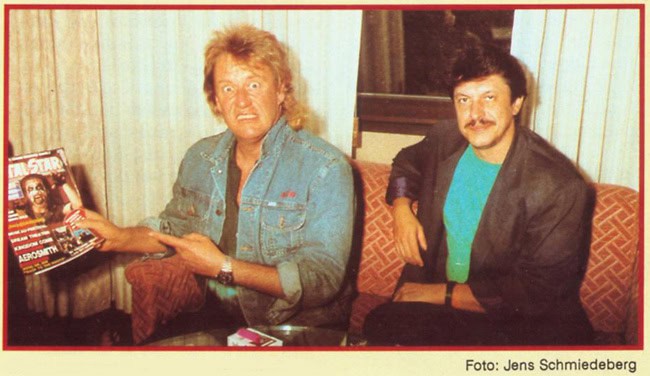
Metal Star Magazine
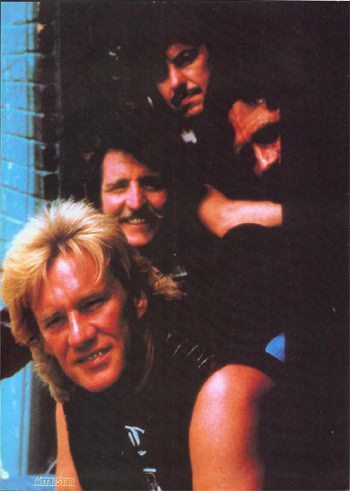
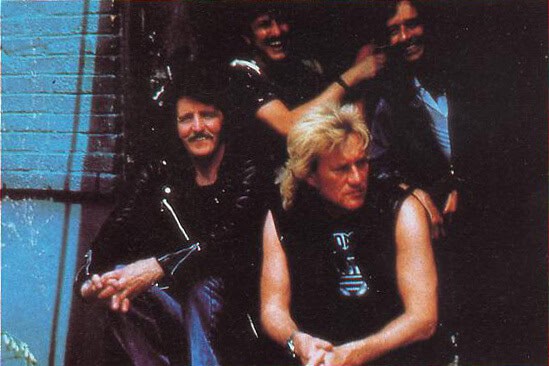
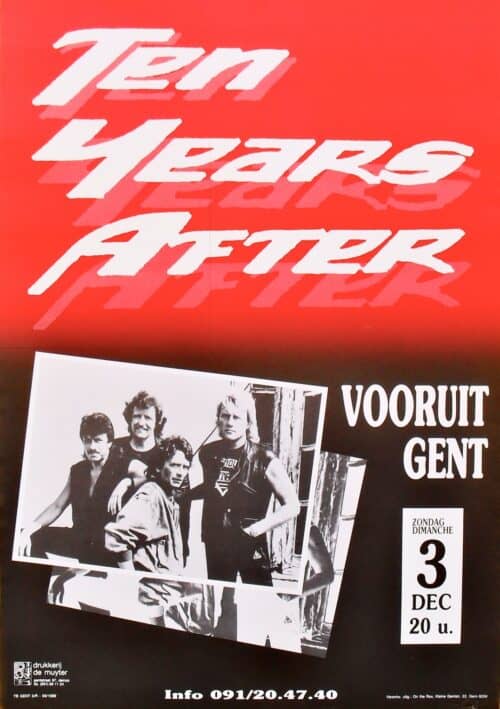
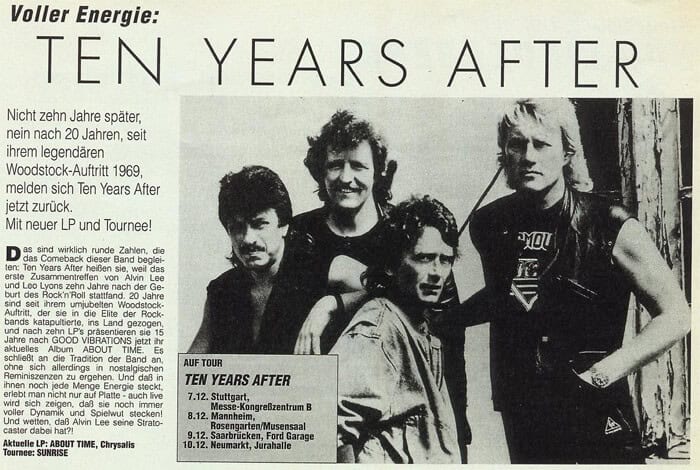
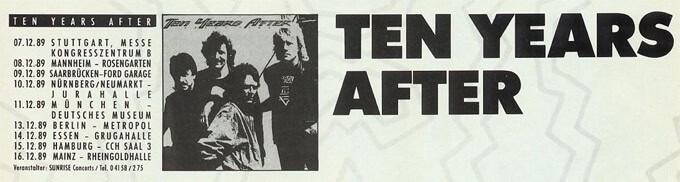
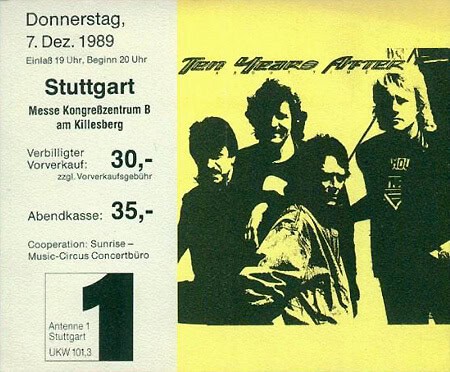
December 6, 1989 – Volkshaus Zürich, Switzerland
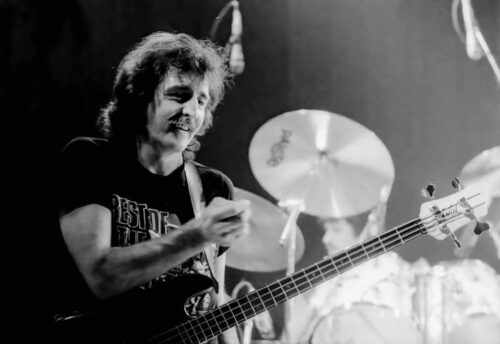
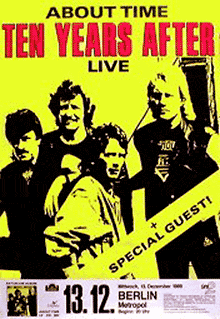
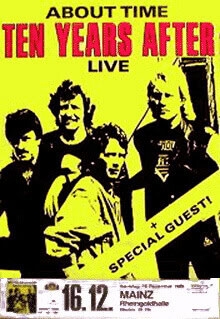
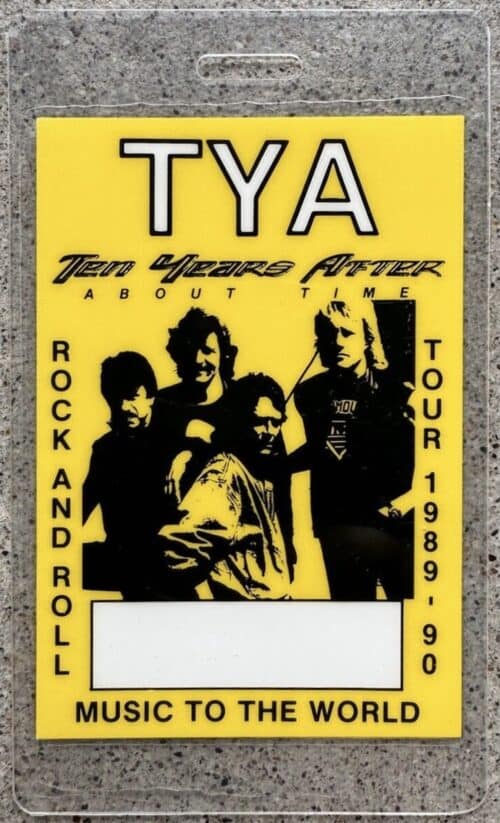
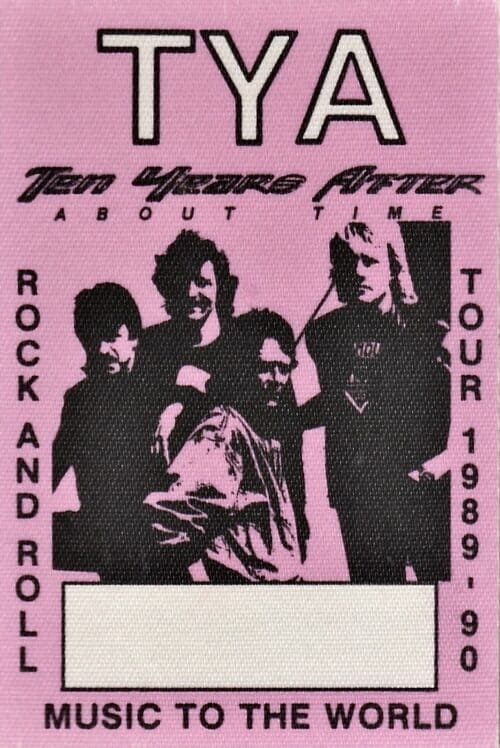
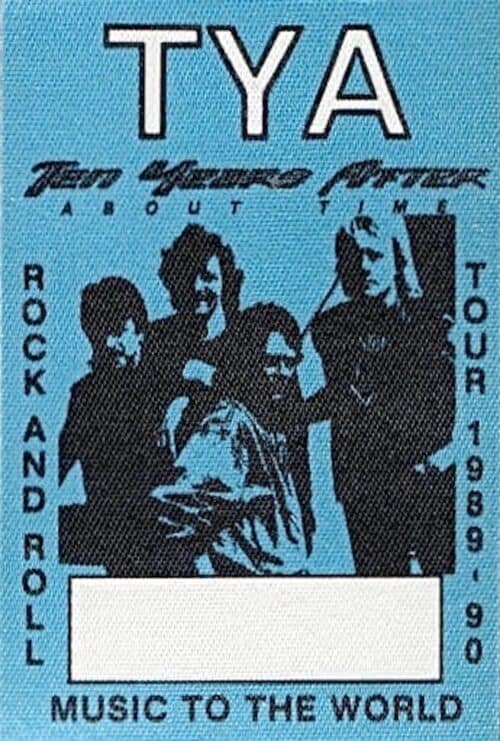
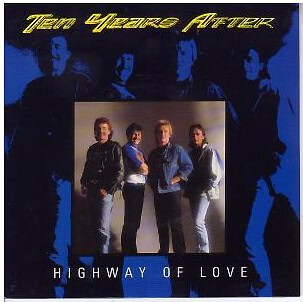
Alvin Lee Interview
He gained his reputation after people started referring to him as the fastest guitar player on earth. Between 1967 and 1974, he did 30 tours of the U.S. He knew Janis Joplin and Jimi Hendrix. He performed at Woodstock and was featured in the film of the same name. He is Alvin Lee and his band is TEN YEARS AFTER. It’s been 15 years since the release of his last album, but make no mistake about it, Alvin Lee is back. ABOUT TIME (Chrysalis Records) is Alvin Lee and TEN YEARS AFTERS latest vinyl effort. Recently, Alvin Lee spoke with us about the music business he knows.
Why did you feel now was the right time to put out an album?
It was last summer and I got a call from a promoter in Germany, and he said is there any chance of getting TEN YEARS AFTER together for these four festivals in Germany? I called up the guys and they all said yeah, we’d love to do it. I kept in touch pretty much on a social level, but we hadn’t done any work together. We did The Marquee Anniversary about 5 years ago. But nothing much came of that. There wasn’t much interest around at the time. It was all New Wave then. Anyway, we had a couple of rehearsals and played these festivals in Germany. Twenty thousand people at each gig! There were banners out saying “Welcome Back TYA!” Basically, it’s by public demand. We would’ve been fools not to realize that people wanted to hear the band. I don’t really know why. There seems to be a movement back towards the older bands now. It seems to be rampant in fact. But, I’m not going to complain about it.
How were you able to support yourself all these years?
I’ve been a working musician all the time. I’ve been doing gigs under the name of the Alvin Lee Band. What I did, kind of my backlash against the business was, I wanted to earn a living as a musician without the interviews and the media stuff. But it was good for me. The fact is, it’s kind of club circuit. I’ve toured America 12 times over the last 10 years. Thing is, nobody really gets to hear about it on the club level. You hit town and maybe there’s a thousand people there, and it doesn’t actually get out into the papers. It’s been enjoyable. My ambition was to be a working musician, and that’s what I’ve been doing. I think this is an opportunity to get back into the mainstream, and kind of carry on where we left off. But we’ve all had our ears open for the last 15 years.
When you performed at Woodstock did you think it was a big deal?
Not really. It was a good festival. It was a big deal personally. I enjoyed it. It was a spectacular event. The main thing to me that made it different was flying in by helicopter. I had a safety harness on and was hanging out over a half million people. Not the kind of thing you forget easily. Actual playing wise it didn’t seem that special. It was just basically another gig. Even after we’d done it, apart from being declared a national disaster by the government, it didn’t seem that big a deal. I think the movie is what made it big. And that didn’t come out till a year after we played. In fact, we were doing 5,000 seaters a year after Woodstock, and when the movie came out we were kind of catapulted to the 20,000 seat bracket.
As I understand it, Sly and the Family Stone and Janis Joplin were sandwiched between Ten Years After. Is that true?
I don’t think that was the way it happened on the actual gig. It may have been that way in the movie. I think we played after (Joe) Cocker, possibly before Country Joe. The reason I have any memories of the Festival at all, apart from the helicopter ride, was we were about to go on, Cocker had played, and the storm broke, which is still one of the highlights of the Festival to me. (Laughs) God’s own light show. The stage got flooded and there were sparks jumping around. In fact, nobody wanted to go on. They thought it was dangerous. There was a 4 hour gap. I took a walk around the lake and kind of joined in the audience as it were, which was great. I got to see it from the other side of the fence.
The groups and performers who played Woodstock were not as concerned with gimmicks and show-biz as many of today’s performers are. You have to wonder how many of the people in attendance at Woodstock can relate to today’s music.
We were called underground movement in those days. It was the time when we could get on stage and play in street clothes, like jeans and t-shirts. You didn’t have to bow and do the show-biz kind of thing. It was pure, one hundred percent music. That was what it was all about. It was about the playing, and of course the extended solos, and the ten minute songs. It might’ve been self-indulgent but it was a very healthy situation for a band to be able to play just the way they wanted to play. I think that attitude is what is interesting people today. It’s a good healthy attitude towards music.
You knew both Janis Joplin and Jimi Hendrix. What do you remember about them?
I held them both in high respect. Jimi Hendrix was a phenomenal guitar player. He was an innovator. There’s lots of good guitar players but I think he was the one guy I actually couldn’t pin down where his roots were.
And Janis?
Janis Joplin and I used to get along pretty well. She used to call me “Babycakes” whatever that meant. She was great. To me she was like one of the boys. I never hardly thought of her as a woman. She was like an ass-kicking rock’n’roller, a lot of energy, a lot of power. I first met here at the Fillmore East. I think it was TEN YEARS AFTER’S first concert at the Fillmore East. We were supporting the Staple Singers and Janis. We all had a jam at the end. She was great. She turned me on to Southern Comfort – got me drunk as a skunk. I was watching the show from the wings, and saw people handing her bottles of the stuff. I saw here tip her head back and drink half a bottle. So I thought it probably was like Red Ripple, some wine or something. She came offstage and gave me a bottle and it tasted nice and sweet. I got very drunk. In fact, I woke up backstage at the Fillmore East about 2 hours later and everybody had gone home. I didn’t even know the name of the hotel we were staying at. Some guy was sweeping up and I said, “Do you know where all the bands are staying?” Amazingly enough, he gave me three addresses and I found out where we were.
Do you like the term superstar?
Not really. No. I’ve always considered myself a musician. I was your actual reluctant rock star in those days when things kind of took off with TEN YEARS AFTER. I never felt comfortable being a superstar or a rock star. It’s just something that people say. My idols have always been John Lee Hooker, Muddy Waters, the old blues guys and Chuck Berry. Those guys, they get to 60 years old and they’re still playing. To me, that’s what is important. Hopefully when I get to that age, I’ll still be playing too.
Gary James / All Rights Reserved
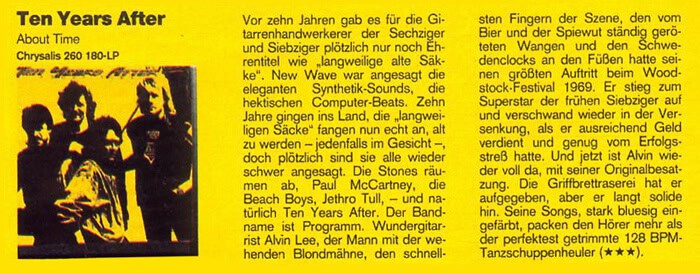
Album Review
Ten Years After are back, fourteen years after their last album release. The original line up of guitarist and vocalist Alvin Lee, bassist Leo Lyons, keyboardist Chick Churchill, and drummer Ric Lee remain intact, and under the guidance of record producer Terry Manning, who is best known for his work with the famous ZZ Top, Ten Years After resurfaced with a killer of an album.
Manning has brought Ten Years After right into the late 1980’s with a fresh new sound and eleven “hook – infested” songs, all of which are written by the band.
“About Time” is an album full of potential classics. You’ve got the rockers like:
“Let’s Shake It Up” and “Victim Of Circumstance,” the blues epic “Bad Blood” along with the jazz influenced “I Get All Shook Up”.
All the other tracks are equally strong and of high quality, making them more than worthy for radio airplay. One of the jewels in this crown called “About Time” must be guitarist / vocalist Alvin Lee, who gives a positively dazzling display of fret-board magic. In this world, full of Yngwie clones and all on one big speed trip, Alvin Lee may be a forgotten hero of yesterday, but he plays with soul, and that’s something the latter modern guitarist seem intent on missing out on.
Ten Years After have returned in a fashion worthy of success, something which I wish them with this new album.
I strongly recommend that you buy this album.
By Steve Brown
Best Magazine – Interview, December 1989
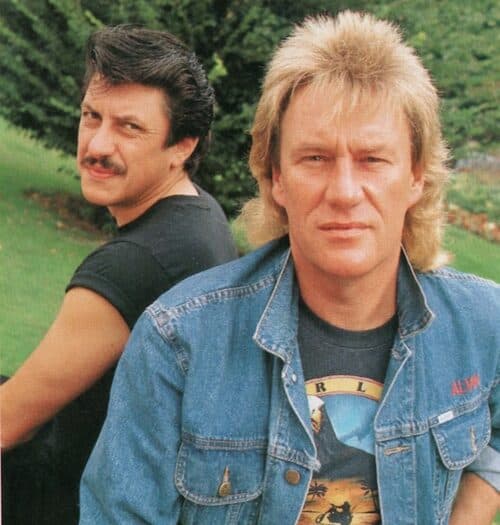
Photo Jean Yves Legras
Transcription:
1973, mon tout premier concert. Sur les sièges de velours rouge de L’Olympia je me laisse emporter par les vagues de riffs du guitar héro le plus rapide-de ce côté-ci du Pecos. Musicorama Ten Years After – quel événement. Auréolé par sa sidérante prestation de Woodstock – le film, sorti en France Juin 1970 – Alvin Lee et son speed d’enfer incarnaient toute notre révolte ado. “I’m Going Home” avait fait d’Alvin Lee une sorte de demi-dieu du rock.
Et, à l’époque, je plongeais dans la discographie de TYA, “Ssssh.”, “Watt”, “Rock And Roll Music To The World”, toile de fond sonore qui rythmait mes années de lycée. Mais TYA finit par se séparer. Alvin se lance dans une carrière solo et tente même de reformer son groupe sous le pseudo de Ten Years Later, mais la sauce ne prend plus, le rock n’a plus besoin d’un guitariste Lucky Luke qui balance ses accords plus vite que son ombre et Alvin retombe dans le no man’s land des spadassins anonymes.
Pourtant, en aout dernier, je voulais fêter dignement l’anniversaire des vingt ans de Woodstsock en retrouvant I’un de ses témoins-clef. Or simultanément, j’ai découvert que Chrysalis, le label historique de TYA, balançait un nouvel album du groupe. J’ai écouté une cassette, c’était aussi top niveau qu’un album de ZZ. Top. Compositions béton, production à vous couper le souffle, pêchu comme l’enfer et line up des origines avec Alvin a la guitare, son faux “frangin” Ric le batteur, Leo Lyons le bassiste et Chick Churchill aux claviers, la réincarnation de TYA m’a poussé sur la piste de mes fantômes.
Et le 16 aout précisément, vingt ans jour pour jour après sa sidérante prestation de Woodstock, j’ai retrouvé Alvin Lee à Sydney (Australie) par la magie du téléphone et du satellite.
Quelle image conserves-tu de ton passage à l‘Olympia ?
J‘ai du mal à me souvenir. On travaillait énormément à I’époque. Nous tournions neuf mois sur douze. Nous sommes restés ensemble jusqu’en 1975, mais on ne s‘amusait plus; lorsque tu joues dans ces pseudo-auditoriums chaque soir, tu finis par ne plus rien entendre et tu ne vois carrément pas ton public, alors où est le fun?
Et Woodstock?
Happy birthday, Woodstock ! Même si ma mémoire me joue des tours, je me souviens du chemin que nous avons parcouru en voiture. Mais a vingt miles du site toutes les routes étaient bloquées. Nous avons dû monter dans un hélicoptère. Et je me souviens d’être descendu au sol dans une nacelle de secours qui se balançait au-dessus d’un demi-million de têtes, tu n’oublies pas ce genre de choses. Je me souviens aussi qu’on allait tout juste monter sur scène lorsqu’un terrible orage a éclaté. Il y avait carrément des éclairs tout autour des projos; il n’était pas question de jouer. Je suis allé me balader autour du lac et j’ai zoné quelques heures dans le public à faire la fête, mais paradoxalement je garde peu de souvenirs précis de ma prestation live.
Tu aimais cette réputation de guitariste le plus rapide du monde ?
Non. Je trouvais cela carrément nul, mais je ne m’en suis pas plaint à l’époque, je ne m’en souciais pas. Ce sont les autres qui le prétendaient et honnêtement cela n’était pas vrai. Beaucoup de guitaristes jouaient encore plus vite que moi. Django Reinhart par exemple et encore il n‘avait que deux doigts qui fonctionnaient correctement. II n’est pas nécessaire de jouer vite, ce qui compte c’est de jouer bien.
Que penses-tu que nous ayons gardé de l‘expérience Woodstock ?
Les temps sont bien différents aujourd’hui. Woodstock n’était qu’un festival de rock, ce qui I’a rendu vraiment spécial ce sont les gens qui y participaient et le climat politico-social dans lequel ils étaient plongés. La guerre du Viet Nam a poussé les kids à se serrer les coudes, ils se sont unis contre la guerre, contre establishment et ce gouvernement qui voulaient les expédier au casse-pipe. Moi, je militais pour la paix même si, en tant qu’Anglais, je ne risquais pas le bad trip ; mais mes copains étaient expédiés au front, dans la jungle.
Ma seule pensée triste sur Woodstock, c’est que l’événement incarnait I’unité et la montée d’une génération. Mais lorsque les gens sont rentrés chez eux a la maison, ils n’ont plus jamais su se réunir, lorsque le film est sorti, le pacifisme est devenu très à la mode. Les modes passent et c’est devenu très nul d’être un hippie. Mais il y avait quelque chose de plus que le film n’a jamais su refléter.
Tu ne crois pas que le combat pour le pacifisme est aujourd’hui remplacé par la bataille pour I’environnement ?
J‘appartiens moi-même à Greenpeace car nous prenons de plus en plus conscience des dangers écologiques qui nous menacent. À ce propos, on m’a raconté que le pet des vaches libère du gaz méthane qui attaque la couche d’ozone. Ne devrions-nous pas devenir végétariens ? Mais mes théories sur la musique font que je refuse de me transformer en prêcheur, j’aime mieux le langage de “don’t step on my blue suede shoe” et de “come on over baby there’s a lot of shakin’ goin‘on.”
Parlons de ce sidérant nouvel LP de TYA ?
Terry Manning I’a produit à Memphis. Nous avons essayé de faire un album de TYA comme si on ne s‘était jamais arrêtés de jouer ensemble. Nous n‘avons parié ni sur le retour aux sources ni sur un album science-fiction aux sequencers chiants.
Et cette similitude avec ZZ Top ?
Terry était I‘ingénieur du son de tous les derniers ZZ Top. Je crois surtout que nous avons les mêmes racines qu‘eux : le blues, le rock et le swing jazz.
Après toutes ces années, as-tu des regrets ?
Aucun. J‘ai toujours considéré que j‘avais la chance extraordinaire de pouvoir faire tout ce que j‘aimais. C’est mon boulot, ma passion, mon hobby, mon combat. Mes héros comme Chuck Berry ou Muddy Waters ont plus de soixante ans et ils gagnent encore leur vie sur scène. Moi j’ai quarante-quatre ans et si je vis aussi longtemps c’est ce que je ferais lorsque j‘atteindrai leur grand âge. Et je n’ai aucun regret. Keep on rocking!
English translation:
1973, my very first concert. In the red velvet seats of the Olympia, I let myself be swept away by the waves of riffs from the fastest guitar hero this side of the Pecos. Musicorama Ten Years After — what an event! Fresh from his stunning performance in Woodstock — the film, released in France in June 1970 — Alvin Lee and his blistering speed embodied all our teenage rebellion. “I’m Going Home” had made Alvin Lee a kind of rock-demigod.
And, at the time, I was immersed in TYA’s discography: “Ssssh.”, “Watt”, “Rock And Roll Music To The World”, the soundtrack to my high school years. But TYA eventually broke up. Alvin launched a solo career and even tried to re-established his band under the name Ten Years Later, but it didn’t work anymore; rock no longer needed a Lucky Luke guitarist who could slash out at chords faster than his shadow, and Alvin fell back into the no man’s land of anonymous gunslinger.
Yet, last August, I wanted to properly celebrate Woodstock’s twentieth anniversary by reconnecting with one of its key figures. At the same time, I discovered that Chrysalis, TYA’s historic label, was releasing a new album from the band. I listened to a cassette; it was as top-notch as a ZZ Top album. Solid songwriting, breathtaking production, punchy as hell, and the original lineup with Alvin on guitar, his “fake” brother Ric on drums, Leo Lyons on bass, and Chick Churchill on keyboards — the reincarnation of TYA allowed me to relive the spirit of my past.
And on August 16th, exactly twenty years to the day after his stunning performance at Woodstock, I met up with Alvin Lee in Sydney, Australia, thanks to the magic of the telephone and satellite.
What image do you retain of your time at the Olympia?
I hardly remembering. We worked a lot back then. We were touring nine months out of twelve. We stayed together until 1975, but we weren’t having fun anymore; when you play in those pseudo-auditoriums every night, you end up not hearing anything and you don’t even see your audience, so where’s the fun?
And Woodstock?
Happy birthday, Woodstock! Even though my memories are incomplete, I remember the drive we took. But twenty miles from the site, all the roads were blocked. We had to get into a helicopter. And I remember being lowered to the ground in an emergency basket that was swinging above half a million heads — you don’t forget things like that. I also remember that we were just about to go on stage when a intense storm broke out. There was lightning all around the spotlights; there was no way we could play. I went for a walk around the lake and spent a few hours hanging out in the crowd, partying, but paradoxically, I have few clear memories of my live performance.
Did you like that reputation as the fastest guitarist in the world?
No. I thought it was absolutely rubbish, but I didn’t complain at the time; I didn’t care. It was other people who claimed such a issue, and frankly, it wasn’t true. Plenty of guitarists played even faster than me. Django Reinhardt, for example, and he only had two fingers that worked properly. You don’t need to play fast; what matters is playing well.
What do you think we learned from the Woodstock experience?
Times are very different today. Woodstock was just a rock festival; what made it truly special were the people who participated and the socio-political climate in which they had to deal with. The Vietnam War forced the kids to pull together; they united against the war, against the establishment, and against the government that wanted to send them to their deaths. I campaigned for peace even though, as an Englishman, I wasn’t at risk of a bad trip; but friends of mine were sent to the front, into the jungle.
My only sad thought about Woodstock is that the event embodied unity and the rise of a generation, but when people went home, they never knew how to come together again. When the film came out, pacifism became very fashionable. Fashions come and go, and being a hippie has become pretty lame. But there was more that the film did not reflect, did not capture.
Don’t you think that the fight for pacifism has now been replaced by the battle for the environment?
I myself belong to Greenpeace because we are becoming increasingly aware of the ecological dangers that threaten us. Apropos, I was told that cow farts release methane gas, which attacks the ozone layer. Shouldn’t we all become vegetarians? But my theories about music mean that I refuse to turn into a preacher; I prefer the language of “don’t step on my blue suede shoe” and “come on over baby there’s a lot of shakin’ goin’ on.”
Let’s talk about this amazing new LP from TYA?
Terry Manning produced it in Memphis. We tried to make a TYA album as if we’d never stopped playing together. We didn’t opt for a return to our 60s/70s music or a science fiction album with annoying sequencers.
And this similarity with ZZ Top?
Terry was the sound engineer for all the recent ZZ Top albums. I think above all that we have the same roots as them: blues, rock, and swing jazz.
After all these years, do you have any regrets?
None. I’ve always considered myself incredibly lucky to be able to do everything I love. It’s my job, my passion, my hobby, my fight. My heroes, like Chuck Berry and Muddy Waters, are over sixty and they’re still making a living on stage. I’m forty-four, and if I live that long, it’s what I’ll be doing, playing music as long as possible. And I have no regrets. Keep on rocking!
Deutsch:
1973, mein allererstes Konzert. Auf den roten Samtsitzen des Olympia liess ich mich von den Riffs des schnellsten Gitarrenhelden diesseits des Pecos mitreissen. Musicorama Ten Years After – was für ein Ereignis! Frisch von seinem umwerfenden Auftritt in Woodstock – der Film kam im Juni 1970 in Frankreich in die Kinos – verkörperte Alvin Lee mit seiner atemberaubenden Geschwindigkeit unsere gesamte jugendliche Rebellion. “I’m Going Home” hatte Alvin Lee zu einer Art Rock-Halbgott gemacht.
Damals war ich total in die Diskografie von TYA vertieft: “Ssssh”, “Whatt”, “Rock and Roll Music To The World” – der Soundtrack meiner Gymnasiums-Zeit. Doch TYA löste sich schliesslich auf. Alvin startete eine Solokarriere und versuchte sogar, seine Band unter dem Namen Ten Years Later neu zu etablieren, aber es funktionierte nicht mehr. Rock brauchte keinen Lucky Luke mehr, der Akkorde schneller als sein Schatten spielen konnte, und Alvin fiel zurück ins Niemandsland anonymer Haudegen.
Letzten August wollte ich den zwanzigsten Jahrestag von Woodstock gebührend feiern und mich mit einer der Schlüsselfiguren dieser Zeit treffen. Gleichzeitig erfuhr ich, dass Chrysalis, das legendäre Label von TYA, ein neues Album der Band veröffentlichte. Ich hörte mir eine Kassette an; sie war so erstklassig wie ein ZZ-Top-Album. Solides Songwriting, atemberaubende Produktion, unglaublich druckvoll, und die Originalbesetzung mit Alvin an der Gitarre, seinem “falschen” Bruder Ric am Schlagzeug, Leo Lyons am Bass und Chick Churchill an den Keyboards – die Wiedergeburt von TYA liess den Geist meiner Vergangnheit wiedererleben.
Und am 16. August, genau zwanzig Jahre nach seinem umwerfenden Auftritt in Woodstock, traf ich Alvin Lee in Sydney, Australien – dank der Magie von Telefon und Satellit.
Welche Erinnerung hast du an die Zeit im Olympia?
Ich kann mich kaum noch erinnern. Wir haben damals sehr viel gearbeitet. Neun von zwölf Monaten waren wir auf Tournee, auch ein paar Mal im L’Olympia. Wir blieben bis 1975 zusammen, aber es machte uns keinen Spass mehr; wenn man jeden Abend in diesen Pseudo-Hallen spielt, hört man am Ende nichts und sieht sein Publikum nicht einmal, wo bleibt da der Spass?
Und Woodstock?
Alles Gute zum Geburtstag, Woodstock! Meine Erinnerungen sind sehr unvollständig. Ich erinnere mich an die Fahrt. 32 Kilometer vor dem Festivalgelände waren alle Strassen gesperrt. Wir mussten in einen Hubschrauber umsteigen. Und ich erinnere mich, wie wir in einem Rettungskorb der über einer halben Million Menschen hin und her schwankte, zu Boden gelassen wurden – solche Dinge vergisst man nicht. Ich erinnere mich auch, dass wir gerade auf die Bühne gehen wollten, als ein heftiges Gewitter losbrach. Um die Scheinwerfer waren Blitze zu sehen; ans Spielen war nicht zu denken. Ich ging um den See spazieren und verbrachte ein paar Stunden damit, in der Menge zu feiern, aber paradoxerweise habe ich nur wenige klare Erinnerungen an meinen Live-Auftritt.
Hat dir der Ruf, der schnellste Gitarrist der Welt zu sein, gefallen?
Nein. Ich fand ihn völlig lächerlich, habe mich aber damals nicht beschwert; es war mir egal. Andere behaupteten Solches, und ehrlich gesagt, stimmte es nicht. Viele Gitarristen spielten schneller als ich. Django Reinhardt zum Beispiel, und der hatte nur zwei Finger, die richtig funktionierten. Man muss nicht schnell spielen; wichtig ist, gut zu spielen.
Was haben wir deiner Meinung nach aus Woodstock mitgenommen?
Die Zeiten sind heute ganz anders. Woodstock war einfach nur ein Rockfestival; was es so besonders machte, waren die Menschen, die daran teilnahmen, und das soziopolitische Klima, in dem sie sich befanden. Der Vietnamkrieg zwang die Jugendlichen, zusammenzuhalten; sie vereinten sich gegen den Krieg, gegen das Establishment und gegen diese Regierung, die sie in den Tod schicken wollte. Ich setzte mich für Frieden ein. Als Engländer riskierte man keinen Horrortrip; aber Freunde von mir wurden an die Front, in den Dschungel, geschickt.
Mein einziger trauriger Gedanke zu Woodstock ist, dass das Ereignis zwar für Zusammenhalt und den Aufstieg einer Generation stand, die Leute aber nach ihrer Heimkehr nie wieder zueinanderfanden. Als der Film herauskam, war Pazifismus in aller Munde. Moden kommen und gehen, und es galt plötzlich als ziemlich uncool, ein Hippie zu sein. Aber da war noch mehr, was der Film nicht schaffte zu reflektieren.
Findest du nicht auch, dass der Kampf für den Pazifismus vom Kampf für die Umwelt abgelöst wurde?
Ich selbst bin bei Greenpeace, weil wir uns der ökologischen Gefahren, die uns bedrohen, immer bewusster werden. Apropos: Mir wurde gesagt, dass Kuhfürze Methangas freisetzen, das die Ozonschicht angreift. Sollten wir nicht alle Vegetarier werden? Aber meine Theorien über Musik haben zur Folge, dass ich mich weigere, Prediger zu werden; ich bevorzuge die Sprache von “don’t step on my blue suede shoe” und “come on over baby there’s a lot of shakin’ goin‘on.”
Lasst uns über diese fantastische neue TYA-LP sprechen.
Terry Manning hat sie in Memphis produziert. Wir haben versucht, ein TYA-Album zu machen, als ob wir nie aufgehört hätten zusammen zu spielen. Haben aber nicht auf eine Rückkehr zu unsere Musik der 60/70iger oder auf ein Science-Fiction-Album mit nervigen Sequenzern gesetzt.
Und diese Ähnlichkeit mit ZZ Top?
Terry war der Toningenieur für alle neueren ZZ-Top-Alben. Ich denke, wir teilen vor allem die gleichen Wurzeln mit ZZ Top: Blues, Rock und Swing-Jazz.
Hast du nach all den Jahren irgendwelche Reuegefühle?
Nein. Ich habe mich immer unglaublich glücklich geschätzt, alles tun zu können, was ich liebe. Es ist mein Beruf, meine Leidenschaft, mein Hobby, mein Kampf. Meine Helden wie Chuck Berry und Muddy Waters sind über sechzig und verdienen immer noch ihren Lebensunterhalt auf der Bühne. Ich bin vierundvierzig, und wenn ich so alt werde, werde ich genau das tun, Musik machen solange es möglich ist. Und ich bereue nichts. Keep On Rocking!
Raw Magazine – Review
From Raw Magazine – By Malcolm Dome – 4 Stars Top Rating Given
Strange as it may seem, I never liked Ten Years After. Yet they played seminal Blues Rock, the sort of music that shaped my tastes, and they operated between 1967 and 1975, the period when I was most susceptible to influence. Still a brief history lesson: Ten Years After featured guitarist Alvin Lee, drummer Ric Lee, key-boards-man Chick Churchill and bassist Leo Lyons (who some may recall has also produced bands such as UFO and Magnum). They played at the legendary “Woodstock Festival” in 1969, and made a huge impact on subsequent generations. Now they’re re-united once again. And they produced a quite brilliant exposition in high tension Blues, that successfully manages to be both a contemporary statement, yet also holds firmly to its roots. Under the production guidance of Terry Manning of ZZ Top and Molly Hatchet fame. Ten Years After have returned in sharp shape and flaming at the frets. This is mightily impressive stuff from veterans who sound so fresh, you’d have
thought they’d just been plucked from the meadow. The songs certainly have a ZZ-Top feel, but then that’s almost a given.
Manning’s tight involvement, besides this comes across just as the album ZZ-TOP should have made after 1983’s “Eliminator” !!! We get the tyre – screech of “Waiting For Judgement Day”. The wailing flamboyance of “Highway Love” and candlelit sensitivity of: “I Get All Shook Up” the ballad-ish carousing of “Outside My Window”…a veritable cornucopia of flashing guitars from Alvin Lee, (perhaps the original high speed master), sonic reduction rhythms from Leo Lyons and the other Lee, (Ric)…and nicely stated keys from Chick Churchill. “About Time is proof that reunions can be worthy. It’s a vital, valuable album – that comes Highly Recommended !
About Time Reviews – What The Fans Say:
This is a fantastic album. I bought it following a live show at the Old Hammy Odeon in London after Ten Years After got back together in 1988. It really captures the flexibility of the band moving smoothly from rock and roll to blues through the genius of Alvin Lee’s exciting fluid guitar work. I do not like all of Ten Years After’s 1960’s compositions, many of which now sound dated, but this album is instantly recognisable as Ten Years After, but is also very modern.
Gene Cooper
This album has some great songs that are well worth listening to more than once. The “Highway Of Love” and “Working In A Parking Lot” come to mind. I have yet to listen to an album since the Beatles, where every song is a hit and I enjoy listening to the whole album.
I rate it as a good album.
Lance Bruce
This album came out at the perfect time and every song is great. Alvin’s guitar work is right on. The song selection is a very good variety of work. It could be perceived as more commercial than their work in the past, but it’s still Ten Years After style and sound.
I recommend this to any Ten Years After fans and those not familiar with the band and wants to listen to good blues and rock n roll.
Brad Wilson
As good an album as any before. Why hasn’t this cd gotten more notice? “Working In A Parking Lot”, is the best rocker ever by them. It’s worth buying the album just for this cut.
Play it at Ear Damage Level.
Drew Hines