Copyright Herbert Hauke/Rainer Schwanke GbR
Rock Folk No. 144 (France) – January, 1979
Translation:
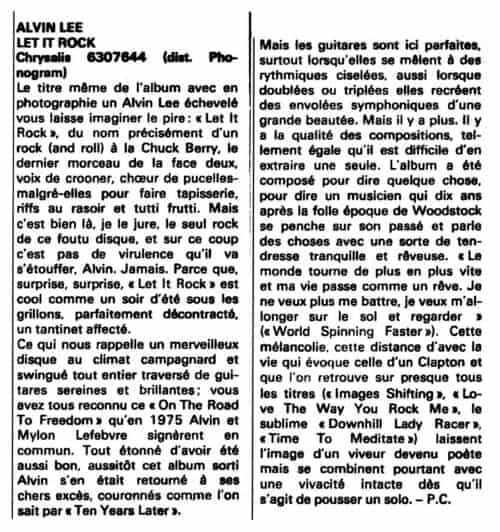
**ALVIN LEE
LET IT ROCK
Chrysalis 6307844 (distributed by Phonogram)**
The very title of the album, with a photograph of a disheveled Alvin Lee, makes you imagine the worst: “Let It Rock,” precisely the name of a rock (and roll) by Chuck Berry, the last track on side two, crooner voice, chorus of reluctant young girls to provide the backdrop, razor-sharp riffs and tutti frutti. But that’s it, I swear, the only rock on this damn record, and this time it isn’t virulence that’s going to choke Alvin. Never. Because, surprise, surprise, “Let It Rock” is as cool as a summer evening with crickets, perfectly relaxed, just a little affected.
Which reminds us of a wonderful record with a country, swinging atmosphere, entirely threaded through with serene and brilliant guitars; you all recognized that “On The Road To Freedom” that in 1975 Alvin and Mylon Lefebvre signed together. All astonished that it was so good, as soon as this album came out Alvin had returned to his beloved excesses, crowned as we know by “Ten Years Later.”
But the guitars here are perfect, especially when they blend with chiseled rhythms; also when doubled or tripled they recreate symphonic flights of great beauty. But there is more. There is the quality of the compositions, so even that it is difficult to extract a single one. The album was composed, so to speak, to say something, to say a musician who, ten years after the mad era of Woodstock, looks back on his past and speaks of things with a kind of calm, dreamy tenderness. “The world is spinning faster and faster and my life passes like a dream. I no longer want to fight, I want to stretch out on the ground and watch” (“World Spinning Faster”). This melancholy, this distance from life that evokes that of a Clapton and that is found on almost all the tracks (“Images Shifting,” “Love The Way You Rock Me,” the sublime “Downhill Lady Racer,” “Time To Meditate”) leave the image of a hedonist who has become a poet but nevertheless combine with an intact vivacity when it comes to pushing a solo. — P.C.
May 15, 1979 – IMA Auditorium, Flint, Michigan
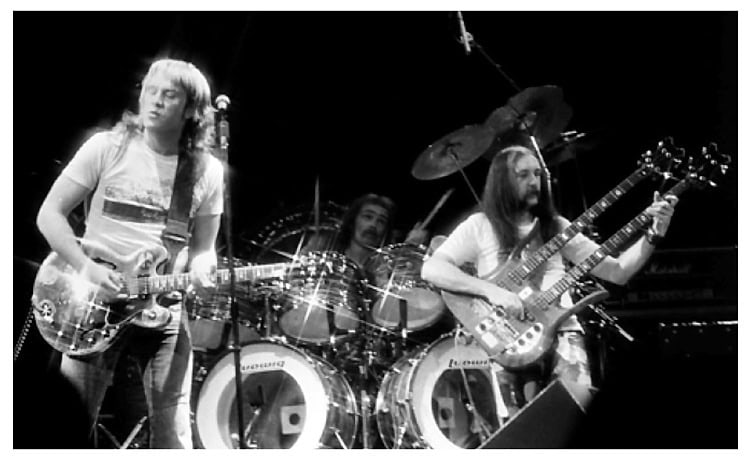
Photo by Tom Weschler
Ciao 2001, No.21 (Italy) – May 27, 1979
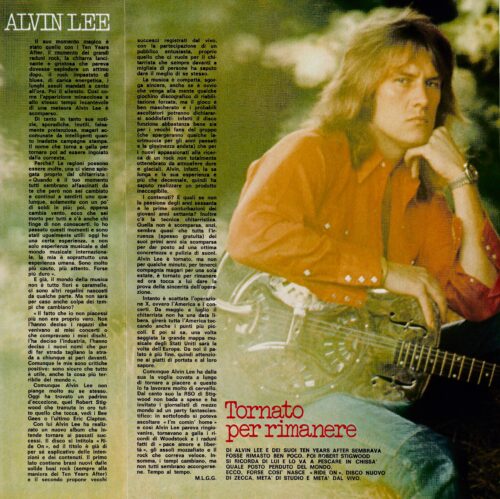
click to enlarge
Translation (by notegpt):
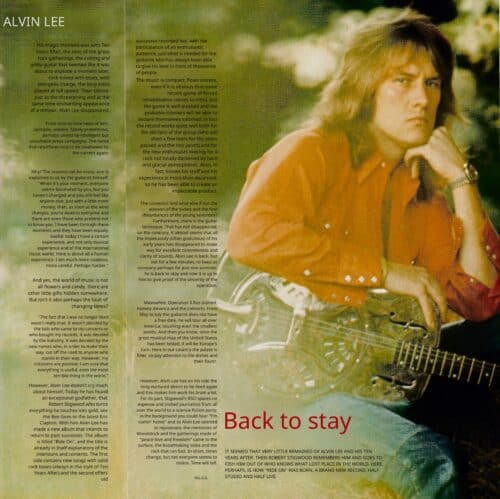
click to enlarge
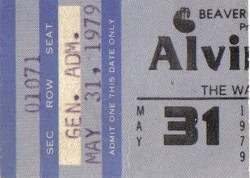
The Warehouse (New Orleans) – Larry’s
Ten Years Later played there on May 31, 1979
Music notes from the early 1970’s
So there was the New Orleans Pop Festival, and while not a super festival, it had happened in 1969 and a lot of people got turned on for the first time. More head shops began popping up around the French Quarter and more long hairs began showing themselves all around the city, a trend that had its beginning around 1967 – 1968. As 1970 rolled around, the next inevitable step was taken, a concert house was opened up to feature regularly scheduled rock shows, and featuring some of the best groups of the time. The venue was simply named “The Warehouse” – located at 1820 Tchoupitoulas Street, which was right in the thick of the city’s old warehouse district, and also right near the river on the uptown side of Canal Street. The Warehouse was detached enough to keep neighbourhood complaints from building up, and big enough to house just about any rock group and its loyal following of fans.
It was funky in its make up, the Warehouse carried a warm charm that made it kind of loose and trippy at the same time. It was made up of old red brick with old time wooden rafters on the inside, and concrete floors that were covered with old carpets, it had a subterranean underground feel to it. Three sets of bleachers provided seating against the back and side walls – this was all before they put in a big bar area on the one side. The stage and concession area completed the set up. When the entire place was full of freaks, you’d almost think that you were in another world altogether. The “Warehouse” had its grand opening in late January of 1970, and quite an auspicious one it was, with The Grateful Dead, Peter Greens Fleetwood Mac Blues Band, and The Flock, all playing a two night gig together.
Alvin Lee played there on May 31, 1979 – on the same bill were Black Oak Arkansas and Blackfoot.
June 17, 1979 – Municipal Auditorium, Bangor, Maine
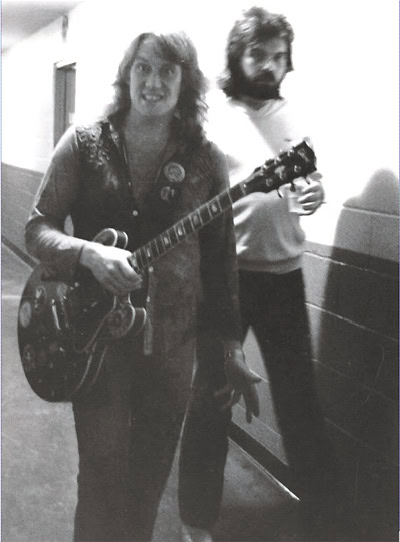
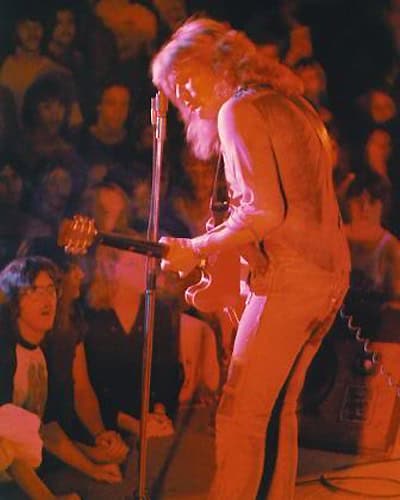
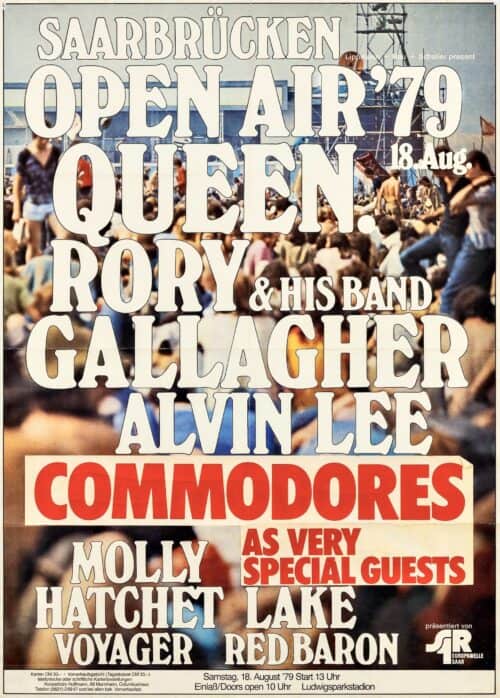
August 18, 1979 – Saarbrücken, Germany
August 24, 1979 – Winterthur, Switzerland
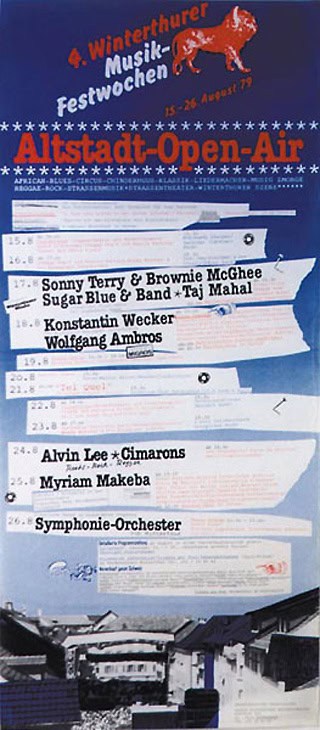
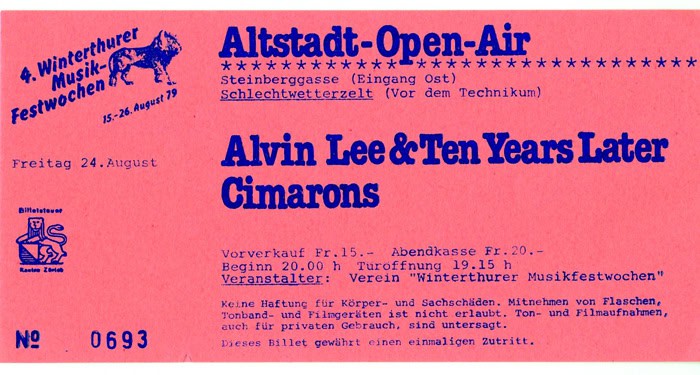
Photos by Dave Th. Hutmacher
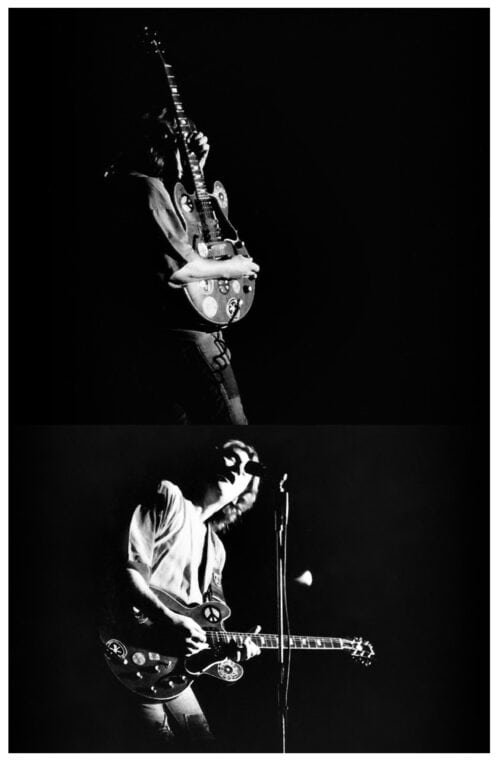
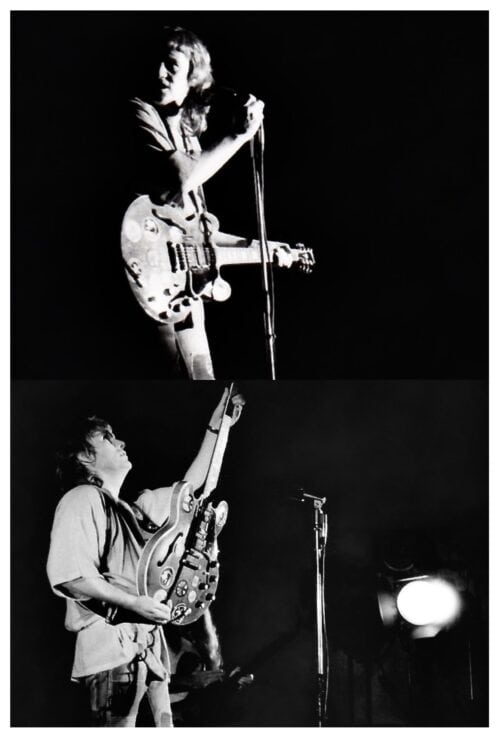
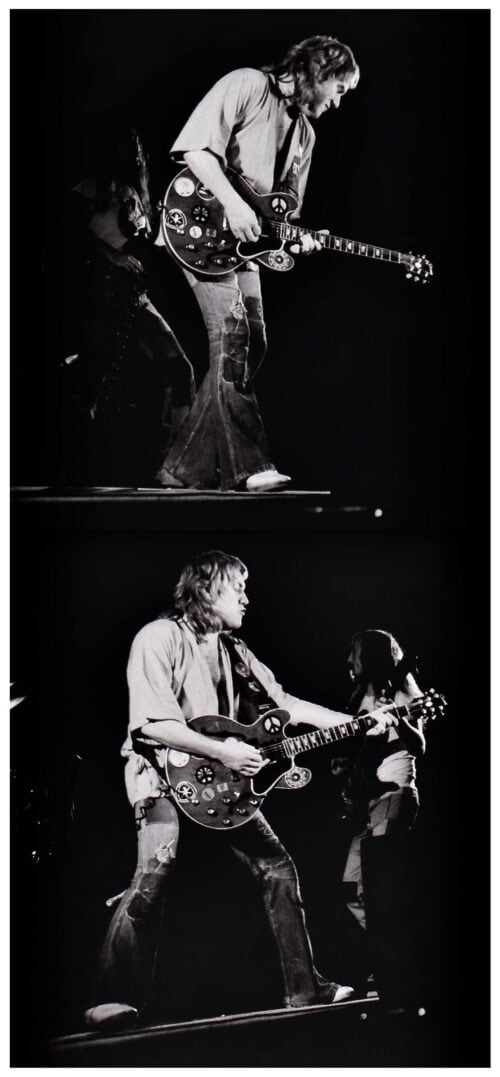
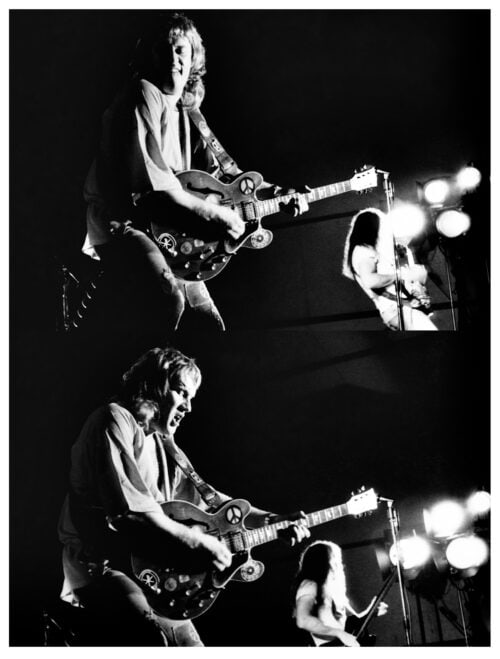
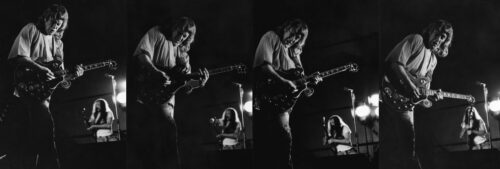
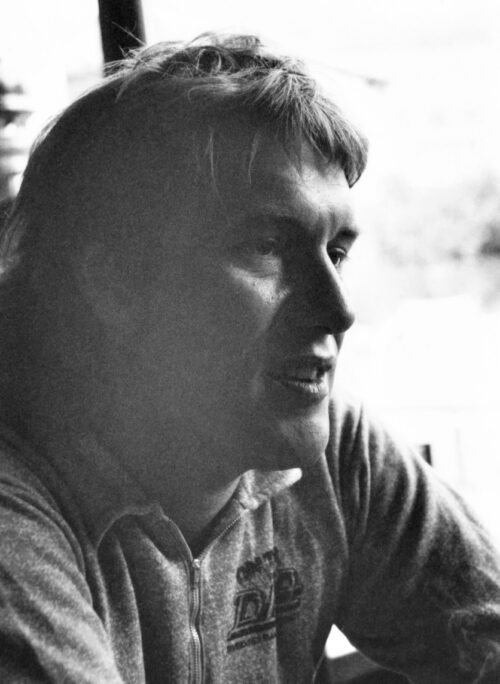
25. August 1979, Winterthur Switzerland, Interview with Music Scene Magazine, Photo: Dave Th. Hutmacher
New Musical Express – October 13, 1979
Ten Years Later – A Month Later
Alvin Lee’s Ten Years Later called off their three British concerts scheduled for this week at Birmingham (Monday) Newcastle (Wednesday) and London Hammersmith (Saturday) within a couple days of announcing them! It’s understood that the gigs, which were reported in our last issue, are being re-scheduled for November. It seems that Lee wanted his U.K. visit to include an appearance in BBC2’s “Old Grey Whistle Test” – and he can’t get a booking on the show until November!
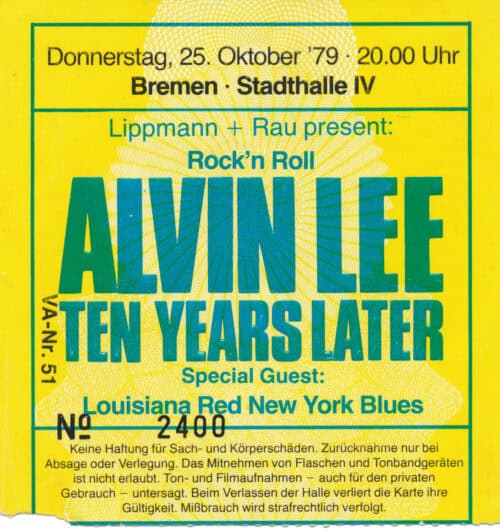
October 25, 1979 – Stadthalle Bremen (Germany)
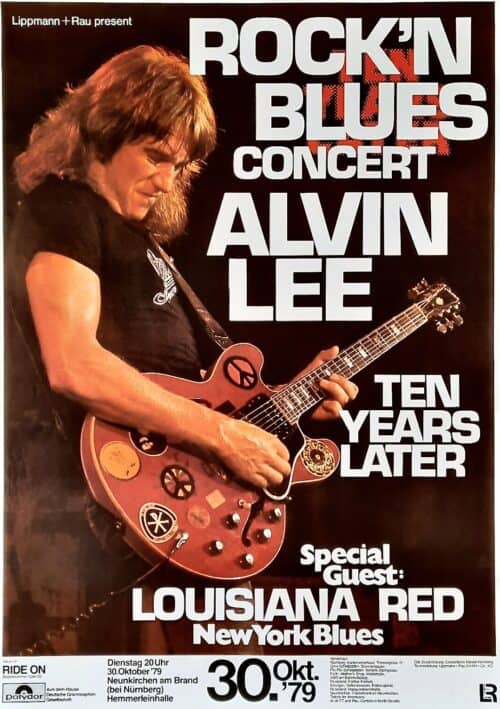
October 30, 1979 – Neunkirchen (Germany)
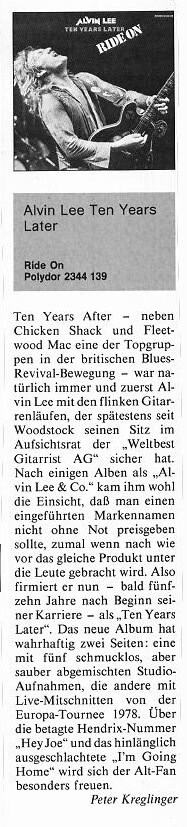
Ride On – Overview 1978
This was released by Robert Stigwood`s RSO record label, 1978’s “Ride On”, which is Alvin Lee’s second solo comeback effort, always struck me as a kind of strange coupling here. Best known for pop and dance acts, singing Alvin Lee and his relatively new band called “Ten Years Later” are definitely a little bit outside of the company’s normal zone of artistic comfort. It would be very interesting to know what the behind the scenes scuttlebutt was during this time period.
This was produced by Bill Halverson, and the album offers up a mixture of five new studio numbers, and four live tracks. The album liner notes state the following: “This is a true and faithful recording of Ten Years Later on stage, no overdubs or effects have been added”.
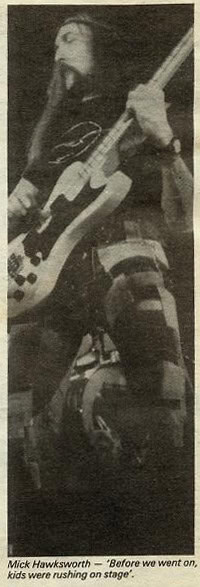
The live portion of this recording is excellent, thanks to drummer Tom Compton and bassist Mick Hawksworth. Alvin Lee and friends sound tight and display more energy and enthusiasm than you’d find on the last album release by Ten Years After.
Ten Years Later is what Ten Years After used to be back in their hay-day.
On the live side of this recording, it’s too bad that more notes and information aren’t provided here. Such as times and dates of performances. While the live tracks are extraordinary, it’s the studio numbers that were the big surprises here. They’re far more designed for commercial consumption than I would expect from Alvin Lee.
Side One – TYL In Concert:
1. “Ain’t Nothin’ Shakin'” – is so interesting for the down-playing of Alvin’s blues-rock tendencies, in exchange for a straight ahead rocker. Tight, and in the best of taste – receiving top rating.
2. “Scat Thing” – some like it – many don’t. To me it’s good…it’s a very short piece if you don’t care this kind of thing.
3. “Hey Joe” – Jimmy Hendrix, over time hated playing this song, but Alvin loved it and still plays it live on stage. Alvin also gave it a good amount of respect and an excellent going over on this album. He gave the audience a view of his famous pyrotechnics that couldn’t have been any more impressive. The best part, is that you can really hear Alvin enjoying himself through his guitar and playing.
4. “I’m Going Home” – yes, the obligatory famous Woodstock / Ten Years After encore. This classic is well done here, without all the fanfare and circumstance. Makes you wish that you were part of the audience and not just a listener here. It only needs the visual aspect of it, to go along with the audio effect.
Side Two – The Studio:
1. “Too Much” – of what you want, is like getting too little of something that you really need! A nice little rocker in the true Alvin Lee style. More of a roller than a rocker, but good start in setting the overall tone.
2. “It’s A Gaz” – is a happy little love song, with a great riff strolling through the entire song. Not for head-banging, but for tapping your feet and swaying in your computer chair.
3. “Ride On Cowboy” – is the most catchy and unique number on this side of the album. It uses a crafty mixture of reggae rhythm, with country flavoured blues roots scattered through out. It’s almost a funky country beat, and the song is the highlight, and no wonder why RSO gave it a four star single rating.
4. “Sitting Here” – is a slinky-greasy-rocker, with power chords attached so that you can’t forget that stick in your skull-riff. It’s also right out of the Savoy Brown / Foghat play-book. Sounds like a demo for commercial AM radio, rather than a normal type Alvin Lee song.
5. “Can’t Sleep At Night” – ends side two of the album. It’s a nice piece of boogie-rock and is a good collection of new songs. It kept the continuity of the album moving right along till the end.
Review by Scott Davidson
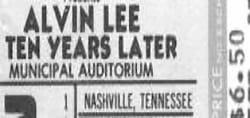
Musicians Only – November 24, 1979
There comes a time in a rock musician’s career when the clamour and controversy that surrounded his early battles to break through to the public, fades away and becomes of little consequence. Alvin Lee has known adulation, fame, money and the accompanying hard slog that brought him from rhythm ‘n blues obscurity in Nottingham, to rock ‘n roll fame on the international stages of rock. Alvin did it all, and he did it first, almost according to the Rock-Star text book. Big – Money tours of America, rows within Ten Years After, the eventual split and retirement to the country mansion. It’s a familiar saga, except that Alvin, throughout it all, has remained simply and genuinely, a nice bloke. There is not a whiff oh egocentricity about the man, hailed as a guitar hero alongside the Claptons, Becks and Pages.
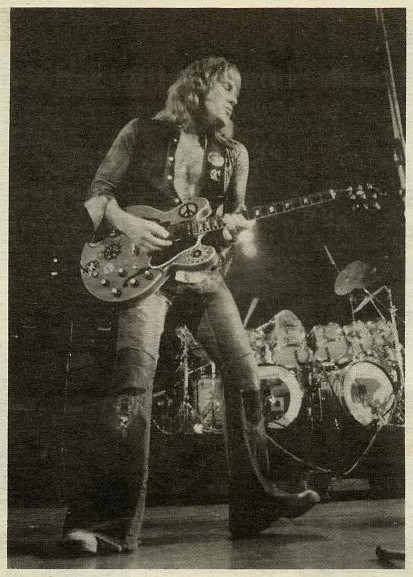
Alvin had a natural gift for showmanship, which stays with him today and his guitar technique remains dependable and at times dazzling. For the last couple of years he has thoroughly enjoyed himself with a new band, called “Ten Years Later”, proving that he is not content to rest on his laurels. He’s done it once, and now he’ll do it again. And despite a brief flirtation with country rock, and a big band in the mid seventies, he’s happiest with a tight little trio, playing essentially, the same guitar style that brought him to fame in 1969.
Like most musicians of his generation, Alvin Lee intends to “Bop” until he drops.
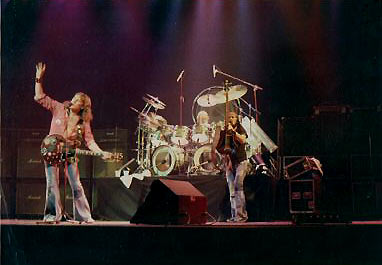
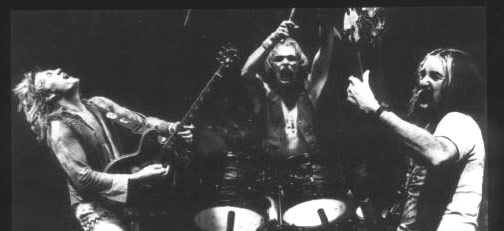
The new line up features, Tom Compton on drums and Mick Hawksworth on bass guitar, and between them they have built up an exciting wall of sound. Alvin is obviously delighted with his crew. Their enthusiasm brings out the best in the guitarist, who admits he might tend to lay-back and make things easy if it were not for their drive. Tom in particular is a source of considerable energy, and his solo on a massive showpiece drum-kit, is one of the highlights of a two hour barn-storming set.
Until recently, the band have achieved their greatest successes abroad, gigging extensively on the Continent and in America. Now they are embarking on their first British dates, although they did some warm-ups during the height of Punk-Mania, when they were mistaken for the Sex-Pistols. Well, that’s their story. They told me the full story of their development and high hopes for the future down at Alvin’s pad, in secluded Berkshire acres. He lives not far from George Harrison’s famed Henley Mansion, and George and Eric Clapton are occasional visitors. They once recorded a jam session in Alvin’s home studio called, “Too Many Lead Guitarists”, which Eric played over the P.A. System on his own tours.
The studio was built by Alvin with the help of his father, inside an old barn, and the ancient beams, riddled with worm-holes, but cleansed of all living organisms, are still on display inside the comfortable control room, and the length of the spacious studio. Here I had the chance to check out the band’s instruments including the vast Compton drum and cymbal plantation. “KIT” seems hardly an adequate description. But first we talked inside the house, where Alvin also demonstrated the latest German toy sports cars for our further amusement.
To back-track, what happened to Alvin’s house desire to work with bigger groups?
“I wanted to do it at the time, in an attempt to get away from the stuff I had been doing with Ten Years After. But it served its purpose and made me realise that really I was happiest with a smaller group. It was the music I liked, but more that I liked to listen to, than play myself.
I didn’t get enough excitement out of it, and wanted a “Heavy Rock ‘n Roll Band”, and here they are. “We’re celebrating our second anniversary, and with any luck, 1980 should prove to be our big year”. They explained, they are attempting to expand their horizons on their next and third album, which they are currently recording. The most recent, called “Ride On” (Polydor Records), combines both studio and live performances. Now they want to develop their song-writing, and leave the rave-ups for stage work. “It’ll be day-time music,” said Alvin. “Until now, we’ve been establishing the fact, that we are a heavy-weight rock band, blasting it out. But from the number of gigs that we’ve done, and the live side on the album, we’ve firmly established that, and we want to branch out and experiment in the studio.
We’re going for moods and restrained power. People don’t want to buy an album featuring just forty minutes of thumping beat. A song like “Ride On Cowboy” has a nice loose feel and a spare guitar sound, which everybody likes as a possible single. The trouble is, I don’t think the band has an image in Britain, because we’ve worked so much abroad. I think it’s important that we should have one, although I didn’t when we started. I always shied away from having a kind of pop image, and ending up like Rod Stewart or someone. Mind you, I notice the Apple scruffs don’t hang around George’s house anymore!” What were they doing about the image building at home? “Well, we’re playing at the Odeon Hammersmith on November 28 and other dates at Birmingham, Leicester, Newcastle and Bristol and they will be the only ones we’ve done here, apart from the six gigs when we were a “Mystery Guest Artist”. People thought we were the Sex-Pistols, and might spit on them. They were going around doing the same thing at the time, and all the audiences were waiting for the Sex-Pistols. So, I swigged a pint of water and spat all over them. They were quite horrified!”
“But the punks got off on rock ‘n roll and enjoyed it. It was at the height of the punk publicity thing and everybody was getting quite scared about it. But we went out to play and it was just the same as always, except they dressed differently. We were all punks once you know, I know I was”, said Mick Hawksworth. “We thought the kids might say “Oh, here comes Alvin again. Yawn”. But I was absolutely amazed. Before we went on, the kids were rushing the stage”. At one time, the band were looking for a fourth member to play keyboards, but eventually they realized they were much tighter and happier on their own. “Even with the best keyboard player, there would be no room for him,” opined Alvin. “After our desperate search, we rather horrified ourselves by deciding to stay a three piece”. “That was the day we made a pledge, that we would be like the “Three Musketeers,” said Tom. “We like to keep on our toes,” said Alvin. “I’m always very conscious that we shouldn’t play the same numbers, the same way every night. We often make up numbers while we’re on stage, and you can tell by the faces of the road crew, if they are digging it and whether it’s happening. It’s all very difficult now-a-days. Just the cost of running a band makes me wonder how new bands can break through. We travel light, and have a tight crew, but a P.A. and lights are basic necessities, and not luxuries. Our albums are doing pretty good, but album sales are down by 50% all over the world, so we’re about average, and we’re keeping our heads above water.”
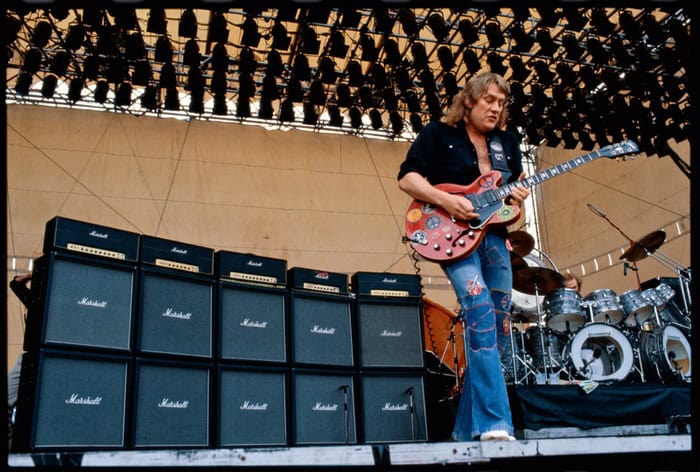
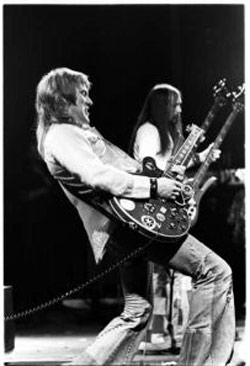
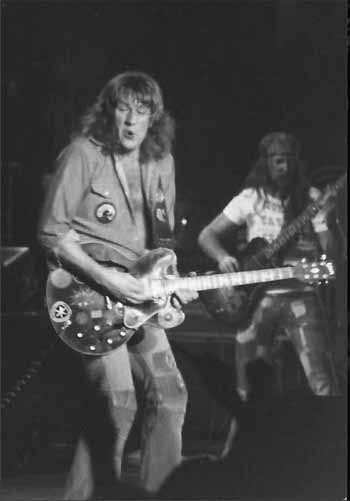
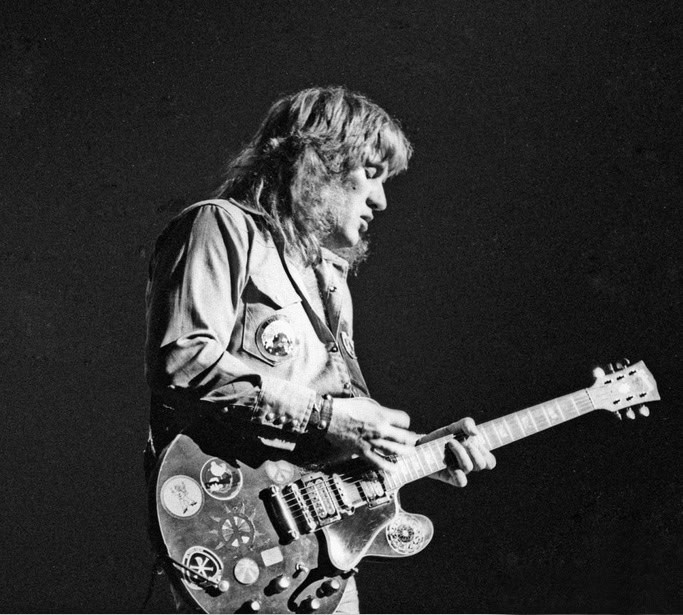
One constant companion with Alvin over the years has been his Gibson guitar and 50W / Amp. “The guitar is an old ES-335 that’s 21 years old, and called “Big Red”. It’s covered in stickers from the psychedelic sixties. I sent it back to Gibson and they varnished over them, so they are there for ever, which is rather nice. The neck broke, so I sent it to Kalamazoo for a new neck. It took six months, but they did a very good job. I bought it in Nottingham for 45 pounds – with case! It was a good investment. I’ve got quite a big collection of guitars, and when I was playing with the nine-piece band, I used quite a few different guitars to produce different sounds. But my gimmick now is that I don’t have any gimmicks at all. No fuzz boxes or pedals, just me-old guitar going straight through the amp, which is unique now-a-days. I use a 1958 50 / Watt Marshall amp. The 100 / Watts were a touch louder, but a bit harder and didn’t sound so nice. I even tried the new 50’s and they didn’t sound right.
“A guy from Marshall’s came down. He’d been working at Marshall for ten years, and he looked inside my amp and said, “I’ve never seen one of these before”. It was just a little capacitor on one of the inputs, which made a difference, and I asked him to put one on all my amps. It drives the valves hard and makes the note sing and the sustain is much better, which is good for the guitar. It’s not a hi-fi situation. If you played my guitar through a big set up, it would just sound like a violently loud banjo. You’ve got to get sustain through the guitar amp.
But Mick is the man to talk to about technology. He’s the only one who can switch his amplifier on”. Mick uses three bass guitars on stage, including a double-neck built for him by Peter Barraclough which weighs half a ton, but produces all kinds of exciting effects. “I’d use it all the time except that half way the set it does get a bit tiring,” said Mick. “I also use a Gibson RD-Artists Bass, a 1963 Gibson Thunderbird, and a Guild 301 Bass”. The RD-Artists Bass, is the one that Mick inevitably tosses into the air at the end of his solo, with a dramatic if dangerous flourish. Mick has been known to hit the steel girders above the stage with his bass and once broke the neck off of his beloved Gibson Artists, but he says: “I don’t really like breaking instruments, I don’t go along with that. Usually, I can catch it!” “I used to throw my Gibson across the stage, so fast it would skim and bounce,” recalled Alvin fondly. “I did it every night for about three years, bang, bang, bang. Then one night it broke, accidentally. I felt a bit embarrassed. The guitar repair man told me, “If you put a maple neck on, they bounce better”. He knew all about it. I wasn’t fooling anybody.”
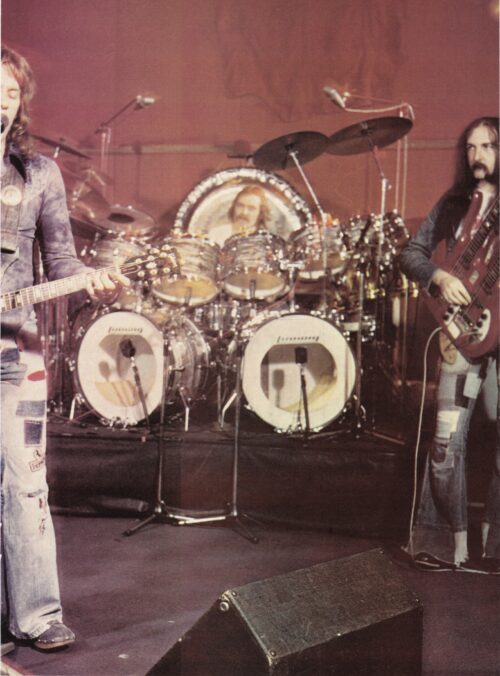
We adjourned to the studio, and examined the gear, and it has to be said, that pride of place, went to Tom Compton’s mighty drum-kit. It was a Ludwig Blue Oyster Pearl kit, the components have been built up over the years and date from 1965 to 1970. It’s comprised of the following: Two 22 x 1in Super Classic Bass Drum. Two 14 x 15 in brass shell 400 Snare Drums with Rogers “Dynasonic” snare beds. Six 8 in and 10 in custom tom-toms using Ludwig fittings; five Ludwig Super Classic tom-toms. 12 x 8 – 13 x 9 – 14 x 10 – 16 x 16 and 20 x 18 in, with Remo Pinstripe and CS heads; 16 and 18 in Remo Rototoms and Perspex reflectors; one pair custom brass shell 14 in timbales, and a set of Tama Octobans (8); two Rogers high-hat pedals and two Rogers “Swivomatic” bass drum pedals with chain conversions; one Bell Tree, Au-Go-Go bells and various cowbells. Cymbals: 22 in heavy ride Avedis Zildjian, 20in Sound Creation Dark China (Paiste), 20in Paiste Sound Creation Dark Crash, 18in short crash, 16in 202 Marching, 11in 202 splash, pair of 15in 202 sound edge hi-hats, 22in China type, one set cup chimes, 17in Paiste 602 sizzle, 18in medium crash, one pair 8in 602 hi-hats, one 8in bell, and 8in splash one 36in symphony gong and stand. And Tom plays the entire lot, sitting down! I had tremendous fun attempting to play this lot, and the Octobands in particular sounded superb while the tom-toms thundered like the crack of doom.
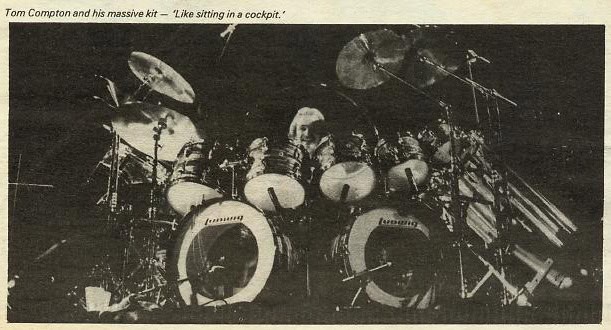
Climbing into Tom’s kit is rather like boarding the cockpit of a Boeing 747, but much more exciting. How long did it take to set up the entire shebang? I wondered. “About an hour,” said Tom gazing with pride upon his beauties. “And it all has to be in the right place every night.
If something is out, it rattles. I’ve had a large kit for many years, and I’ve always liked the idea of a range of tom-toms. In fact these Ludwig drums are very old, and I made some of the tom-toms up myself, out of Ludwig spares, but they match the old Ludwig colours. I have a total of 29 drums and 22 cymbals, nearly all Paiste including a lot of their new range, the Sound Creation. When I went to the Paiste factory, they were extremely helpful, showing me all the latest cymbals. I’ve got splashes, sizzles, rides and crashes. You can give one almighty wallop and hit all three cymbals at once! It gives a nice tonal range, and the good thing about having so many drums, is that everything resonates with it and gives such a good sound.
You get a huge live sound. It’s like sitting in a cockpit, and everything is handy.”
Tom’s enthusiasm is symbolic of “Ten Years Later” who prove that experience and commitment are still an unbeatable combination. “If we do make any mistakes, we like to pretend that’s what we intended all along”, explained Tom. Alvin and Mick laughed.
“That’s what I do all the time,” said Alvin.
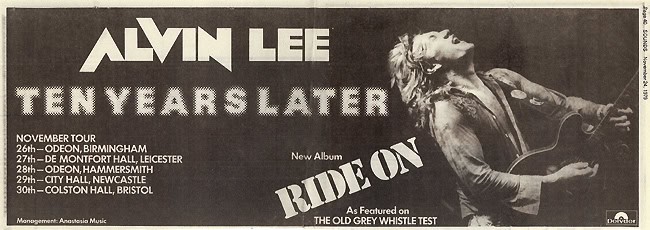
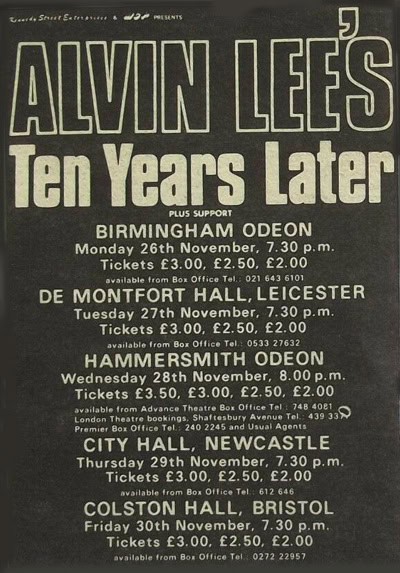
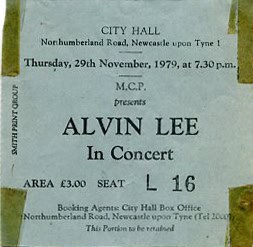
Melody Maker – December 8, 1979
After Dark Section
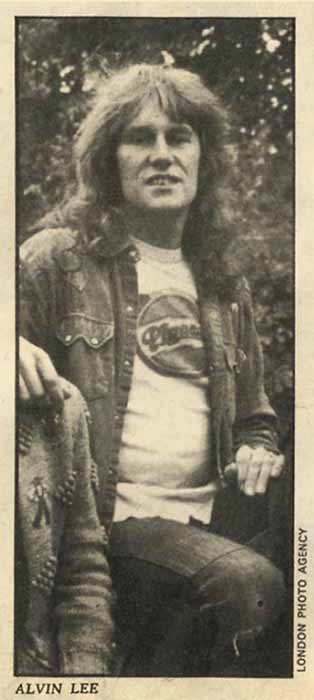
“I’m a fish and chips musician, not a lobster thermidor,” said Alvin Lee. “When I’ve been off the road, I’ve found myself saying: “If only I could be in a Holiday Inn tonight!” It’s taken a few years to sink in, but now I’ve decided that touring is the natural life, and I never want to stop being a working musician. I look at Muddy Waters and John Lee Hooker and say to myself; Yeah, they’re still at it, and that’s for me too”.
The speed-freak of Woodstock as he describes himself during our meeting, is back on the road with a re-formed trio under the name Ten Years Later. Lee earned a fair reputation for dazzling technique with his band Ten Years After, in the acid and post hippie period of British Rock, but now like many others doyens of the Old Guard, he’s hoping to persuade younger fans that he can play a better game than most of the younger bands.
He’s 34 and lives in some grandeur in rock’s stockbroker belt of Hanley on the Thames – Oxfordshire. But for a long time he wondered what to do with the rest of his years and eventually realised that life on the road was the answer. “I want to seek the highest of highs and the lowest of lows. That’s the touring life, and I want it back,” he says. “I intend to be doing it when I’m 40 or 50. Sure, to continue doing what I’ve always believed in, musically and physically get’s harder the older I get, but my heroes are the blues musicians and they seem to continue going round the world with a certain dignity”.
He built a sixteen track studio at his home, where he recorded his new album “Ride On” and he formed a new trio with Tom Compton (drums) and Mick Hawksworth (bass). “I tried a keyboard player,” he says, “but honestly, he gave us no room to play. I wanted a simple and honest approach to rock ‘n roll blues, but we all agreed that the pianist was shaping the overall sound far too much. He had to go, because there was no way I was going to put up with that drone”. Ten Years Later approach their current British dates with plenty of confidence. They’ve recently completed a successful European tour, and an American tour last year proved that the legend of Woodstock is still alive.
The Alvin Lee of today is under no illusion about his relevance to the new rock audience. “We’re all getting on, the musicians who made it in the Sixties and Seventies, but I definitely think there’s a place for us. It’s great to see the new bands coming up, but that whole scene has got to sort itself out, and I notice it’s still only the good players who are getting anywhere”. As a warm up to his recent European tour, Alvin went out on a few gigs into small halls “full of safety pins and audiences expecting the Sex Pistols”. At one in Leicester, he says he drank a lot of water and spat it out at the audience to demonstrate how unpleasant he thought the habit was. “They were horrified and I suppose as much as anything, by the sight of this old musician joining in on their scene”. The music he says, went down well, and he has always enjoyed, “tough, sweaty, gigs”.
He feels that in the future the enormous arena concert will become “obsolete”. “I just don’t believe that we can go on forever playing to audiences the size of Madison Square Garden, or even Wembley and expecting it to be a real rock concert. The economics of rock music today will probably prove me wrong, but I like the atmosphere of a place the size of Hammersmith Odeon, where the musicians get off on the crowd and vice-versa. It’s just the right size. I’ve had it with places the size of Madison Square Garden, where the crowd is a dot and the music is one long echo”. He holds strong views too, on performers obligations to play all their old hits, anything the audience demands. “When we’ve been touring recently, and last year in the States, I sat down one night and had to face the fact, that if I went to see Jerry Lee Lewis, I’d want him to do “Whole Lotta Shakin”. I guess there’ll always be some people out there wanting me to play “I’m Going Home,” and that’s why they come to
the show in the first place. They’re in love with a memory of an event that took place earlier, of something. So I reckon every musician has to go back to his roots and give the audience whatever it was that dragged them out from their houses to the concert hall to see him in the first place.
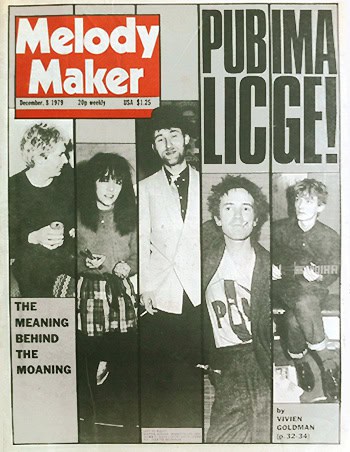
He knows though, that his road back to a British audience won’t be as simple as turning on a tap. “We had great years with Ten Years After and made lots of mistakes, but I’m determined to learn from them. I don’t want to fall into the same traps. As I’m intending to keep playing for as many years ahead as I can imagine, I have to forget all the nonsense I grew up with in the early Seventies. “I don’t believe at all in the champagne and limousine at the airport trip anymore, and I’m not into fifty foot tanks with sharks in the dressing room. That should all stop. No promoter should stand for it, and once a band experiences that kind of treatment, they expect it again and again and the whole thing became ridiculous . The promoter is not a catering officer. He should get the gig together and make his act (he’s promoting comfortable) and that’s all. “What’s brought me back with such enthusiasm is my honest belief that rock ‘n roll is the bridge between the 50 year old musician
and the 12 year old kids. For me, it still has that power. “Sound-Check hassles and motorways are like a drug to me, and I want to be out there taking it”.
Article by Ray Coleman
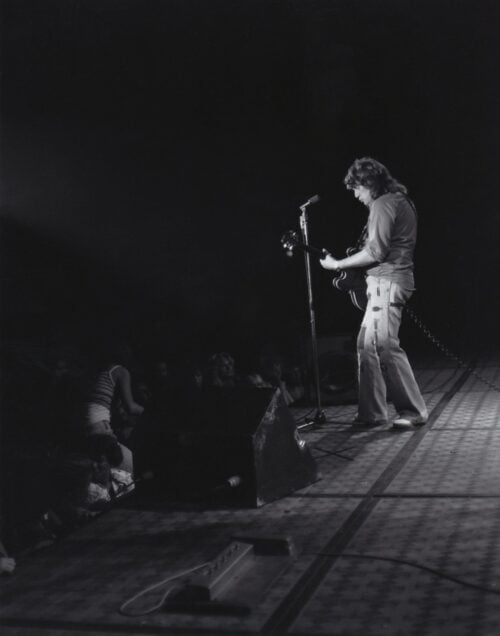
Popular 1 mag. (Spain), January 1980 edition, published December 1979
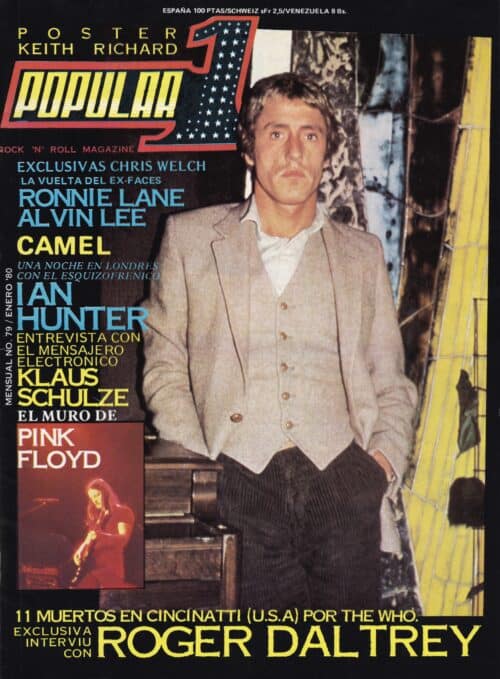
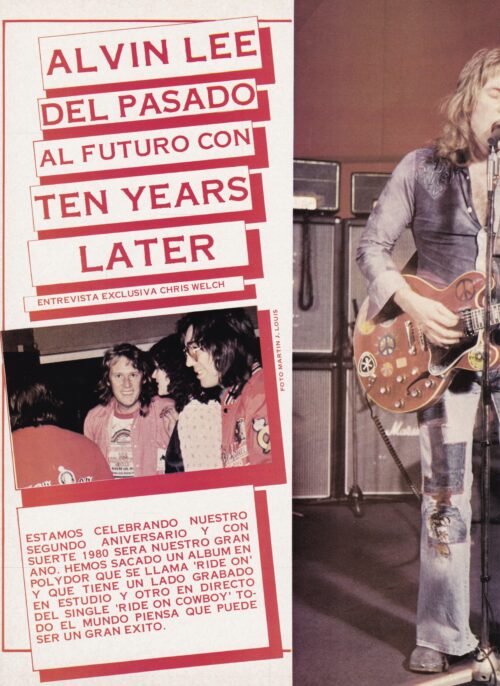
click to enlarge
click to enlarge
Translation:
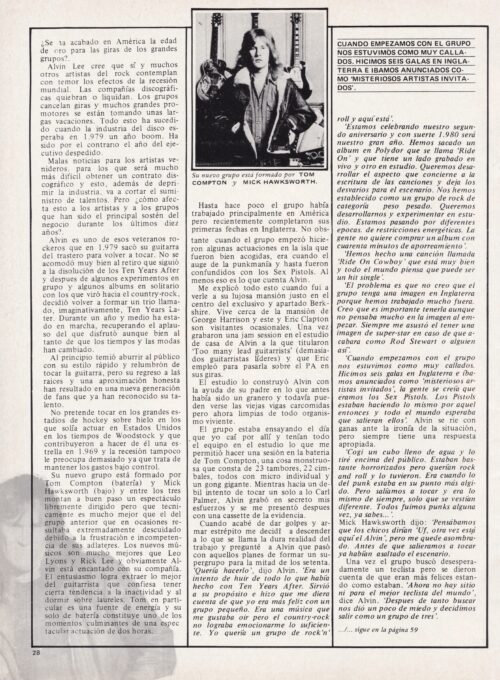
**Has the golden age for tours by big groups in America come to an end?**
Alvin Lee thinks so, and many other contemporary rock artists contemplate with fear the effects of the global recession. Record companies are going bankrupt or liquidating. Groups are canceling tours and many big promoters are taking long vacations. All of this has happened when the record industry expected 1979 to be a boom year. It has been quite the opposite, the year of mass layoffs.
Bad news for veteran artists, for whom it will be much harder to obtain a record contract and this, in addition to depressing the industry, will cut off the supply of talent. But how does this affect artists and the groups that have been the main support of the business over the last ten years?
Alvin is one of those veteran rockers who in 1979 took his guitar out of storage to play again. He did not settle very well into retirement that followed the dissolution of Ten Years After, and after some experiments in groups and some solo albums with which he leaned toward country-rock, he decided to form a group again called, imaginatively, Ten Years Later. For a year and a half he has been back on the road, regaining the applause he enjoyed, although it is true that times and fashions have changed.
At first he feared boring the public with his fast, dazzling guitar style, but his return to roots and an honest approach have resulted in a new generation of fans who have already recognized his talent.
He does not intend to play in the large ice hockey stadiums where he used to perform in the United States in the days of Woodstock and that helped make him a star in 1969, and the recession does not worry him too much since he tries to keep expenses under control.
His new group is made up of Tom Compton (drums) and Mick Hawksworth (bass) and between the three of them they put on a good show, freely directed but technically much better than the previous group, which at times turned out to be extremely careless due to the frustration and incompetence of its wings. The new musicians are much better than Leo Lyons and Ric Lee and obviously Alvin is delighted with his companions. The enthusiasm manages to bring out the best in the guitarist, who confesses to having a certain tendency toward inactivity and resting on his laurels. Tom in particular is a source of energy and his drumming alone constitutes one of the culminating moments of a spectacular two-hour performance.
—
**His new group is formed with TOM COMPTON and MICK HAWKSWORTH.**
Until recently the group had worked mainly in America, but they recently completed their first dates in England. However, when the group began to do some performances on the island that were well received, it was during the boom of punkmania and they were even confused with the Sex Pistols. At least that is what Alvin says.
He explained all of this to me when I went to see him at his luxurious mansion right in the center of exclusive and leafy Berkshire. He lives near George Harrison’s mansion and both Eric Clapton and he are occasional visitors. Once they recorded a jam session in Alvin’s home studio which they titled “Too Many Lead Guitarists” (too many lead guitarists) and which Eric used to play over the PA on his tours.
The studio was built by Alvin with the help of his father in what had previously been a barn and you can still see the old wooden beams, but now clean of all organic life.
The group was rehearsing the day I dropped by and they had all the equipment set up in the studio, which allowed me to do a session on Tom Compton’s drum kit, a monstrous thing consisting of 23 drums, 22 cymbals, all with individual microphones, and a giant gong. While I was trying to do a solo à la Carl Palmer, Alvin secretly recorded my efforts and later presented me with a cassette as evidence.
When I finished hitting things and making a racket I decided to come down to what is called hard reality at work and asked Alvin what had happened with those plans to form a supergroup in the mid-seventies.
“I wanted to do it,” said Alvin. “It was an attempt to run away from everything I had done with Ten Years After. It served its purpose and made me realize that I was happier with a small group. It was music that I liked but country-rock didn’t excite me enough. I wanted a rock ’n’ roll and here it is.”
—
**“WHEN WE STARTED WITH THE GROUP WE WERE VERY QUIET. WE DID SIX SHOWS IN ENGLAND AND WERE ANNOUNCED AS ‘MYSTERIOUS INVITED ARTISTS’.”**
“We are celebrating our second anniversary and luckily 1980 will be a great year. We have recorded an album for Polydor called *Ride On*, which has one side recorded live and the other in the studio. We want to unravel the aspect that concerns songwriting and leave the fireworks for the stage. We have established ourselves as a heavy-category rock group. We want to develop and experiment in the studio. We are going through different periods of energy restriction. People don’t want to buy an album with forty minutes of boredom.”
“We have made a song called ‘Ride On Cowboy’ which is very good and everyone thinks it could be a hit single.”
“The problem is that I don’t think the group has an image in England because we have worked a lot abroad. I think it’s important to have one, although I never thought much about image at the beginning. I’m always scared of having a superstar image if it ends up like Rod Stewart or someone like that.”
“When we started with the group we were very quiet. We did six shows in England and were announced as mysterious invited artists; people thought we were the Sex Pistols. The Pistols were doing the same thing back then and everyone was waiting for them to come out.” Alvin laughs at the irony of the situation, but he always has an appropriate response.
“I took a bucket full of water and threw it over the audience. They were quite horrified but they wanted rock and roll and they got it. It was punk at its most aggressive point. But we went out to play and it was the same as always, only we dressed differently. We were all punks back then, you know…”
Mick Hawksworth says: “We thought the kids would say ‘Ugh, another old geezer here!’ but I was amazed. Before we went on stage they had already stormed it.”
Once the group desperately looked for a keyboard player but realized that they were happier as they were. “Now there’s no room for the world’s best keyboard player,” says Alvin. “After looking for one for so long we got a bit scared and decided to stay as a trio.”
—
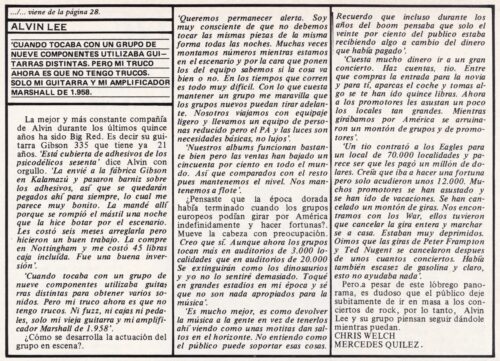
**…/… continued from page 28**
**ALVIN LEE**
**“WHEN I PLAYED WITH A NINE-PIECE GROUP I USED DIFFERENT GUITARS. BUT MY TRICK NOW IS THAT I HAVE NO TRICKS. JUST MY GUITAR AND MY 1958 MARSHALL AMPLIFIER.”**
The best and most constant companion of Alvin over the last fifteen years has been Big Red. That is, his Gibson 335 guitar which is now 21 years old. “It’s covered in psychedelic stickers from the sixties,” says Alvin proudly. “I sent it to the Gibson factory in Kalamazoo and they varnished over the stickers, so they’ll stay stuck there forever, which I think is very nice. I sent it there because the neck broke one night when I threw it across the stage. It took them six months to fix it but they did a good job. I bought it in Nottingham and it cost me 45 pounds, case included. It was a good investment.”
“When I played with a nine-piece group I used different guitars to obtain various sounds. But my trick now is that I have no tricks. No fuzz, no wah-wahs or pedals, just my old guitar and my 1958 Marshall amplifier.”
**How does the group’s stage performance develop?**
“We want to stay alert. I’m very aware that we shouldn’t play the same pieces the same way every night. Many times we put numbers together while we’re on stage and by the faces the crew make we know whether things are going well or not. In these times everything is very difficult. With what it costs to maintain a group I’m amazed that new groups can move forward. We travel light and carry a reduced crew, but the PA and lights are basic necessities, not luxuries.”
“Our albums work quite well but sales have dropped by fifty percent worldwide. So compared to the rest we’re maintaining our level. We’re staying afloat.”
**Did you think the golden age had ended when European groups could tour America indefinitely and make fortunes?**
He shakes his head worriedly. “I think so. Although now groups play more in 3,000-seat halls than in 20,000-seat arenas. They’ll become extinct like dinosaurs and I won’t miss it too much. I played in big stadiums in my time and I know they’re not appropriate for music.”
“It’s much better; it’s like giving music back to people instead of having them there watching like little dots jumping on the horizon. I don’t understand how the public can put up with those things.”
“I remember that even during the boom years I thought that only twenty percent of the audience was receiving something in exchange for the money they had paid.”
“It costs a lot of money to go to a big concert. Do the math, man. Between buying tickets for your girlfriend and yourself, parking the car and having a drink, you’re out fifteen pounds. Now big venues scare promoters a bit. While we were touring America a lot of groups and promoters went bankrupt.”
“A guy hired the Eagles for a 70,000-seat venue and it seems he paid them a million dollars. He thought he was going to make a fortune but only about 12,000 people showed up. Many promoters got scared and went on vacation. A lot of tours were canceled. We ran into War, they had to cancel the entire tour and go home. They were very depressed. We heard that Peter Frampton’s and Ted Nugent’s tours were canceled after just a few concerts. There was also a gasoline shortage and of course that didn’t help at all.”
But despite this bleak outlook, it is doubtful that the public will suddenly stop going en masse to rock concerts; therefore Alvin Lee and his group plan to keep giving it to them as long as they can.
**CHRIS WELCH
MERCEDEZ QUILEZ**