Record Mirror – April 10, 1976
page 3
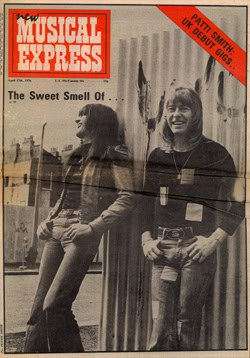
New Musical Express – April 17, 1976
News Desk:
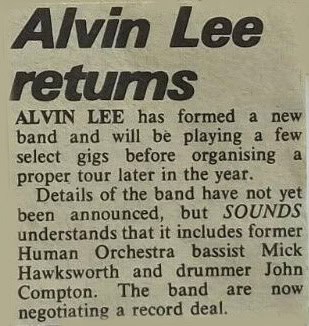
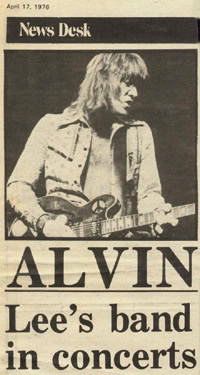
Alvin Lee is going out on the road again, opening later this month, and he has completely re-vamped the line-up of his backing band – although it will still be going under his standard billing of Alvin Lee & Company. The British dates will serve as a preview to the outfits new album, which is due out at the end of next month.
With Lee featured on lead guitar and vocals, he is joined in his new look outfit by highly respected keyboard player Tim Hinkley, who has previously worked with at least a dozen different name bands; drummer Bryson Graham, best remembered for his work with Spooky Tooth; and spells with Savoy Brown and Blodwyn Pig.
A spokesman commented: “This is not a question of the old band having split or been sacked. Ever since he started working as a soloist, his backing band has always been flexible. He simply signs up musicians on a short-term basis, to cope with what ever bookings he has in hand at any particular time. It never was a permanent band.”
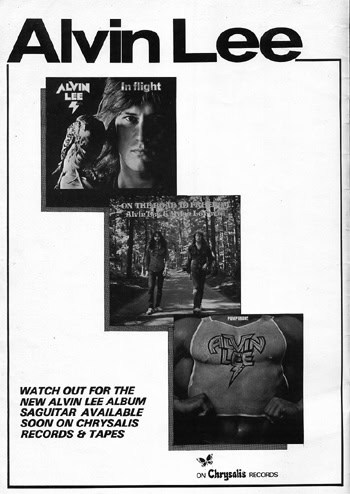
The new Alvin Lee album is titled “Saguitar” and is scheduled for May 28 release by Chrysalis. It will be preceded, in about three weeks time by a single called “Sea Of Heartbreak” a revival of a former hit by country artists Don Gibson.
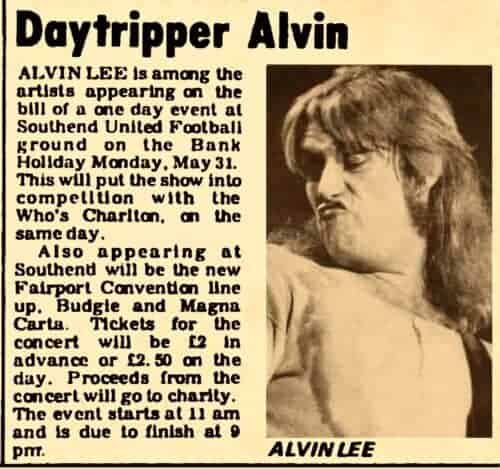
First dates confirmed for the band are Cardiff University (30) Birmingham Odeon (May 1), Bristol University (7), Ipswich Gaumont (8), York University (15) and the open air concert at the Southend United Football Ground on Spring Bank Holiday May (31).
It is understood that a few more dates and venues have still to be finalized, and they may well include a major London performance. Lee’s appearance in the Southend gig, plans for which were revealed by New Musical Express last week, is still subject to confirmation. Said the the spokesman: “Alvin hasn’t yet signed a contract to take part in this event, but it is 95 percent certain that he will do so, as he likes the idea of the concert and the charity it is benefiting.”
Record Mirror – April 17, 1976
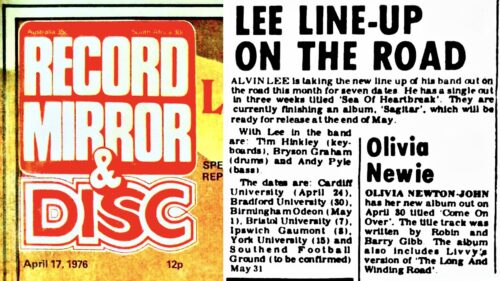
Alvin Lee is taking the new line-up of his band out on the road this month for seven dates. He has a single out in three weeks titled, “Sea Of Heartbreak”. They are currently finishing an album, “Saguitar”, which will be ready for release at the end of May.
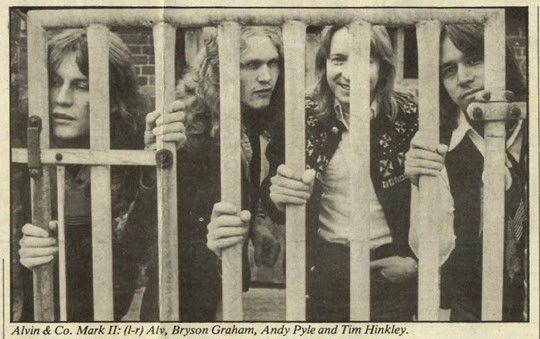
With Lee in the band are: Tim Hinkley (Keyboards), Bryson Graham (Drums) and Andy Pyle (Bass).
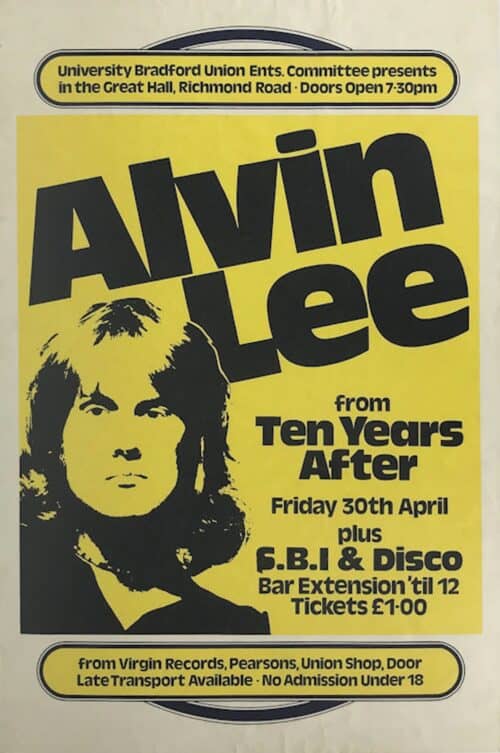
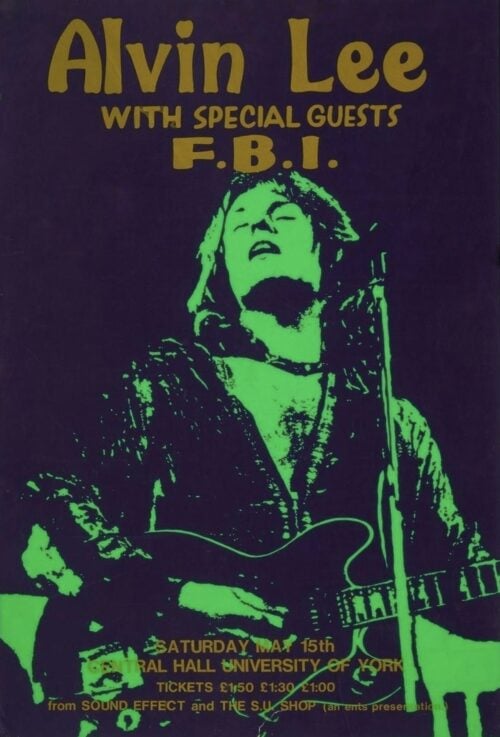
The dates are: Cardiff University (April 24), Bradford University (30), Birmingham Odeon (May 1) Bristol University (7), Ipswich Gaumont (8), York University (15) and Southend Football Ground (to be confirmed) May 31.
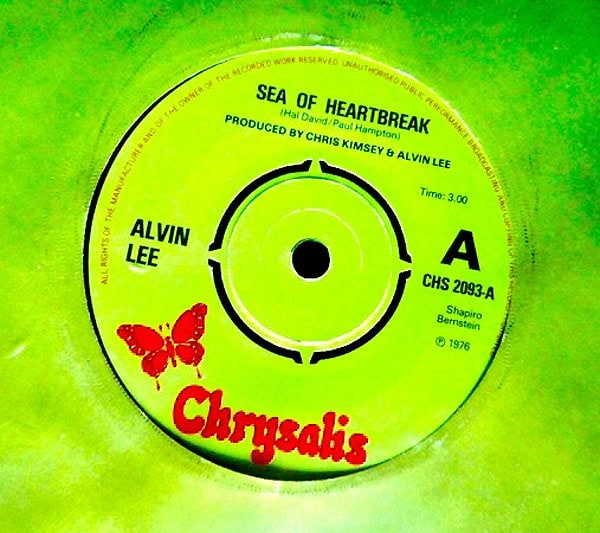
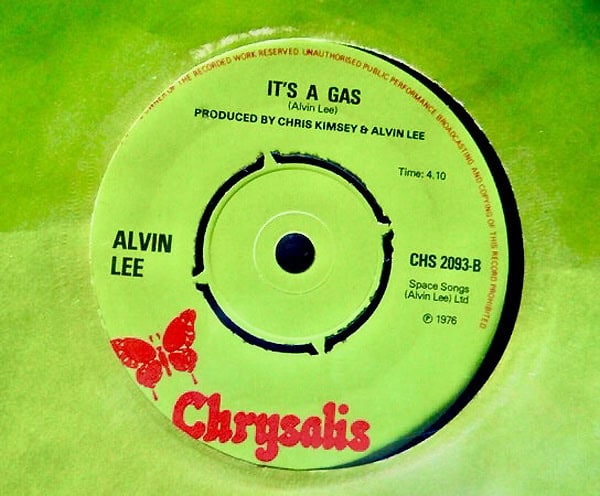
Alvin Lee on Tour
Sounds – May 1, 1976
AT 3PM, Alvin Lee, benevolent despot, was still asleep – he hadn’t gone to bed until 9:30 am – so it seemed a good excuse to take the obligatory tour of the grounds.
The onions were coming up nicely in the expansive vegetable garden and the grape vines being sprayed by a gardener in one of the many greenhouses looked well established. The geraniums also seemed to be doing well.
Across the fields, where the verdant green of spring battled for attention with the shrill cries of cocky sparrows and jaunty finches, the chimney smoke rose from the cottages of Alvin’s tenant farmers. Their welfare is Alvin’s concern. It’s a hard life, rock and roll despotism.
Within the manor, the lord had risen and was reviving his consciousness with tea. Around him staggered some of his band and co-producer Chris Kimsey. The latter, with bassist Andy Pyle, had just completed thirty hours in the studio, emerging with bass track to “Friday The 13th”, a potential song for Alvin’s new album called “Rocket Fuel”.
Alvin turned the discussion of the track to his publicist. “I’ve got a story for you. We’ve tried to record this track on each of the last four albums, but every time something happens that makes it impossible. So when we did it this time we called in an exorcist”. “Is that so?” “Yep.” Alvin looked pleased. “It’s not true, but it’s a good story.” Retiring to the listening room, Mr. Kimsey threaded the tape in question onto the Revox. Fresh from producing Peter Frampton’s last two extravaganzas, his presence was for his ability to obtain good vocals and keep Alvin “If-it’s-not-right-in-three takes-forget-about-it” Lee at the post until it was perfect. It’s this attention to perfection that caused him to produce “FBI’s” album, which in turn has earned him the job for Kokomo’s next outing.
The assembled lounged amongst the comfy floor cushions as four Tannoy Malorcans blasted “Friday The 13th”. The bass bounded and leaped like a steamroller in heat while a flight of Alvin Lee guitars cruised in tight formation immediately overhead. Every so often was an excellent imitation of someone ripping the strings off an innocent instrument at full amplification. This track was said to be indicative of the dirtier side of Alvin Lee and Company Mark 2’s burgeoning output, a brace of numbers that will stand up on stage. Mr. Lee, needing a deadline as impetus – after all, as part of the Legendary Gits with Boz, Ian Wallace, Tim Hinkley and Mel Collins, he had done nothing for a year except record every weekend, precisely because there was no motivation to meet the public- had live dates arranged and a record release date before a band had been assembled. Oh, there was the odd person, but auditions and selection was required, until, with an ensemble assembled four weeks ago, rehearsals and tapings could happen simultaneously in the barn-shaped studio.
But Mr. Lee. Playing? Going on the road? “It’s a physical need. I’m getting bored with sitting here, I need to see the M1 again, the Blue Boar. It’ll keep us off the streets.” Are we to consider this a permanent aggregation? “It’s quite possible. It depends on who falls over first.”
The plan as envisioned, is to just keep extending gigs beyond the initial tour, playing three or four nights a week, keeping the hand in. An American tour is scheduled for the autumn. The difference between this “and Company” and the first such was that the latter was very quickly gathered on a musical basis, regardless of personality. It immediately split into about three groups. Mark 2 has been assembled by the opposite process. Mark 1, was also an experiment in directions unfamiliar to Alvin, “which weren’t really up my street. But the journey of being a musician is to take up different paths and explore them. We just got to a point where I was playing out of my depth. This group is much more basic, heavy R & B based. I think there’s a tendency to discount what you do best because it’s easiest.”
The group had moved to the TV room. The sun steamed through the mullioned windows, playing across the wood panelling and the 50 video cassettes littering the floor in front of the television. Outside an open window, finches chattered as they attacked the suspended bag of suet. A breeze rustled the turf of the croquet lawn. The leaves on the trees scraped together. It was a hard life, in the country. ———- By John Ingham
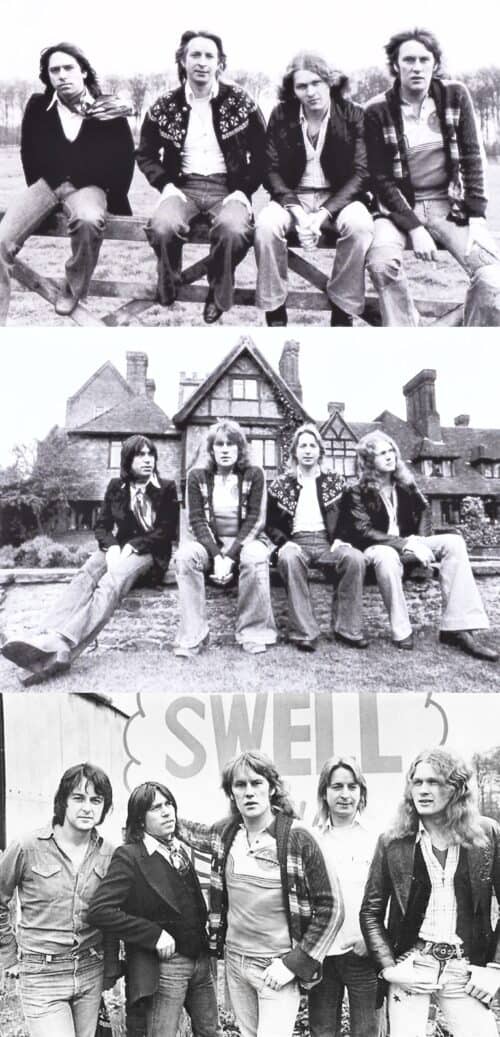
l-r: Chris Kimsey, Tim Hinkley, Alvin Lee, Andy Pyle, Bryson Graham
May 23, 1976 – Roundhouse, London
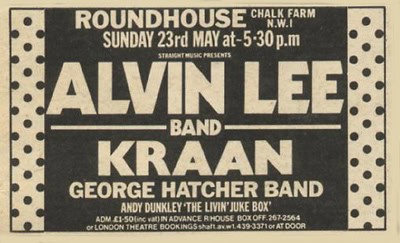
Of course everyone knew it was going to happen. By the time the opening band had finished their set at London’s famous Roundhouse (the famous locomotive turn around point) on Sunday afternoon, the fact that Jeff Beck was going to make an unadvertised guest appearance was a completely open secret. Exactly with whom he was to play was less well known, so when ex-Mahavishnu Orchestra keyboard man Jan Hammer walked on with the rest of his band, including Steve Kindler, who played violin on Hammer’s last album, with Fernando Saunders, bass, and Tony Smith, drums, it looked like we were going to witness a real summit meeting.
While it wasn’t quite all that, as it turned out, but it will do to be going on stage with.
After a powerful opening with “Country and Eastern Music” off his album with Jerry Goodman, Hammer called on “a guest guitarist who will join us right now” and Jeff Beck walked onto a storm of applause. They all then swung right into “It Doesn’t Really Matter” from Jeff’s own “Blow By Blow” album, and it became perfectly clear, that this was not going to be any ordinary meeting of the minds. For the blend of two apparently disparate styles – Hammer’s cerebral “Funk” and Jeff’s “Blues Tinged Note Bending”, has enormous potential. But to be totally honest here, the full potential of what could’ve been, wasn’t entirely realized on this occasion.
Jeff Beck seemed somewhat understated and uncomfortable in his new role as a guitarist in the band. Even if he was set up specially as a featured soloist – which wasn’t a role that he has played since the break up of the Yardbirds. Also, with the Hammer material he often seemed merely to be duplicating Kindler’s violin lines.
Hammer on the other hand, really seemed to be getting off on Jeff’s presence. They were a hard act to follow for sure, and to be fair to the German band Kraan, who were the main support group, they did their very best. Forget everything that you’ve heard about German Rock Bands so far, that they are difficult, introverted, philosophical stuff, high on electronics and low when it comes to body rhythms – because Kraan aren’t anything like that stereotype at all. What they are is funky and exciting, although sadly, it didn’t come across too well on Sunday.
That left us with Alvin Lee, who must have had mixed feelings about his surprise guest. Alvin had two alternatives in which to choose. First, he could’ve pounded the opposition into the ground with pile-driving, heavy metal guitar work, along with five million verses of “I’m Going Home” just like in the Woodstock movie; or, he could show us just how tasty he could be under extreme pressure. Wisely, for my money, Alvin choose the latter option. But, though comparisons would be odious, they are also inevitable.
What Alvin doesn’t have, is Jeff’s melodic flair and surprisingly he didn’t throw his guitar (axe) around as much as usual. But he acquitted himself reasonably well under the circumstances.
Article written by Karl Dallas

photo by Andrew Putler
May 31, 1976 – Southend Festival
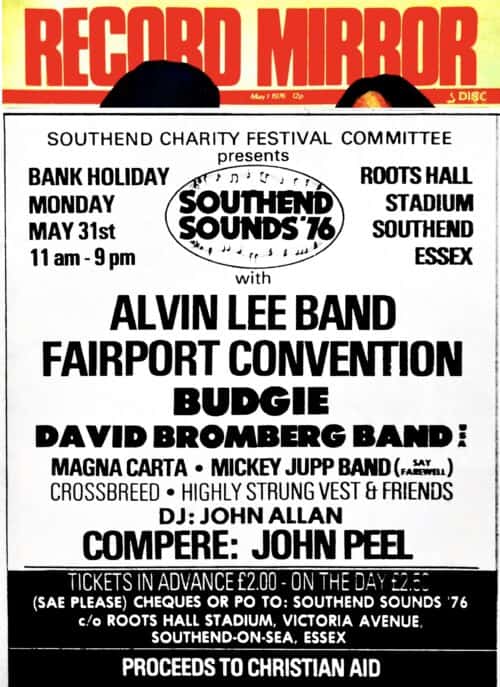
Record Mirror – May 1, 1976
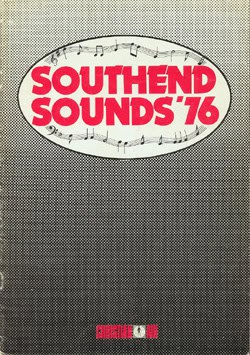
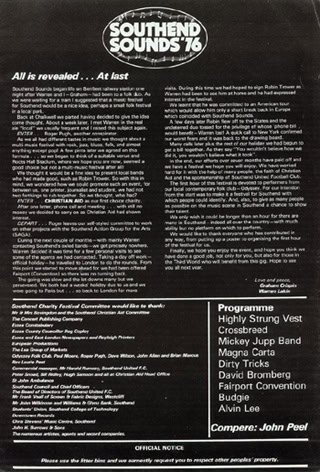
Southend Music Festival 1976:
The growing national trend to use football stadium’s for music festivals has spread to Southend, on May 31, 1976, when Roots Hall took on the Southend Music Festival, that is hosted by Radio 1 Disc Jockey John Peel. On the music menu, includes such acts as:
Budgie, Fairport Convention, Alvin Lee Band and The David Bromberg Band. As well as the farewell performance of Southend’s own Mickey Jupp Band. Reports say that some 3,000 music fans enjoyed the event.
Southend Sounds 1976, is the closest that we ever got to a music festival at Roots Hall Football Ground.
It featured Alvin Lee of Ten Years After fame, in the top billing slot.
Musician – June 1976
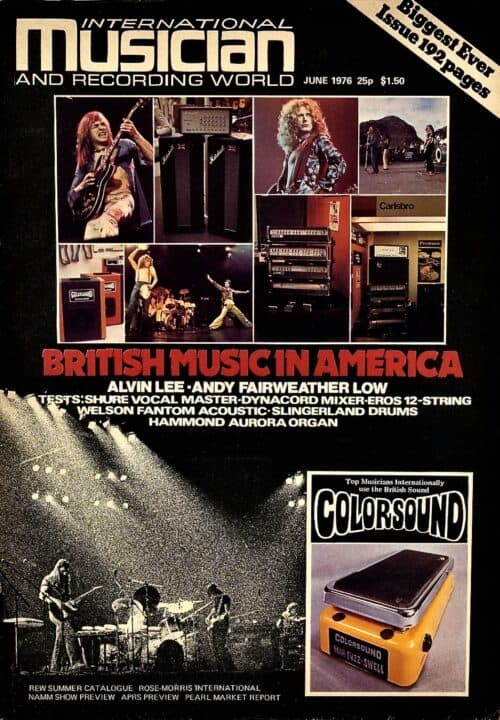
Alvin Lee – Has A Problem !
By Eamonn Percival
Alvin Lee has got a problem. He may not be aware of it – although I suspect he is, but he really has to get off his arse and rock and roll, if he is going to sustain his position in the ranks of rock’s elite. He’s worked hard to get there, but he will have to work just as hard to stay there. Over the last couple of years, he has lost a lot of ground and every week sees a new “Guitar Super Hero”. Not that he particularly wants to be a “guitar-super-hero”, he had enough of that with Ten Years After, but his forte is undoubtedly his six string dexterity.
Ten Years After was the band that elevated the name of Alvin Lee to superstar status. In the early sixties blues boom, it was a case of the faster you play, the better you are. Alvin learned to play fast. From “a good band with a fair guitarist” Ten Years After became “a great guitarist with a fair band”. The band did particularly well in the States always thirsty for boogie, and America took Alvin Lee into their hearts and he came out “A Superstar”. The film Woodstock put the seal on it. Alvin’s red hot solo on “Going Home” was for many the highlight of the film. Ten Years After were now “Big Business”, but it was the beginning of the end for the band. Alvin became disillusioned everywhere they played, the audience wanted to re-live the film. Cries of “Going Home!” eventually provoked Alvin Lee into returning home to England. The band split and he retired to his modest £100,000 mansion near Reading, presumably to “get himself together”. 1973 saw an album called “On The Road To Freedom” which Alvin recorded with Mylon Lefevre, who was a very powerful gospel singer. It was a complete change of direction for Alvin, and his new found independence and renewed enthusiasm culminated in a new road band, called “Alvin Lee and Company”, which consisted of Mel Collins (Saxophone) Ian Wallace (Drums) Tim Hinkley (Keyboards) Alan Spenner (Bass) and Neil Hubbard (Guitar). With a minimum of rehearsals, the new band performed one outstanding performance at London’s Rainbow, from which the “In Flight” double live album was taken. After the phenomenal success of that gig, Alvin went on to do a world tour, with a slightly different line up, with Ronnie Leahy replacing Tim Hinkley and Spenner’s place was taken by Steve Thompson.
In the summer of 1975, Alvin dug up Ten Years After for another American tour. Unfortunately, the tour coincided with the release of another Alvin Lee solo outing, called “Pump Iron” It was a fair album, but not strong enough to sell on its own. With Alvin touring the States, “Pump Iron” didn’t really live up to expected sales. He returned home and set about looking for members for yet another band. His old pal Tim Hinkley was brought in on keyboards, along with Bryson Graham and Andy Pyle playing drums and bass respectively. Together, they recorded an album which should be released in the near future and are now busy rehearsing in preparation for the road. A trip down the M4 to Reading was the order of the day. Four in the afternoon found Alvin only just surfacing, he had been in the studio until eleven that morning, and after a reviving coffee, we retired to the T.V. room to conduct the interview. A video recorder, countless cassettes, a T.V. camera and other playthings littered the floor, while our hero relaxed in an antique armchair and lit up the first in a long chain of cigarettes.
Perhaps Alvin’s lifestyle has something to do with his “Problem”. Tucked away for most of the year in this gigantic house, next door to an enormous converted barn, housing a professional sixteen track recording studio. It’s a comfortable life for a humble Nottingham lad, perhaps a little too comfortable. There’s always the temptation to hibernate for most of the year, and only occasionally popping across the Atlantic for a short tour with Ten Years & Company or whoever, eventually returning to Hookend Manor to escape and recuperate. Of course, there’s always the studio to keep him occupied at home, but I couldn’t help but wondering if his sojourns into the studio are really borne out of a deep desire to be creative or a deeper desire to escape and relieve the boredom.
With the new band, however, he seems to have found a brand new enthusiasm. There is a definite change in direction as he explained this way: “With the music that I’ve been doing in the past, I was influenced, like a lot of people, by funk and soul. The Rainbow gig we did, had very funky leanings, and the second Alvin Lee and Company band was sort of jazz / funk.
When I went out on the road with them, I thought that instead of being a sort of copy of Cornell Dupree, I should really get down to doing what I do best. It’s a musician’s trip, always trying to play above yourself. Playing jazz and things with more taste, that would be appreciated by other musicians but that’s about it. When all was said and done, we really did have a good funky band, but it was nothing like: The Meters or Kool And The Gang, so it’s all down to getting back to the Rhythm and Blues roots now. What’s good about it now is that, previously I got the very best musicians that I could find, where as now I’ve got a band.
The four of us are a unit, which is really nice. It’s like the first three years of Ten Years After. Everybody’s really into what we’re doing, and it’s a very communal thing.”
Ten Years After stopped being “fun” for you then?
“Ten Years After went through that but then lost it. It’s like the very early days, all over again now. Sometimes we sort of sit around talking about what we’d like to do for about three hours. Discussing various records and new directions and things like that.” The friendship that exists within the band is very important to Alvin. For the first time in quite a few years, he is working with friends as well as musicians.
Alvin continues: “It really is important to a band, and it shows in the music as well. Like, we’ll be doing a take and it might not be quite right, so we come in here and sit around and get our heads together. It’s a whole different thing, and it just gells.” When asked how permanent the band is, Alvin was a trifle hesitant in replying. “Well, it’s a permanent as……well, it could well be permanent . I’m quite optimistic. It’s just a really nice unit to work with.” Before they started recording the album, the band had only been together a matter of weeks.
They rehearsed the numbers for a week, cut rough versions in the studio and then took them away for a weekend to “live with the songs”. When they came back, arrangements were ironed out and the songs recorded. Alvin says: “It was like the equivalent of three months on the road. That’s the reason the whole thing is coming together so quick. It’s like when you’re on the road and you’re doing a number, and you think to yourself “Oh I’d like to put this in here” and by the end of the set, you’ve forgotten all about it. When you’ve got it down on tape, you can analyse it in different moods. And when you record it and listen to it afterwards, everyone is very critical. It’s an amazing facility really, having a studio to rehearse and record in.”
In keeping with Alvin’s principle of “getting back to the roots” most of the tracks on the album will be very basic. He is insistent on not doing too many overdubs. He adds: “Most of the stuff I really used to get off on didn’t have eight overdubbed voices or anything like that. The old Elvis and Jerry Lee Lewis and Little Richard stuff was all done in just one take, usually. They might have had to do it a load of times, but when they got it, they really got it. I think overdubbing really only helps if your basic track is weak. What we found is with the tracks we’ve done, overdubbing just doesn’t fit because the basic tracks are good. Unless you’re super careful, you tend to cross whatever is already happening. You can very easily go too far, and it can happen a lot with multi-tracking too.”
Alvin tells me that he’s co-producing the album with Chris Kimsey. The partnership goes back a long time, to the days when Chris was engineer at Olympic Studios and he worked on three Ten Years After albums. It is the first time Alvin has used another producer, and he’s very pleased with the results. Alvin adds: “He’s really good, and it really helps. It’s like having a really attentive ear in the studio. It sounds very different up there in the control room. You can get too close if you’re producing yourself. Like, I might play a part on the guitar and think to myself “Yeah, that’s the one” and Chris will say no, that’s not right, and then sometimes I’ll do a bit and think to myself: “No that wasn’t right” and Chris will like it. A mistake you might try to bluff out of sometimes, turn out to be the best licks. It’s just because if you didn’t do what you intended to do, you think it’s wrong.”
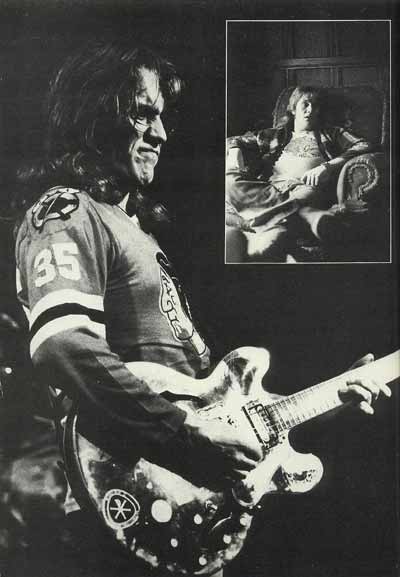
On most of the basic tracks, Alvin sticks to his old Gibson ES-335 Guitar, although he sometimes uses a Telecaster or a Stratocaster and various acoustics. He also finds that when he changes a guitar, his playing style alters accordingly. “I picked up a really old Stratocaster in Texas. It’s a beautiful guitar, one of those that seem to play itself. The notes sound so nice, you don’t have to play a lot. With my stage Gibson, I use a very heavy bottom E string so that if I’m playing up high, I can whang down on the bottom string and it sounds like a grand piano. Where as if you do that with a Les Paul or a Strat, it just doesn’t happen because the note just bends away. Also, on the Gibson, I’ve got heavy gauge Gibson strings for the E, A and D and then the top three are light gauge Fender Rock and Rolls, because they’re the one that I bend. That came about by accident really. I was in the States, and I used to use fairly heavy strings, but I cut my finger once and decided to put light gauge strings on the top, so they were easier to bend. Since then, I’ve just got used to that set-up.”
Apart from his own band, Alvin recently became involved with an outfit called FBI (Funky Blues Incorporated – 1976) Just over a year ago, Alvin was watching T.V. when he spotted them playing on a children’s show. At the time the band had been slogging around the London pub circuit and getting nowhere fast, but Alvin liked them and offered to lend a hand. He invited them over to his studio and with Chris Kimsey, they both helped to get their sound down on tape. Their first album was recently completed at the studio, (Space-Studio) and Alvin is still very much involved with them. Alvin says: “We’ve been having a bit of trouble getting them the right set up. They’re going to go with me on the tour, and it will be a bit different for them, having to play to a seated audience. They’re basically a club band. They’re great at somewhere like Dingwalls, but they need experience playing concerts.
The trouble with looking after a band a band like that is from the business angle. I’m not a great businessman. Warner’s wanted the band right from the get-go. They heard the demos we did and they said, “Great” so we worked out a deal and everything. Then with my lack of business knowledge, I told everyone else who were interested in them that it was off and that we were going with Warner Brothers. A few days before it was all signed, sealed and delivered, Warner Brothers called the whole deal off – they had cut-backs and closed some of their offices and even dropped some of their artists. By that time, I’d blown it with everyone else. Now, we’ve got Polydor really raving about the band in Europe, and the guy in England doesn’t like it. We almost had a deal in England tied up, but the guy wanted the option for America too, which was totally ludicrous, because they were going to see if it sold in England first, and then release it in America six months later.
Well, ideally I wanted it out at the same time. So I’ve given up trying to be a businessman. It started to affect me. I wasn’t playing any music. Some people can get into all that, but I’m not inclined that way. I mean, I’d get stoned and go into a meeting and tell them exactly what I thought and what I wanted to do, and that’s not the sort of thing to do in the business world!”
After a month long British Tour, Alvin will go to the States in late August, although it’s doubtful that FBI will support him on the American jaunt. He says: I’d like to take them with me, but it could cost a lot of money. They’re a nine piece band, and with hotels and plane fares alone, it could be quite expensive.” Naturally, after his problems with Ten Years After in the States, Alvin hasn’t set his sights firmly on the USA. The question remains then, where does he see the bands future?
“Well, I don’t look at it like that. It’s really seated in the music. If the music’s good, then we’ll go anywhere.”
June 6, 1976 – Sunrise Festival – Offenburg, Germany
The concert poster without Alvin Lee listed, the reason for this: Stephen Stills, The Kinks and War had to cancel; Alvin Lee, Procol Harum and Scorpions stepped in at short notice.
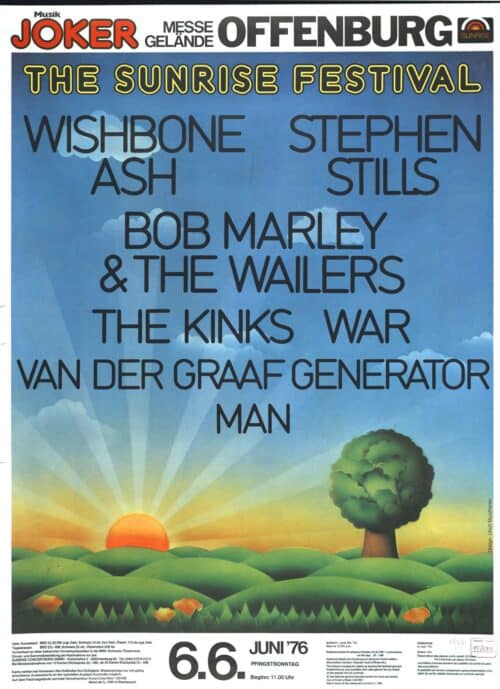
On the final bill were: Van Der Graaf Generator – Man – Procol Harum – Wishbone Ash – Bob Marley and The Wailers – The Scorpions – Barclay James Harvest – Little Feat – and Alvin Lee.
Alvin’s set list: Gonna Turn You On – Friday The 13th – Midnight Special – Ain’t Nothin’ Shakin’ – The Devil’s Screaming – Going Home.
The Alvin Lee Band made a surprise last minute appearance, initially erroneously listed as Ten Years After.
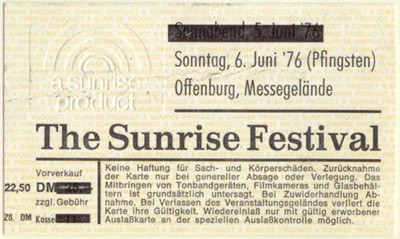
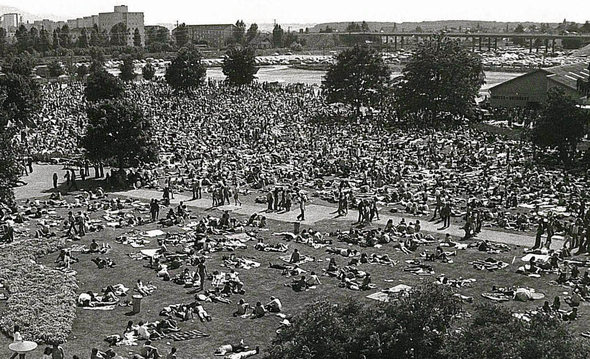
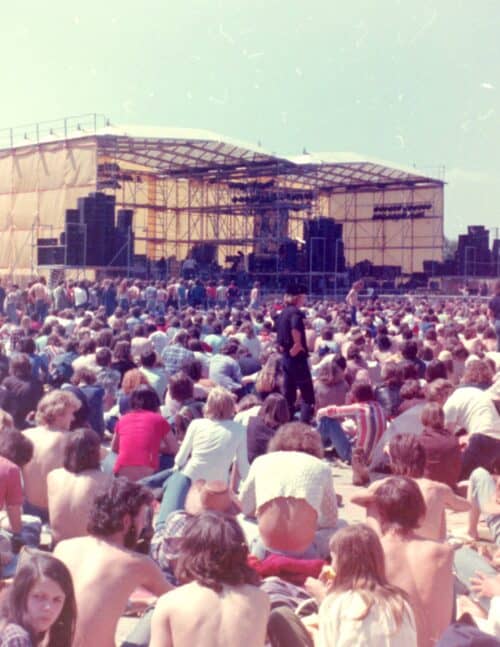
Richard E. Kesel says of the festival, with the distance of thirty-five year span in between, “of course everyone was relieved when it was around, not to mention all the smoke, and being ankle deep in garbage”. However, vibrate with a bit of satisfaction, that it has remained in spite of all the prophecies of doom, a largely peaceful rock concert, that is still talked about decades later. It was an Open Air Festival that took place at the Offenburger inlet, where a reported 18,000 people attended, paying twenty DM per ticket. Good times back then.
It was referred to as a “Festival of Friendship”. Also there was Tony Prince, who was the chief spokesman for Radio Luxemburg, working from the Offenburg Festival. It should also be noted, that this festival occurred on Pentecostal Sunday. People started arriving with tents, sleeping bags, cooking pots and pans, cooking stoves, aprons, packets of soup and with guitars in hand. Individually, the audience members represented, The U.S.A. – Germany – The Netherlands – England – Brussels – Spain……you name it, these thousands of rock disciples of, most dressed in adventurous nomad like clothing, in light summer attire.
To put it into context, 1976 was the year disco overruled all other music – “Grease” (the movie and the Bee-Gees soundtrack) was in, and rock was out. It was now seven years after the historic Woodstock 1969 Festival and the Hippie Trial was now stone cold at best.
But this event, was no doubt, the loudest Pentecostal concert that the residents of Offenburg would be witness to. The largest open air rock festival ever held in this quiet community, even regarded as world-class. With an abundance of musicians who were among the best to ever come out of our generation – talkin’ bout my generation! Or that era of rock and roll.
The Offenburg Fairgrounds saw: Alvin Lee, Procol Harum,,Man, Wishbone Ash, Van Der Graaf Generator, The Scorpions and Bob Marley. Offenburg was always a good time for a pop or rock concert I’m told.
The hard rocking sounds of Alvin Lee, was for many the highlight of the event. The greatest fastest paced guitarist of Ten Years After fame, now out to prove himself all over again, with his own band. He performed “I’m Going Home” to perfection, and to thunderous applause.
The “Scorpions” attacked the guitar strings, followed by Europe’s champions league “Man”.
The quintet from Wales. Procol Harum went on, and who among us doesn’t know their hit song of the day, “A Whiter Shade Of Pale” ! Followed by Wishbone Ash, who were well known for such titles as, “Rock and Roll Widow” and “The King Will Come”.
The Face Down Side:
It was stated, that the festival should be completed by 22:00 (10:00 pm). By 23:15 (11:15 pm) clock, the time completely ran out, and at the behest of the police lights ablaze and pulling the electrical plug on Bob Marley’s performance. Bob took it all in his usual stride, because he otherwise would’ve been neglected entirely and he realized that, saying – “everything will be alright, we will win in the end, because the truth is on our side. Then Germany will be dancing to the truth, and the truth is Reggae.” Bob returned to his cabin and had made a giant joint. “That’s the system, never mind” said Marley, “everything will be alright in the end”.
But Bob never lived to see that day come, as he died on May 11, 1981.
Photographer: Peter Nath

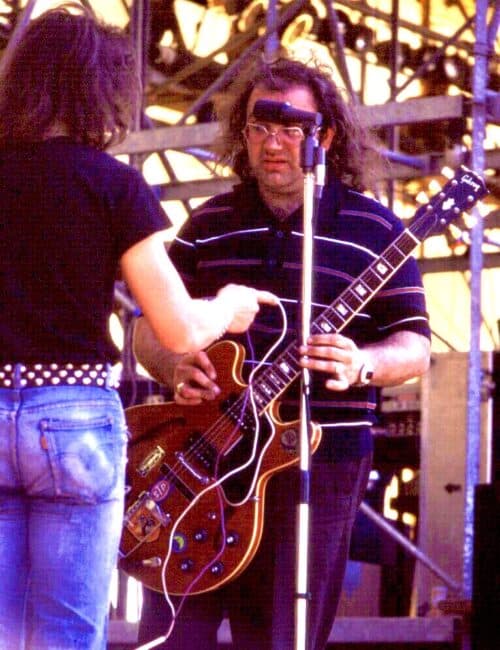
John Hembrow with Alvin’s second
Bravo Magazine (Germany) – June 23, 1976
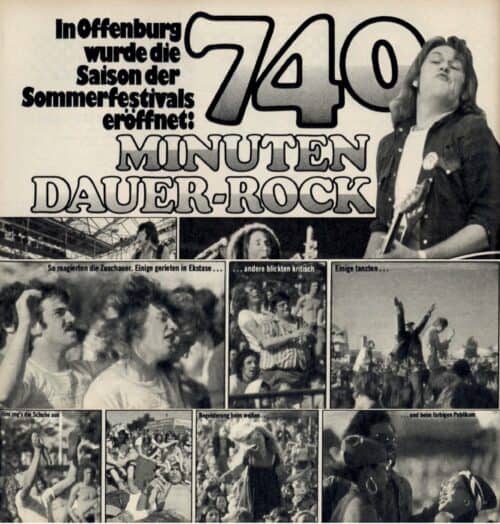
click to enlarge
Popular1 No. 39 Magazine (Spain) – September 1976
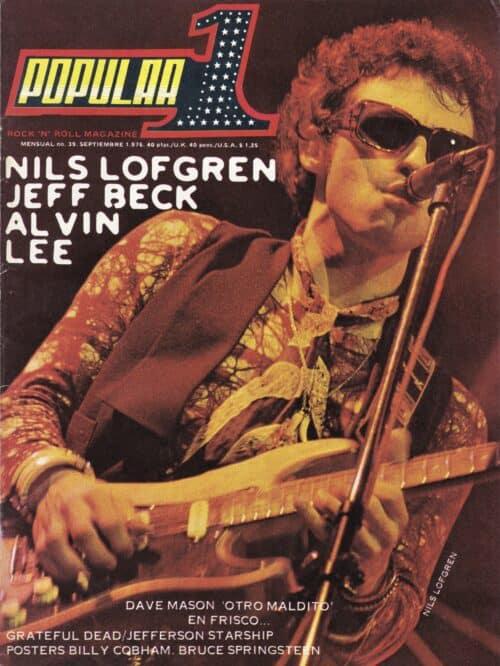

Alvin Lee and Andy Pyle at the Roundhouse London, 23. May 1976, photo by Daniel DAlmeida
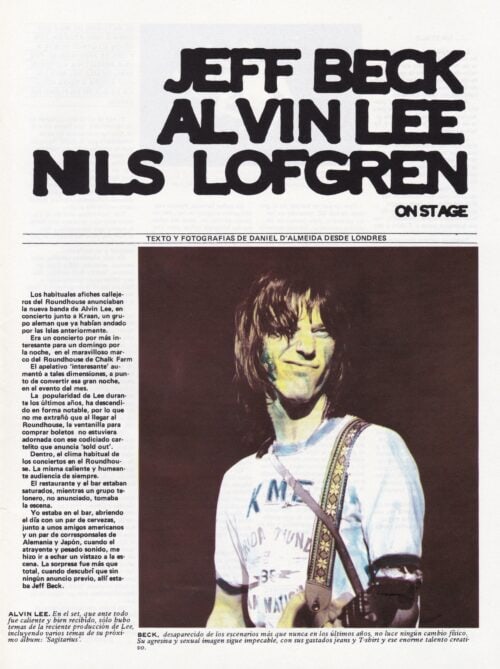
click to enlarge
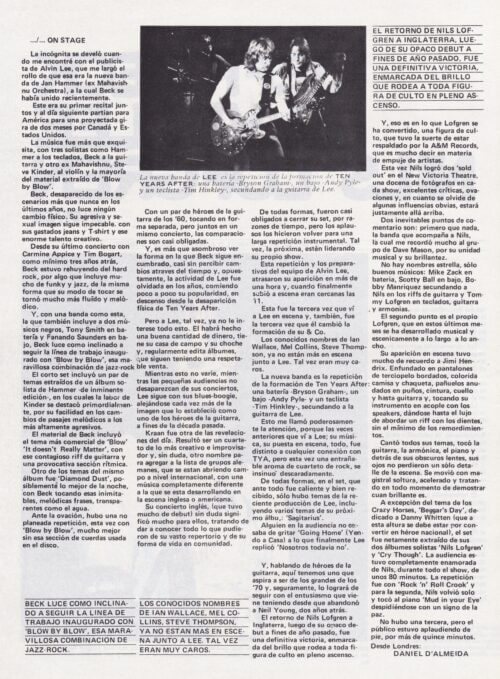
click to enlarge
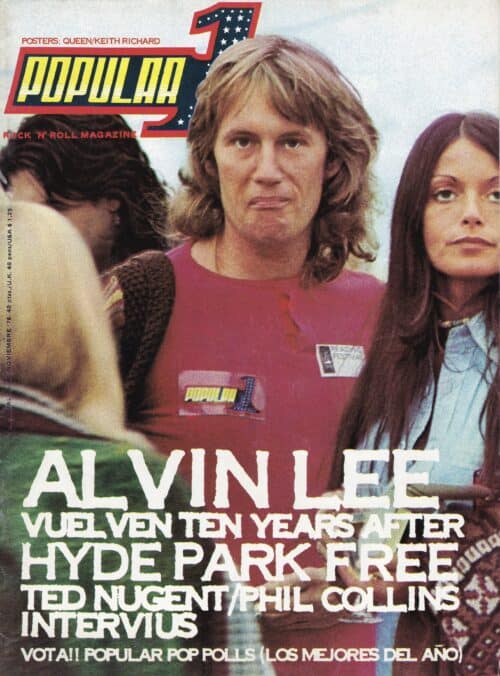
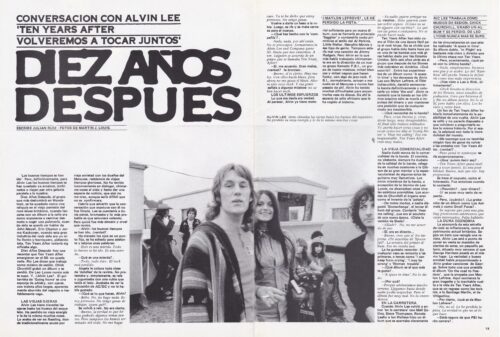
Popular1 Magazine (Spain) – November 1976
click to enlarge


Alvin and Suzanne with estate agent friend Perry Press at Reading Festival, most likely on Sun 29. Aug. 1976 – click to enlarge
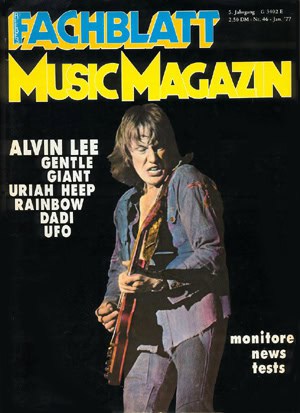
Fachblatt Musicmagazin (Germany) – January 1977
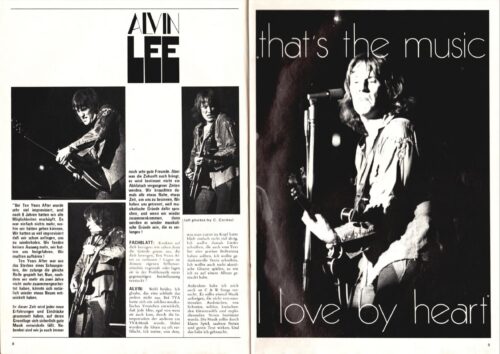
click to enlarge
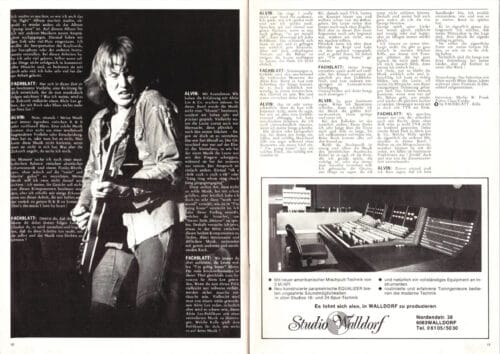
click to enlarge
Fachblatt was one of Germany’s most respected and highest circulated music magazines from the mid-70s until 1999.
ALVIN LEE – THAT’S THE MUSIC I LOVE BY HEART
<Bei Ten Years After wurde sehr viel improvisiert, und nach 8 Jahren hatten wir alle Möglichkeiten erschöpft. Da war einfach nichts mehr, wohin wir hätten gehen können. Wir hatten so viel improvisiert, dass wir schon anfingen, uns zu wiederholen. Wir fanden keinen Ausweg mehr, wir hatten uns festgefahren. Wir mussten aufhören.
Ten Years After war wie das Sterben eines Schauspielers, der zulange die gleiche Rolle gespielt hat. Nun, nachdem wir mehr als zwei Jahre nicht mehr zusammengearbeitet haben, könnte sich natürlich wieder etwas Neues entwickelt haben.
In dieser Zeit wird jeder neue Erfahrungen und Eindrücke gesammelt haben, auf deren Grundlage sich sicherlich gute Musik entwickeln lässt. Nebenbei sind wir ja auch immer noch sehr gute Freunde. Aber was die Zukunft auch bringt, es wird bestimmt nicht ein Abklatsch vergangener Zeiten werden. Wir brauchten damals alle etwas Ruhe, etwas Zeit, um uns zu besinnen. Wir haben uns getrennt, weil musikalische Gründe dafür sprachen, und wenn wir wieder zusammenkommen, dann werden es wieder musikalische Gründe sein, die es verlangen!>
Fachblatt
Konkret auf dich bezogen: wie sahen denn die Gründe genau aus, die dich bewogen, Ten Years After zu verlassen? Lagen sie deinem eigenen Selbstverständnis zugrunde oder lagen sie in der Problematik eurer gegenseitigen Beeinflussung versteckt ?
Alvin Lee
Wohl beides. Ich glaube, das eine schließt das andere nicht aus. Bei Ten Years After hatte sich ein solches musikalisches Verstehen entwickelt, dass jede Idee, egal von wem sie auch kam, durch die Interpretation der anderen zur Ten Years After – Musik wurde. Dabei wurden die Ideen zu oft verfälscht. Ich meine, von dem, was man im Kopf hatte blieb einfach nicht viel übrig. Ich wollte damals Lieder schreiben. die auch vom Text her eine gewisse Bedeutung haben sollten. Ich wollte gedankenvolle Texte schreiben. Ich wollte auch mehr akustische Gitarre spielen, so wie ich es auf einem Album gemacht habe.
Außerdem habe ich mich auch an Country and Western Songs versucht. Es sollte einmal Musik aufzeigen, die nicht von emotionalen Ausbrüchen, von Schreien, wilden, kreischenden Gitarrenriffs und explodierenden Noten bestimmt wurde. Die Musik sollte durch klares Spiel, saubere Noten und guten Text wirken. Und das habe ich gebraucht.
Ich musste es machen, so wie ich auch das <In Flight> Album machen musste obwohl es wieder anders als das Album <Pump Iron> ist. Auf diesem Album bin ich mit anderen Musikern neuen Ansprüchen nachgegangen. Diesmal haben wir den Soli sehr viel Platz eingeräumt. Ich wollte die Interpretation der Keyboards, der Saxophone oder der anderen Instrumente vorstellen. Bei diesen Arbeiten habe ich sehr viel gelernt. Selbst wenn solche Dinge nicht erfolgreich in kommerzieller Hinsicht sind, so bedeuten sie mir doch sehr viel. Ich habe sehr viel bei dieser Arbeit gelernt.
Fachblatt
Hat sich in dieser Zeit eine bestimmte Vorliebe, eine Richtung für dich entwickelt, der du nun musikalisch folgen möchtest? Was ich meine, wird es in Zukunft vielleicht einen Alvin Lee geben, der mit Rock oder Blues nichts mehr im Sinn hat?
Alvin Lee
Nein, niemals! Meine Musik war immer irgendwo zwischen Rhythm & Blues oder Rock-Based Blues. Eine solche Musik kommt aber nicht aus einer intellektuell begründeten Vorliebe oder Entscheidung. Man hat es, oder man hat es nicht. Man kann diese Musik nicht kreieren, wenn man sie nicht in sich hat. Was aber die Zukunft angeht, da suche ich noch.
Im Moment suche ich nach einer musikalischen Balance zwischen akustischer Gitarrenmusik und einem Funky-Rhythmus, ohne jedoch auf die Ravin und Blastin´Guitar zu verzichten. Meine Musik will ich zwar nicht darauf aus richten – ich meine, ihr Gesicht soll nicht von diesen Komponenten bestimmt werden, aber ich erhoffe mir helfen, wieder zurück zu gutem Rhythm & Blues zu kommen. That’s the music I love by heart !
Fachblatt
Denkst du, dass dein Publikum dir dabei immer folgen kann? Glaubst du, es wird verstehen und begreifen, dass du diese Schritte tun musst, um dir selbst und der Musik treu bleiben zu können?
Alvin Lee
Mit Ausnahmen. Wir haben die Erfahrung mit Alvin Lee & Co. machen müssen. In dieser Band wurde die Musik nicht vom <blowin’> bestimmt, sondern wir haben sehr viel präziser gespielt. Vielleicht waren die Leute zuerst auch nur überrascht , denn plötzlich – nach den ersten Stücken – fingen sie doch an zu verstehen. Das war fast überall so. Der Unterschied war nur auf der Ebene des Verstehens, so wir bei der einen Musik die Leute nur mit den Fingern schnippen, während sie bei der anderen nur tanzen. Der Anspruch ist einfach anders. Einmal <tik a chtik cuch o cuch a tik> oder <bang räng whow räng chuch bäng gängagämgagäng>.
Diese andere Art, diese nicht so wilde Musik, hat mir schon gefallen, aber letztlich habe ich doch zu sehr diese <work out mood> vermisst, wie sie in <I’m Going Home> versteckt ist. Ich habe dieses Feeling vermisst, welches du brauchst um <Sweet Little Sixteen> zu spielen. Deshalb versuche ich jetzt, etwas in der Mitte zwischen diesen beiden Komponenten zu finden. Also: interessante und diffizilere Musik verbunden mit gutem sauberen und emotionalen Rock.
Fachblatt
Wo immer du aber auftrittst, die Leute wollen <I’m Going Home> hören. Für viele Rockenthusiasten ist dieser Titel gleichfalls zum Synonym für Alvin Lee geworden. Wenn du nun dieses Feld, vielleicht nur teilweise verlässt, werden sicher manche enttäuscht sein. Vielleicht wird man von einem müde gewordenen Alvin Lee reden, sicherlich aber wird es schwer sein, dieses Alvin Lee Publikum mit einer veränderten Musik zu überzeugen. Welche Rolle spielt dein Publikum für dich, wie wirkt es auf deine Musik?
Alvin Lee
On stage I really don’t care about the audience. Ich spiele, was ich spielen muss und wie ich spielen muss. Sprechen wir nur einmal von guten Nächten wenn es mir auch gelingt <to get myself off>, dann überzeuge ich jedes Publikum. Das schaukelt sich dann so auf, und es gelingen mir wirklich gute Konzerte. Aber mit dem unbedingten Vorsatz auf die Bühne zu steigen, die Leute ausflippen zu lassen, das finde ich nicht ehrlich.
Fachblatt
Stimmungen und Gefühle sind also anscheinend die treibenden Momente des Alvin Lee. Wenn es nun zum Schreiben der Songs kommt, ist es doch sicherlich notwendig, in einem entsprechenden Umfeld zu sein. Wie und wann entstehen deine Lieder ?
Alvin Lee
Das ist sehr unterschiedlich. Aber du hast vollkommen recht, wenn du sagst bei mir sei alles vom Gefühlszustand abhängig. Ich habe verschiedene Gitarren, die ich auch unterschiedlich einsetze, wenn ich meine Songs schreibe. Die Zeiten oder Gelegenheiten, bei denen mir Songs einfallen, sind zufällig. Manchmal fällt mir sogar wahrend eines Konzertes ein neues Lied ein. <I’m Going Home> war ein solches Stück, das zufällig entstanden ist.
Wir, damals noch Ten Years After, hatten ein Konzert hinter uns und wollten schon von der Bühne gehen. Die Leute riefen aber immer noch nach einer Zugabe. Weil aber zu dieser Zeit unser Repertoire noch sehr begrenzt war, wussten wir nicht, was wir machen sollten. Plötzlich hatte ich aber diese Melodie im Kopf und habe sie den anderen vorgespielt, und es gefiel ihnen. So haben wir <I’m Going Home> gefunden.
Fachblatt
Deine Songs entstehen somit wohl auf zweierlei Art. Einmal stammen sie gänzlich aus dem Gefühlsbereich, und zum anderen entspringen sie konzentrierter Überlegung. Unterscheiden sich deine Songs auch deswegen?
Alvin Lee
Ja, ganz bestimmt sogar. Wenn ich Spontanes schreibe, dann schenke ich der Musik die größte Aufmerksamkeit. Dann springe und tanze ich.
Bei den Balladen ist das natürlich anders. Dann denke ich sehr lange über die Texte nach und feile so lange, bis ich vollkommen zufrieden bin. Beim Rock kommt alles auf den Sound an.
Weißt du, Rockmusik ist einzig und allein die Musik des persönlichen Ausdrucks. Dabei ist es egal, ob die Note, die ich gerade spiele, die richtige ist, oder was immer man darunter verstehen will. Ich gebrauche die Gitarre, um Dinge zu sagen, die ich sonst nicht erklären könnte. Deshalb sind meine Soli auch ganz anders als z.B. die von George Harrison. George spielt seine Lieder fast immer gleich, vielleicht mal traurig oder mal happy, aber sie klingen immer wieder gleich.
Ich könnte so etwas überhaupt nicht. Da gibt es ganz einfach in meinen Stücken Riffs, aus denen sich Passagen ableiten, die nur ganz typisch für mich sind. Wenn ich mich danach fühle, dann jamme ich einfach los. Ich finde, nur so bleibt die Musik wirklich echt und lebensfähig. Ich kann es richtig fühlen, wie die Leute, ich meine die Mitspieler, von dieser einzigartigen Stimmung gefangen sind. Das könnte niemals passieren, wenn man nur auf die Bühne geht, um wieder und wieder die gleichen Sachen zu spielen. Deswegen waren wir ja auch mit TYA am Ende.
Fachblatt
Wir sprechen immer nur von dir; sicherlich auch mit Recht, denn ohne dich wäre ja wohl TYA nicht so berühmt geworden. Deine zweite Band hieß ja Alvin Lee & Co. Welche Rolle spielen da eigentlich die anderen Mitmusiker, in deiner Band? Haben sie ein Mitspracherecht, worüber können sie mit dir reden, wo füllen sie bestimmte Funktionen aus? Erzähl’ doch mal was von der Zusammenarbeit untereinander.
Alvin Lee
Zuerst einmal muß ich dazu sagen, dass ich kein Bandleader bin. Ich erzähle niemandem, wie und was er in meiner Band zu spielen hat. Es ist eigentlich genau das Gegenteil: Ich möchte, dass meine Mitmusiker in der Lage sind, ihrer Musik ihr eigenes feeling zu geben. Sie sollen die eigentliche Form um meine Gitarre bilden, so wie sie es für richtig halten. Sicherlich sind die Songs von ihrer Entstehung her meine Lieder, aber die Einheit ist unser aller Werk!
Interview: Merlin W. Frank
Fotos: Claus Cordes
Anmerkung: Das Interview mit Alvin wurde im Juni 1976 während eines Festivals in Offenburg aufgenommen.
© By Fachblatt – Köln
Record Mirror – February 19, 1977
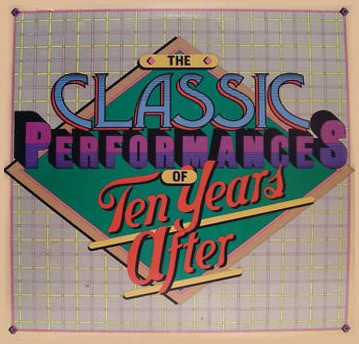
Ten Years After: “The Classic Performances” (Chrysalis CHR 1134)
Ten years after they first shook the foundations of the Marquee, Ten Years After are no more.
October 1967 – Fairport Convention, Pink Floyd and The Incredible String Band play the Saville Theatre; Vanilla Fudge tour, Who, Herd, Tremeloes and Traffic about to tour together and new band Ten Years After cause sensation. Alvin Lee had the all action style that destined him for super-stardom, stealing honours at both the Woodstock and Isle Of Wight rock festivals. Their albums sold in the thousands on both sides of the Atlantic and their anthem “I’m Going Home” became something of a legend. But, Ten Years Afters all meat and no vegetable style attracted often vehement criticisms. They never seemed to blend in with the more sophisticated trends of the seventies and a split was inevitable. This album is a collection of numbers from their later records.
Ten Years After – “The Classic Performances”
Released on Chrysalis Records – Ten Years After 1967-1977
In the Autumn of 1967, Ten Years After were formed. They went on to play some of the biggest rock concerts ever staged, and turned out albums that turned on thousands to what real rock and roll was all about. ‘Classic Performances’ is the best of that magic distilled onto a single album. If you’ve never heard them before, take a listen. And if you’re familiar with Ten Years After, you’ll know exactly what you’re letting yourself in for.
Alvin Lee, when he’s on, burns with an intensity on the guitar that is still unmatched by most. Eric Clapton only got this hot with Cream and John Mayall, Jeff Beck was hot on “Wired” and “Blow By Blow”. While Alvin Lee plays the same old blues and rock licks but with so much more excitement, not to mention speed, than anybody around at the time. Except Jimi Hendrix of course, but even he wasn’t this lickety-split. There’s not one thing less than perfect about their Magnum-Opus, “I’d Love To Change The World”: It’s one of the greatest 1960’s songs there is, encapsulating a whole mind set and style of music as well. It stands up as well as any tune from the late 1960’s and early 1970’s to my ears. I also really dig “It’s Getting Harder”, a very funky little tune full of classic Lee-licks, that squirm and slither all over the place in his own unique ways. He didn’t just play fast, he played sweet and true a lot of the time. “Good Morning Little Schoolgirl” – “Going Home” and others are also still a treat to hear, not just for nostalgia, but because they rock! If you happen to see this collection in your local bargain bin, grab it. It’s got a few absolutely crisp jams on it.
Lloyd Frank
Pop Magazine June 1977
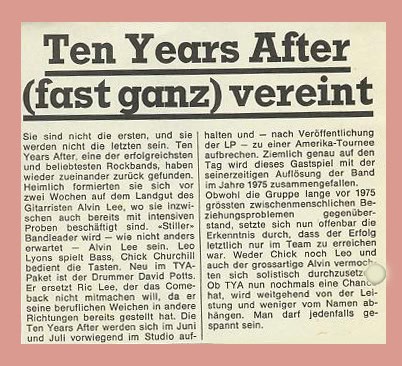
Sounds Magazine 1977
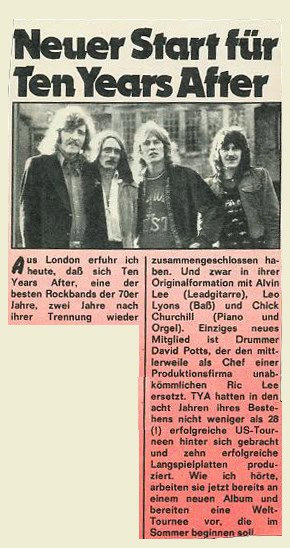
Billboard Magazine – July 16, 1977
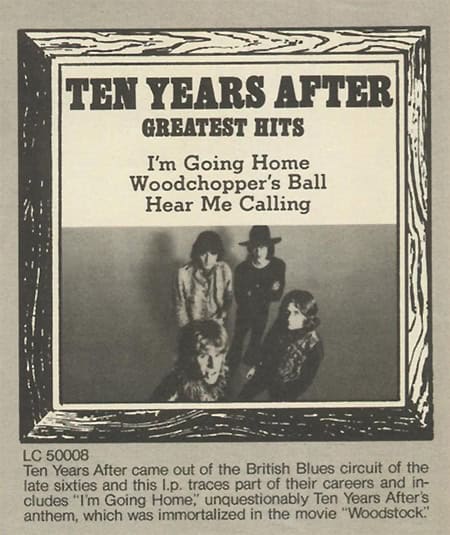
Ten Years After Back Together Again
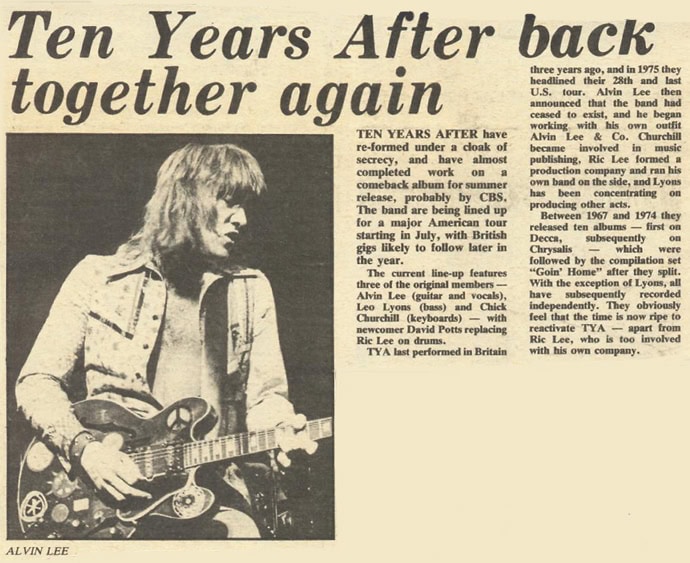
Ten Years After have re-formed under a cloak of secrecy, and have almost completed work on a comeback album for summer release, probably by CBS. The band are being lined up for a major American tour starting in July, with British gigs likely to follow later in the year.
The current line-up features three of the original members, Alvin Lee (guitar and vocals) Leo Lyons (bass guitar) Chick Churchill (keyboards) with newcomer David Potts replacing Ric Lee (on drums). Ten Years After have performed in Britain three years ago, and in 1975 they headlined their 28^th and last U.S. tour. Alvin Lee then announced that the band had ceased to exist, and he began working with his own outfit Alvin Lee & Company. Chick Churchill became involved in music publishing, Ric Lee formed a production company and ran his own band on the side, Leo Lyons has been concentrating on producing other acts.
Between 1967 and 1974 they released ten albums, first on Decca, subsequently on Chrysalis, which were followed by the compilation set “Goin’ Home” after they split. With the exception of Leo Lyons, all have subsequently recorded independently. They obviously feel that the time is now ripe to re-activate Ten Years After, apart from Ric Lee, who is too involved with his own company.
Interesting insights from a David Potts Interview (August 1999)
By Jon Hinchliffe
You worked with Ten Years After is that right?
Yeah, that was a little while after my time with YES.
Yeah, Ten Years After. I lived with Alvin Lee. We did an album at Alvin’s house that never got released, at least I don’t think it did. When it was finished. They were bickering all the way through it and wanted to split up because they were all rich and successful. I kept talking them back into it because I wanted a big house in the country too, and they kept going yeah, yeah, yeah. But then about six months down the line, when the album was all finished, Alvin called me in and said “I will form a band with you, but I don’t want all that hassle with Chick or Leo”. And you can quote me on this, because they’re playing together now.
You played with them live?
No, we were supposed to do a ten week tour supporting with Peter Frampton when he released that double album, Peter Frampton Comes Alive, that he had a big success with.
We had ten weeks in the States doing that, we also had some dates lined up in Germany, but it never got to that point. The band just split up.
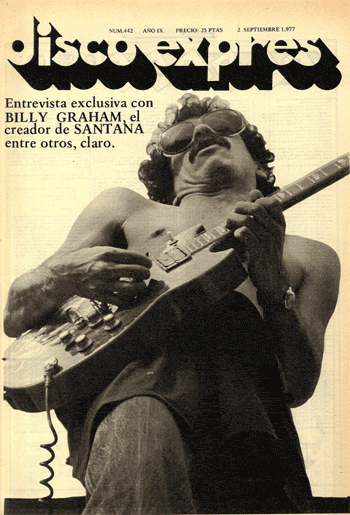
Disco Expres magazine (Spain) – September 2, 1977

October 15, 1977